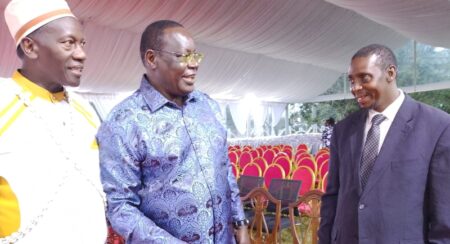







Deputy President Kithure Kindiki has pledged to complete stalled development projects across the country, insisting that political differences will not determine the distribution of national resources or deny residents access to essential services.
Prof Kindiki said the Kenya Kwanza administration would implement its development commitments in all 290 constituencies, including those represented by opposition politicians, dismissing claims that areas perceived to be hostile to President William Ruto’s government would be disadvantaged.
He challenged opposition leaders to support development initiatives rather than mobilise residents against government projects, arguing that roads, electricity connections, markets, affordable housing and other public investments were intended to improve livelihoods regardless of political affiliation.
“This is a government for all Kenyans. There are no wantam or Tutam citizens. We only have Kenyans who have a right to development and delivery of quality services,” he said.
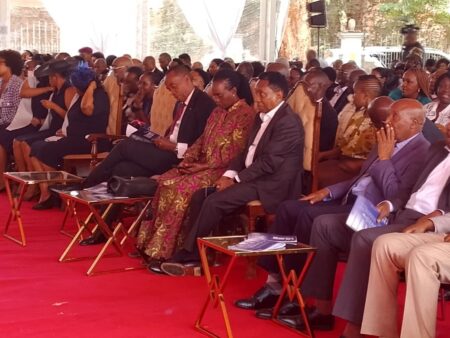
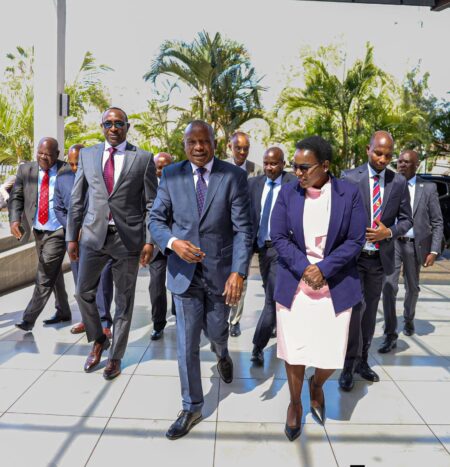
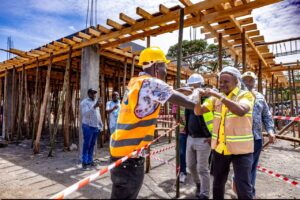
The Deputy President spoke on Tuesday during a development tour of Mukurweini Constituency in Nyeri County, where he inspected ongoing projects, addressed residents at Gakindu and launched materials for rural electrification works targeting thousands of households.
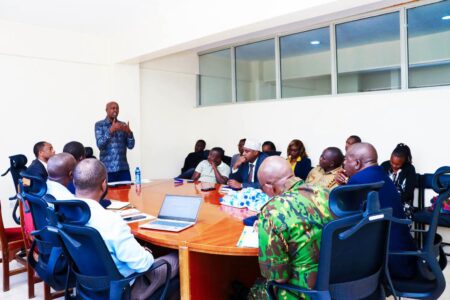
His visit focused on the progress of government programmes in agriculture, electricity connectivity, affordable housing, markets and infrastructure, with particular attention to projects that have stalled or fallen behind schedule.
“We are implementing the Kenya Kwanza manifesto page by page, commitment by commitment, project by project,” Prof Kindiki said, maintaining that the administration remained committed to fulfilling its campaign pledges.
He described development as a public obligation rather than a political reward, saying residents should not suffer because of disagreements between elected leaders and the national government.
“Development is not about politics. We cannot make citizens suffer because of political differences,” he said.
The Deputy President’s remarks came as he received complaints about stalled roads and market projects in Mukurweini, prompting him to promise swift intervention to resolve the obstacles preventing contractors from resuming work.
Among the projects raised were the Gikondi-Kaharo road, the Kiawamururu-Kaheti road and the Mukurweini Central housing and markets development.
Prof Kindiki said the government had resolved the contractor related problem affecting the Gikondi-Kaharo road and expected work to resume by the end of the week.
He also promised to address the bottlenecks affecting the Kiawamururu-Kaheti road and Mukurweini Central housing and market projects, with the aim of ensuring construction resumes and the facilities are completed within the coming months.
On the Mukurweini Central modern market, he announced that a new contractor would take over the stalled project to accelerate its completion.
The Deputy President further directed that the Gakindu Economic Stimulus Programme (ESP) Market, which he inspected during the tour, be completed by December 31.
The market was about 20 per cent complete at the time of his visit, according to the project update he gave residents.
The Sh128 million facility is among 13 fresh produce market projects being implemented in Nyeri County under the government’s programme to provide modern trading spaces for small scale traders, including women who sell vegetables and other farm produce.
The projects are intended to replace or improve informal trading spaces, provide better working conditions and help traders protect their goods from weather related damage.
Prof Kindiki said the national government was developing approximately 600 modern markets across the country, with the Housing Fund financing nearly 600 additional market projects as part of a wider investment programme encompassing affordable homes, student hostels and institutional accommodation.
He said contracts worth Sh800 billion had been signed for projects covering housing, markets, student hostels and accommodation for police and military personnel.
The Deputy President argued that the construction programme was also creating employment opportunities for young people, from professionals such as engineers, architects and quantity surveyors to masons, carpenters, electricians and other construction workers.
He estimated that about 1.1 million young people were earning a living from the projects, directly or through related economic activities.
Prof Kindiki said sustained implementation of the programme over the next two or three decades could fundamentally transform Kenya’s built environment, expand access to decent housing and help eliminate informal settlements.
In Nyeri County, he said the Housing Fund had deployed Sh17 billion towards ongoing projects, while another Sh5 billion worth of developments was in the pipeline.
Mukurweini is among the beneficiaries, with projects covering the Mukurweini and Gakindu markets, affordable housing and student hostel accommodation at Mukurweini Technical Training Institute and the Mukurweini campus of the Kenya Medical Training College.
He added that roads, hospitals and stadiums were also being constructed or upgraded across Nyeri County as part of the government’s broader development programme.
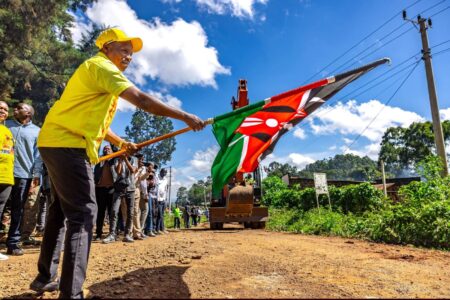
On electricity access, Prof Kindiki launched electrification materials for Gaikundo Tea Factory and 16 other Last Mile Connectivity projects intended to extend power to households and institutions in Mukurweini.
The initiative was initially described as targeting 2,000 households at a cost of Sh41 million, although the subsequent project briefing placed the cost of the 16 connectivity projects at Sh31 million.
The Deputy President said additional projects were planned to extend electricity to a further 2,200 households, as the government pursued its goal of connecting homes and public institutions that remain without power.
Across Nyeri County, electricity projects valued at Sh650 million are targeting approximately 12,000 households.
Prof Kindiki said the administration had connected 42,000 households in the county to electricity over the previous four years.
He announced that the second phase of the rural electrification drive in Nyeri would begin early next year, with an allocation of Sh568 million, as the government moves towards universal electricity access.
Electricity connectivity is expected to support households, schools, health facilities, small businesses and agricultural enterprises, while improving the capacity of tea factories and other productive establishments to operate efficiently.
Agriculture, a major source of income for households in the region, also featured prominently during the Deputy President’s engagement with residents.
He said farmers were benefiting from reduced prices of subsidised fertiliser and seeds, improved returns from coffee and milk, and government efforts to strengthen the dairy value chain.
The price of a 50 kilogramme bag of subsidised fertiliser had fallen from Sh7,000 to Sh2,500, with a further reduction to Sh2,000 announced in the government’s pricing plan.
The lower prices are intended to reduce production costs for farmers and encourage greater use of farm inputs, with the ultimate goal of increasing yields and improving household incomes.
Dairy farmers are also benefiting from the distribution of milk coolers designed to reduce spoilage before milk reaches processing plants.
Prof Kindiki said Nyeri had received 13 milk coolers under the national programme, which had distributed 230 units, with another 670 ordered for delivery in December.
The equipment is expected to strengthen milk collection, preserve quality and reduce losses, particularly in areas where farmers depend on cooperative societies and collection centres to deliver milk to processors.
Residents welcomed the improved returns from coffee and dairy farming, alongside the reduction in the cost of farm inputs, as they called for continued support to agriculture and faster completion of infrastructure projects.
The Deputy President urged political leaders to promote peaceful competition, warning against incitement that could lead young people to violence or the destruction of businesses and public infrastructure.
He cited the 2002 presidential contest between Mwai Kibaki and Uhuru Kenyatta as an example of political competition that did not require the destruction of property.
Prof Kindiki also called on leaders to work together in addressing illicit alcohol and drug abuse, arguing that public health and community safety should not become subjects of partisan political disputes.
He maintained that the success of the government’s development agenda should be assessed through projects delivered, services improved and opportunities created for ordinary Kenyans.
The Mukurweini tour was attended by Nyeri Senator Wahome Wamatinga, Othaya MP Wambugu Wainaina, Nyeri Town MP Duncan Mathenge, Principal Secretaries Alex Wachira of the State Department for Energy and Caroline Karugu of the State Department for East African Community and ASALs, as well as MCAs, senior government officials and grassroots leaders.
Prof Kindiki said the administration would continue monitoring projects across the country and addressing implementation challenges to ensure that public investments translate into tangible benefits for citizens.
He urged residents to hold leaders accountable for delivery while rejecting attempts to turn development into a contest between supporters and opponents of the government.