






Kiambu National Polytechnic is seeking to strengthen the role of technical and vocational education in Kenya’s economic development by promoting research, practical skills and entrepreneurship among trainees.
The institution is hosting the sixth edition of its International Research and Innovation Conference, Skills Competition and Expo, bringing together academics, researchers, industry professionals and students to exchange ideas, present innovations and explore ways of improving technical training.
The annual event is anchored on the theme, “TVET Excellence: Nurturing Skilled, Innovative and Entrepreneurial Graduates for Sustainable Development in Kenya,” which highlights the need to equip graduates with competencies that respond to labour market demands and emerging economic opportunities.
Peter Kirui, the head of research and innovations at the polytechnic, said the gathering provides a platform for participants from different institutions and industries to present research findings, demonstrate their technical abilities and learn from one another.
He said the programme combines academic research with practical contests and exhibitions, giving participants an opportunity to assess how knowledge acquired in training institutions can be applied to real life challenges.
The research component will focus on issues affecting technical education and the wider economy, including entrepreneurship, agribusiness, environmental sustainability, artificial intelligence and digital technologies.
According to Mr Kirui, the objective is to encourage research that contributes to improving the quality of vocational training while identifying innovative approaches to addressing challenges in industry and society.
He said involving participants from different professional backgrounds would help broaden discussions and generate ideas that could improve training methods, technological applications and graduate preparedness.
“Research should help us find better ways of strengthening TVET and ensuring that the skills we impart remain relevant to changing needs,” Mr Kirui said.
The conference comes at a time when technical and vocational education is increasingly viewed as an important driver of employment creation, industrial growth and entrepreneurship.
With employers demanding workers who can combine technical knowledge with practical experience, training institutions are under pressure to produce graduates who can perform effectively in the workplace or establish their own businesses.
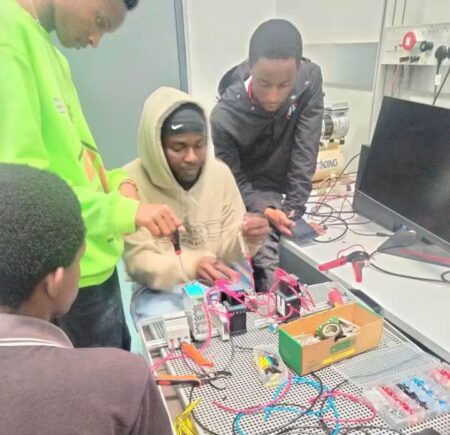
The skills competition is therefore a major feature of the gathering, with trainees from participating TVET institutions expected to demonstrate their proficiency in a range of technical and professional disciplines.
The contests cover carpentry, masonry, plumbing, electrical installation, electronics and industrial mechatronics. Other areas include baking, bread making, hospitality, fashion, information and communication technology (ICT) and applied sciences.
Mr Kirui said the competitions would enable institutions to evaluate the competence of their trainees against that of students from other colleges.
He noted that the contests provide a practical measure of the effectiveness of training by testing students’ ability to apply what they have learnt rather than relying exclusively on written examinations.
The exercise also gives trainers an opportunity to identify gaps in instruction and areas where teaching approaches, equipment and practical training could be improved.
By comparing performance across institutions, organisers hope to encourage higher standards of technical proficiency and promote a culture of continuous improvement within the TVET sector.
The emphasis on practical skills aligns with Kenya’s broader economic transformation ambitions, which place considerable importance on developing a workforce capable of supporting construction, manufacturing, agriculture, hospitality and the expanding digital economy.
In construction, competencies in plumbing, electrical installation and masonry are essential for delivering infrastructure and housing projects. Meanwhile, industrial mechatronics, electronics and ICT are increasingly relevant as businesses adopt modern equipment, automated processes and digital systems.
Entrepreneurial skills are also important in helping graduates turn their technical abilities into sustainable sources of income, particularly in sectors where small enterprises can create employment and provide services to local communities.
The research discussions on agribusiness and environmental sustainability are expected to encourage participants to consider how technical knowledge can support productivity, resource conservation and more efficient production systems.
Similarly, the inclusion of artificial intelligence and digital technologies reflects the need for training institutions to prepare students for a labour market being reshaped by technological advancement.
Mr Kirui said the conference is intended to bring together the different elements of technical education, enabling institutions to exchange experiences and explore opportunities for collaboration.
The exhibition will complement the research presentations and competitions by providing a platform for showcasing innovations and practical projects developed by students and participating institutions.
Such engagements can help expose trainees to new ideas, encourage creative problem solving and strengthen connections between educational institutions and industry.
For employers, closer engagement with TVET institutions can provide an opportunity to communicate the competencies required in the workplace. For trainers, feedback from industry can inform curriculum delivery and help ensure that courses respond to practical needs.
The gathering also seeks to reinforce the place of research in vocational training, encouraging students and instructors to develop solutions that can be tested, refined and applied beyond the classroom.
As Kenya seeks to expand opportunities for young people and strengthen its productive sectors, the quality of technical training will remain critical to ensuring that graduates can compete for jobs and establish viable enterprises.
Kiambu National Polytechnic’s sixth international conference is intended to contribute to that goal by bringing research, innovation and practical competence into a common forum, with the broader objective of producing graduates capable of responding to the country’s development priorities.