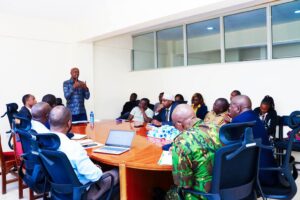
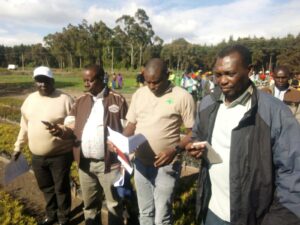



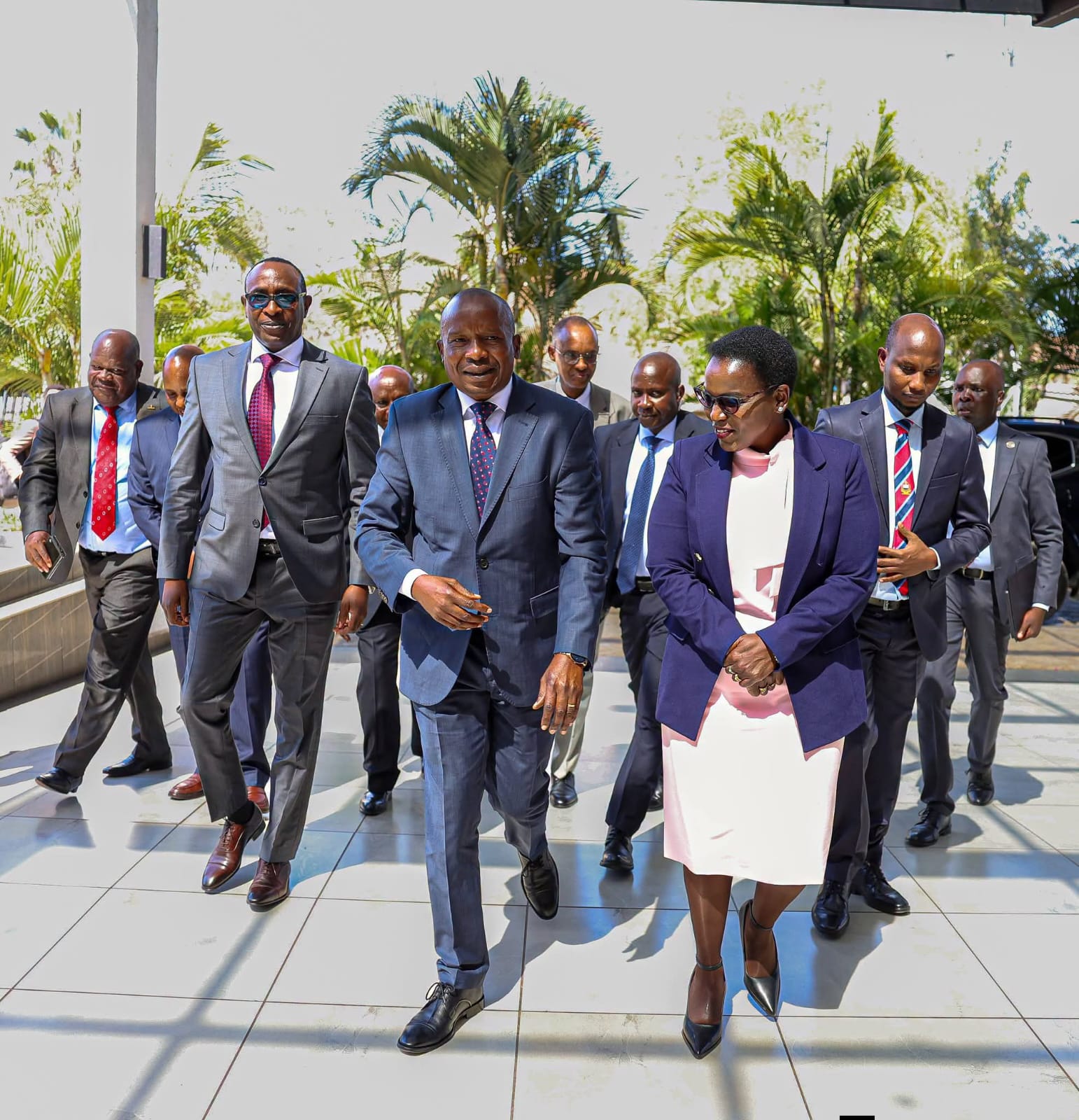
Deputy President Kithure Kindiki has called for the adoption of artificial intelligence, data analytics and renewable energy technologies in Kenya’s correctional facilities, saying the innovations could improve service delivery, strengthen rehabilitation programmes and promote environmental sustainability.
Prof Kindiki said modern technology should be integrated into correctional services to improve operational planning, identify gaps in service delivery and ensure the efficient use of public resources, while safeguarding the dignity, privacy and rights of inmates.
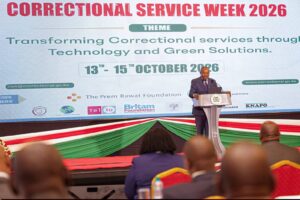
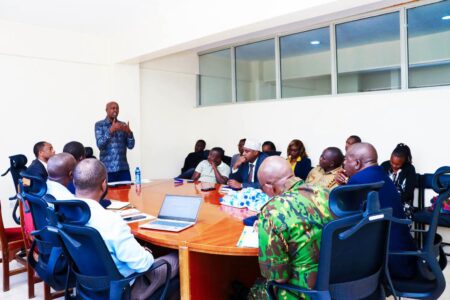
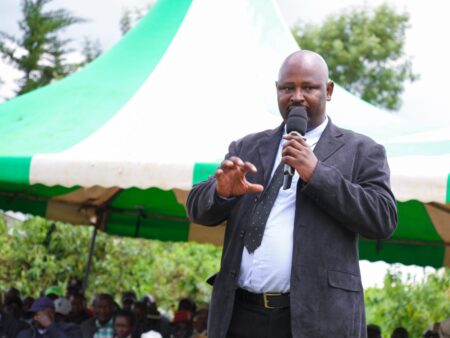
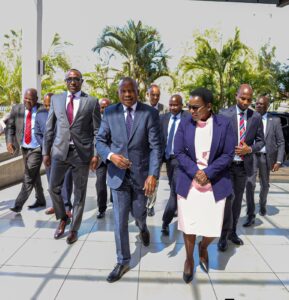
He spoke in Nairobi during the official opening of the fourth Correctional Services Week, which brought together government officials, judicial representatives, diplomats, development partners and other stakeholders to discuss reforms in the management and rehabilitation of offenders.
The Deputy President said technology should complement, rather than replace, the fundamental responsibility of correctional institutions to rehabilitate offenders and prepare them for successful reintegration into society.
He called for responsible adoption of emerging technologies, warning that innovation must not compromise essential services, personal data protection or public confidence in digital systems.
“Technology and green solutions should reinforce rather than distract from the fundamental role of correctional services,” was the central message of his address.
Prof Kindiki said the government was pursuing a modern correctional system that combines institutional security with rehabilitation, vocational training, psychosocial support, restorative justice and community based alternatives to imprisonment.
He urged correctional institutions to strengthen education and skills development programmes, promote family participation in rehabilitation and support initiatives that address the needs of offenders, victims and the wider community.
The Deputy President said the success of correctional reforms should not be measured solely by the number of inmates managed or the security of facilities, but also by their ability to prepare offenders for productive lives after release.
He challenged participants at the week long engagements to translate their discussions into practical proposals capable of improving institutional efficiency, environmental management and the welfare of people under correctional supervision.
Environmental sustainability emerged as a key priority, with the government calling for greater investment in renewable energy, water conservation, climate smart agriculture and tree growing initiatives across correctional facilities.
Prof Kindiki said correctional institutions should adopt sustainable production practices to reduce operating costs, conserve natural resources and strengthen their contribution to the country’s environmental restoration agenda.
Among the proposed interventions are solar powered irrigation, rainwater harvesting, efficient water use, organic waste recycling, biogas production and improved wastewater treatment and reuse.
The measures are expected to reduce reliance on conventional energy sources while supporting agricultural productivity in prison farms.
During the event, a speaker highlighted the pressure placed on forests by institutional cooking requirements, citing annual consumption of about 62,000 tonnes of fuelwood as an indication of the scale of the challenge.
The speaker argued that the declining cost of solar panels and battery storage had made renewable energy increasingly accessible, offering correctional institutions an opportunity to reduce expenditure on electricity and fuel over time.
The proposed transition would also include more sustainable farming methods aimed at conserving soil moisture, restoring degraded land and improving agricultural yields.
Water management was identified as another critical area, given Kenya’s vulnerability to water shortages.
The speaker cited water recycling practices observed in Cairo, Egypt, where water is reportedly reused several times, urging Kenya to explore similar approaches suited to local conditions.
The government was also encouraged to establish partnerships with private companies and financial institutions to mobilise the technology, expertise and funding needed to implement the proposed reforms.
Kenyan solar irrigation company SunCulture was cited as an example of a local enterprise providing solar powered irrigation solutions, including financing arrangements intended to improve accessibility.
Financial institutions, including Kenya Commercial Bank and Equity Bank, were also identified as potential partners in expanding investments in renewable energy and clean cooking technologies.
Beyond reducing operational costs, the green transition is expected to create opportunities for inmates to acquire practical skills that can support employment, entrepreneurship and economic independence after release.
The meeting heard that Kenya Prisons Enterprises could be positioned to participate in the green technology value chain, including the fabrication of institutional cooking equipment, installation and maintenance of solar systems, irrigation equipment and biogas plants.
Such initiatives would enable inmates to gain technical experience while supporting the maintenance and sustainability of investments within correctional institutions.
The approach is intended to link environmental conservation with vocational training and economic empowerment, giving inmates practical competencies that could improve their prospects of securing jobs or establishing businesses after completing their sentences.
Prof Kindiki said correctional institutions should increasingly function as centres of rehabilitation, skills development, innovation and sustainable production.
The State Department for Correctional Services also reported progress in the use of digital systems and community based rehabilitation.
Principal Secretary Salome Beacco said the Probation and Aftercare Service was supervising approximately 61,000 offenders in the community.
During the 2025/2026 financial year, the department prepared and submitted about 67,000 reports to courts to support the administration of justice.
The service also continues to implement other sanctions and court related responsibilities, including cases involving offenders pardoned through the presidential power of mercy.
Dr Beacco said the department had expanded its collaboration with the Judiciary through electronic filing of court reports, e-conferencing, electronic counselling and case management systems.
The digital platforms are intended to improve coordination, reduce delays and strengthen the delivery of probation and aftercare services.
She added that the department had planted more than 265,000 trees across its stations and raised approximately 2.9 million seedlings as part of its environmental conservation efforts.
The department is also working with the United Nations Office on Drugs and Crime (UNODC) on initiatives intended to strengthen tree growing programmes and improve water harvesting, particularly in areas facing environmental and water related challenges.
Commissioner General of Prisons Patrick Aranduh said partnerships with government agencies, development organisations and other stakeholders remained critical to modernising correctional facilities and improving the treatment of inmates.
He reported that all women’s prisons had been equipped with beds, while the department had begun a similar programme in male facilities, where approximately 2,000 beds had been provided.
The initiative is intended to improve living conditions and promote humane treatment in line with international standards governing the management of people in custody.
Mr Aranduh said technology, funding and technical expertise would have limited impact if institutions pursued reforms independently instead of coordinating their efforts.
He called for stronger collaboration among public agencies, development partners and other stakeholders to ensure that resources translate into tangible improvements in correctional services.
The Commissioner-General said partnerships should move beyond meetings and declarations to deliver measurable results in institutional efficiency, environmental sustainability and the welfare of inmates.
The fourth Correctional Services Week provides a platform for stakeholders to review progress, exchange ideas and identify practical approaches to reforming the country’s correctional system.
The engagements are expected to strengthen collaboration around rehabilitation, digital transformation, environmental conservation and the preparation of offenders for reintegration into society.
Prof Kindiki officially opened the event by urging participants to turn their proposals into workable solutions that would support a humane, efficient and sustainable correctional system.
He expressed confidence that the deliberations would generate recommendations for further improving the sector and advancing the government’s reform agenda.