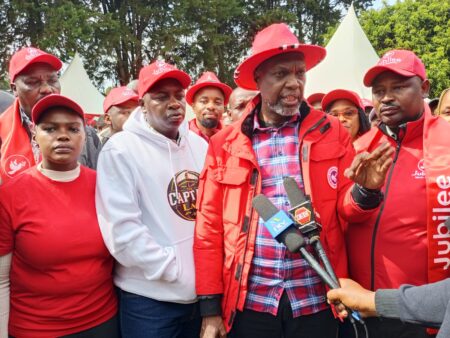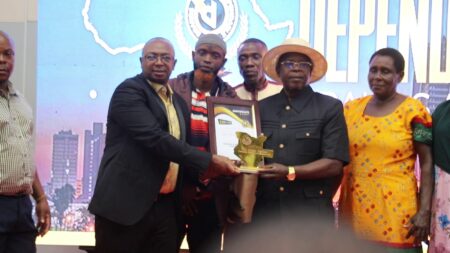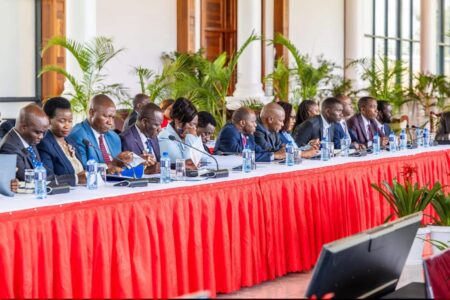




Kiambu Woman Representative Anne Wamuratha has stepped up her grassroots empowerment campaign, distributing income-generating equipment and welfare support to community groups across the county in what she says is an effort to move residents from dependency to sustainable livelihoods.
The latest initiatives have targeted boda boda operators, welfare groups, traders, salonists, barbers and elderly residents, with Wamuratha arguing that political leadership should be measured by tangible interventions that improve household incomes and strengthen community organisations.
In Ndumberi, Wamuratha handed over a tent and 100 chairs to the Kiambu County Boda Boda Group, saying the equipment would support the riders’ activities and enhance their unity.
She also delivered a similar package to Umoja Welfare Group in Lari Constituency, where members received a tent and 100 chairs.
The interventions come at a time when boda boda operators and small community-based groups remain a critical part of Kenya’s informal economy, providing employment and income for thousands of households amid rising living costs and limited formal job opportunities.
For many such groups, tents and chairs are not merely welfare items. They can provide a source of income through hiring out equipment for weddings, funerals, meetings and other social functions, potentially helping groups generate revenue and build financial resilience.
Wamuratha said the approach was intended to promote empowerment rather than create long-term dependency on political support.
“Change is temporary. Empowerment is forever,” she said, emphasising the need for interventions that give communities the means to improve their economic circumstances.
The Woman Representative has also linked her empowerment agenda to grassroots participation, saying development decisions should reflect the priorities of residents at the local level.
Her message comes as political leaders increasingly face pressure to demonstrate the economic impact of public programmes, particularly at a time when unemployment, the high cost of living and shrinking household purchasing power remain major concerns for Kenyan families.
In Cianda Ward, the empowerment drive took a different form when residents of Kawaida received support during the memorial service of the late Sarah Wangari Chege, popularly known as Wakahiro.
Wamuratha described Ms Chege as a politician and grassroots mobiliser who worked with political leaders as a crowd organiser. She said the decision to support residents of her home area was meant to honour her legacy while addressing some of the immediate economic needs of the community.
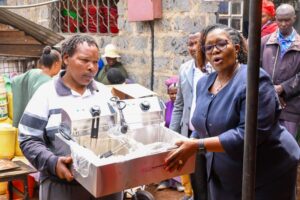
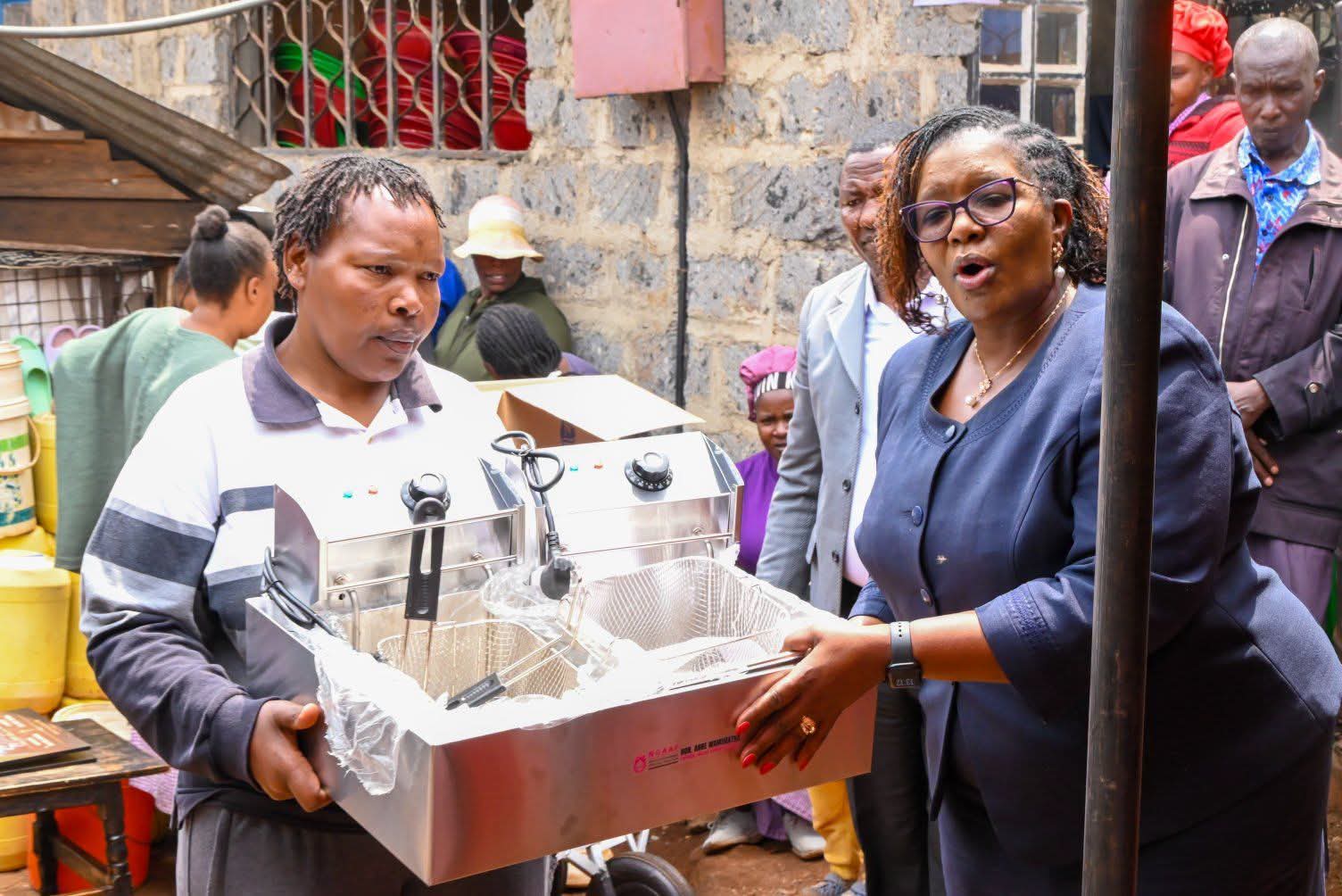
Through the National Government Affirmative Action Fund (NGAAF), residents received blankets for elderly people as well as equipment intended to support small businesses.
The beneficiaries included salon operators, barbers and small-scale food vendors, who received items such as UV machines, shaving machines, blow dryers, hair dryers, chips cutters and chips fryers.
Market and boda boda umbrellas were also distributed, according to the Woman Representative.
The interventions point to an increasingly prominent role of small enterprises and informal businesses in the fight against unemployment, particularly among young people and women.
For a salonist, barber or food vendor, a machine or piece of equipment can mean the difference between remaining unemployed and starting a modest business. Similarly, umbrellas for market traders and boda boda operators can improve working conditions while potentially creating a modest asset base for beneficiaries.
Wamuratha said her empowerment programmes were designed to reach communities without discrimination, arguing that government resources and affirmative action programmes should benefit residents based on need rather than political affiliation.
“We change lives and transform status without segregation,” she said.
She has also promoted a model of grassroots decision-making in which residents participate in identifying the challenges facing their communities and determining the interventions they consider most urgent.
The approach places local empowerment at the centre of the political debate in Kiambu, where leaders are under growing scrutiny over whether public resources and government programmes are translating into jobs, business opportunities and improved living standards.
The distribution of equipment and welfare items is likely to remain a significant feature of grassroots politics ahead of the 2027 General Election, with politicians seeking to demonstrate their record of delivery and connect national and county programmes to the daily economic realities of voters.
For Wamuratha, however, the interventions are part of a broader argument that political leadership should be judged not only by promises made during campaigns but by whether those promises result in practical benefits for communities.
Her message to beneficiaries has been consistent: empowerment should be about creating capacity, income opportunities and independence rather than fostering permanent reliance on political leaders.
As economic pressures continue to weigh on households, the effectiveness of such grassroots programmes will ultimately be measured by whether beneficiaries can turn the support into sustainable businesses and stronger community organisations.
The challenge, therefore, extends beyond the handover ceremonies. It is whether the equipment and other forms of support can translate into lasting economic opportunities, higher household incomes and a more resilient grassroots economy in Kiambu.