




President William Ruto has honoured a team of Kenyan students and lecturers who made history at the 2026 Huawei Global ICT Competition, in a performance the government says underscores the country’s growing strength in digital skills and innovation.
Kenya emerged among the leading performers at the global contest in Shenzhen, China, with three teams reaching the finals and securing top honours in the highly competitive technology challenge.
The country’s biggest triumph came in the Cloud Track, where Team Kenya won the Grand Prize—the highest award in the competition and the country’s first since it began participating in the contest in 2019.
The Network Track team won the Second Prize, while an all-women Computing team from Jomo Kenyatta University of Agriculture and Technology (JKUAT) also took Second Prize and received the prestigious Women in Tech Award.
The winners were among nine students and three lecturers who represented Kenya at the global finals and were hosted by President Ruto at State House, Nairobi.
The achievement has been hailed as a major boost to Kenya’s efforts to develop the specialised skills required to power an increasingly digital economy, including cloud computing, artificial intelligence, cybersecurity, networking and wireless technologies.
Information, Communications and the Digital Economy Cabinet Secretary William Kabogo said the President personally presented awards to the Kenyan finalists in recognition of their achievement.
Kabogo said the success demonstrated the breadth of Kenya’s emerging digital talent pool, noting that the winning teams were drawn from seven universities.
He also highlighted the participation of technical and vocational education and training institutions, saying a team from PC Kinyanjui Technical Training Institute became the first TVET team from Kenya to reach the regional finals.
The all-women JKUAT team’s double recognition, he said, was evidence of growing opportunities for women to participate and excel in technology-related fields.
The winning team included Machakos University lecturer Franklin Mutisya, Denzel Nzinga of Multimedia University, Robert Wambua of Kenyatta University and Joy Wairimu of the Co-operative University of Kenya.
Their expertise in networking, cybersecurity and wireless technologies comes at a time when Kenya is seeking to strengthen the resilience and security of its digital infrastructure as more government, business and financial services move online.
President Ruto’s recognition of the winners also comes as the government intensifies efforts to position digital skills and technology at the centre of economic transformation.
According to the government, the Digital Superhighway Programme has so far seen an additional 37,000 kilometres of fibre-optic cable deployed, while hundreds of digital hubs have been established across the country.
More than 1.9 million Kenyans have also been trained in digital skills, with the government saying the initiatives have contributed to the creation of more than 350,000 digital jobs.
The number of government services available online has also risen sharply, from about 350 in 2022 to 25,000, reflecting the administration’s push to digitise public services and reduce the cost and time of accessing government services.
Kabogo said the government would continue expanding digital skills programmes to universities, colleges and TVET institutions to ensure that more young people can participate in the digital economy.
He encouraged students to register for the 11th edition of the Huawei ICT Competition, saying Kenya had become the first country globally to open registration for the new competition.
“I encourage you to sign up and compete,” Kabogo said, urging students to take advantage of opportunities presented by the growing technology sector.
He thanked Huawei Technologies, the Chinese Embassy, university vice-chancellors, TVET principals and lecturers for supporting the development of Kenya’s digital talent.
The government’s digital agenda is also increasingly focusing on cloud computing and artificial intelligence as critical components of public-sector transformation.
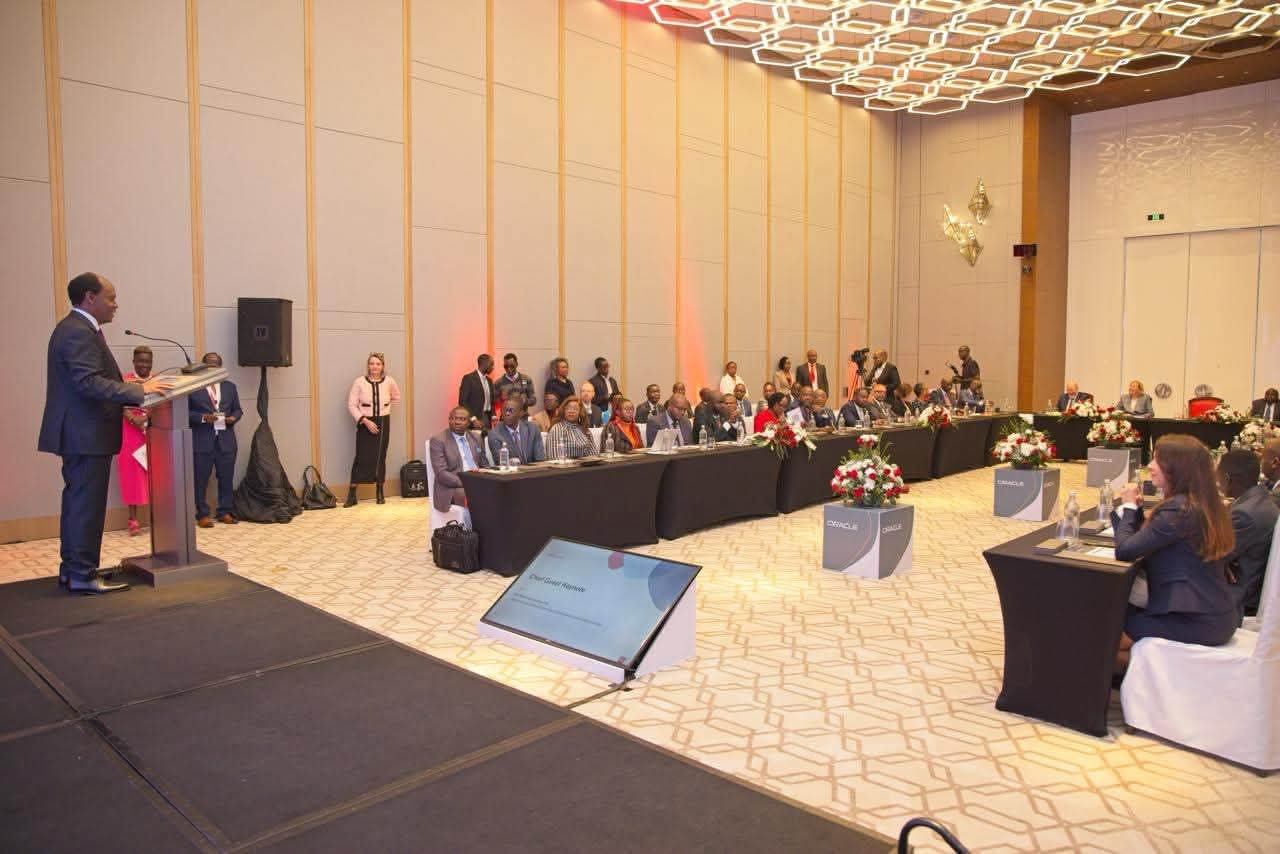
Kabogo separately joined government officials, development partners and technology experts at the Oracle Public Sector Ministerial and Senior Leadership Summit, where discussions centred on the use of cloud technology and AI to improve public service delivery.
The summit explored practical and scalable technologies that could strengthen government operations, promote innovation and make public services more accessible and responsive to citizens.
Kabogo said strategic partnerships with global technology companies such as Oracle were important in building secure and efficient digital infrastructure while safeguarding data sovereignty and promoting responsible adoption of AI.
He said the government remained committed to implementing its Cloud Policy, expanding digital skills and modernising public services while creating an environment capable of attracting technology investment and supporting innovation.
The two developments underline the growing importance of digital infrastructure and human capital in Kenya’s economic strategy, with the government betting on technology to create jobs, improve service delivery and open new opportunities for young people.
The success of the Huawei competition finalists, officials said, offers a glimpse of the talent available to drive that transformation—provided investment in skills, infrastructure and innovation is sustained.