


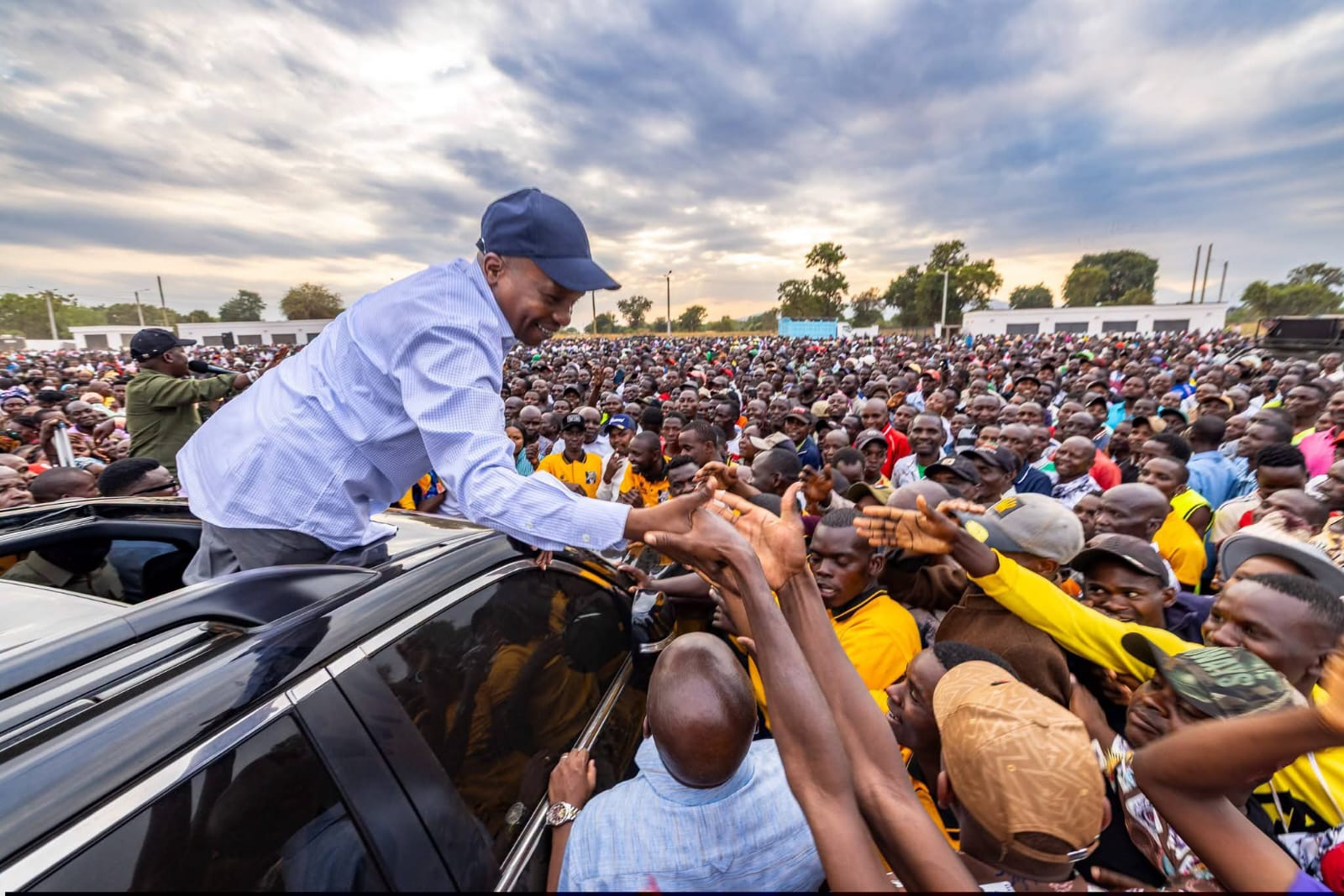
Deputy President Kithure Kindiki has challenged Kenyans to look beyond the 2027 General Election and support President William Ruto’s proposed Vision 2060, warning that excessive focus on short-term political contests could derail the country’s long-term development ambitions.
Kindiki said the next election would last only a day, but decisions made by the current generation would shape Kenya’s economic fortunes and determine the quality of life of millions of citizens for decades to come.
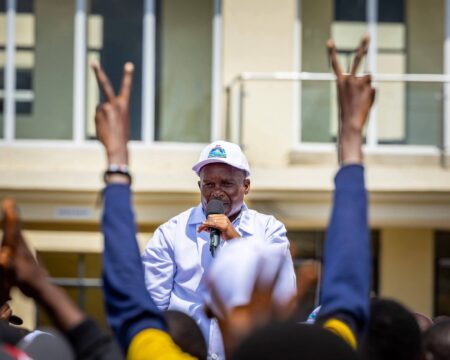
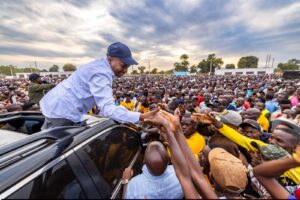
Speaking during an interaction with neighbours at Irunduni in Tharaka Nithi County on Sunday, the Deputy President described President Ruto’s planned national conversation on the country’s long-term future as a profound undertaking that would have consequences for generations yet unborn.
He said Vision 2060 should not be reduced to a political slogan or viewed through the narrow lens of the 2027 succession battle.
“Next year’s elections will come and go. There will be a winner, and there will be someone who does not win. Both are Kenyans,” Dr Kindiki said, urging politicians to stop politicising every national conversation.
The Deputy President’s remarks come as political realignments gather pace ahead of the 2027 elections, with the future of the Kenya Kwanza administration and President Ruto’s re-election prospects already dominating political debate.
Kindiki sought to shift the focus from electoral politics to the government’s development record, arguing that the administration should be judged by the projects it is implementing and its plans for the country’s economic transformation.
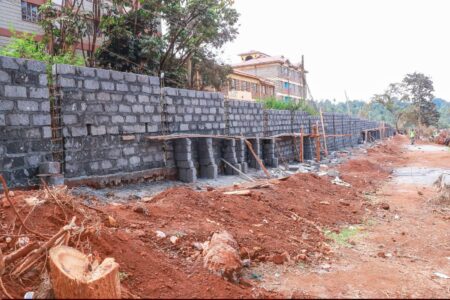
He cited infrastructure as one of the key areas where the government was seeking to demonstrate its record, saying more than 6,000 kilometres of stalled road projects were being revived after the government cleared Sh177 billion in pending bills owed to contractors.
In Tharaka Nithi, he pointed to the Mioponi-Mukothima-Gachiongo-Gatunga road, where he said 15 kilometres had been completed.
The government, he added, was also implementing a programme to establish 600 modern markets across the country, with facilities already completed in Chuka, Chogoria and Gatunga.
The projects, he said, were part of a broader development strategy aimed at expanding economic opportunities and ensuring that public investment was distributed across the country.
“The Government continues to pursue an equitable and inclusive development agenda that leaves no part of Kenya behind,” Dr Kindiki said.
He said investment in roads, electricity, markets, healthcare, education and other sectors was being pursued as part of efforts to open up new economic frontiers and create opportunities for Kenyans.
But the Deputy President’s message was also sharply political, as he took aim at critics calling for President Ruto to serve only one term and political actors seeking to regain influence in the Mt Kenya region.
“Give us time,” Dr Kindiki said, challenging the administration’s critics to compare their own records in government with the Kenya Kwanza administration’s development agenda.
He accused some political leaders who had occupied senior government positions for decades of failing to deliver development commensurate with the opportunities they had enjoyed.
The remarks are likely to deepen the political contest over Mt Kenya, a region that played a critical role in the 2022 presidential election but has since witnessed growing debate over its political direction ahead of 2027.
Dr Kindiki, however, dismissed attempts to frame development and national politics along ethnic lines, saying the government’s approach was based on equitable distribution of resources and opportunities.
He said the administration was committed to ensuring that Kenyans, regardless of their region, had access to infrastructure, electricity, water, markets, jobs, healthcare and education.
The Deputy President also sought to reassure government supporters amid renewed political manoeuvring, telling them there was no reason to panic as the administration continued implementing its agenda.
He said the debate over Kenya’s future should not be allowed to become hostage to the 2027 election.
“Vision 2060 is not about next year’s elections. It is about the future of Kenya, the future of our children and the future of our grandchildren,” he said.
The proposed long-term vision is expected to trigger a national debate on the policies and investments required to transform Kenya into a high-income economy.
For the Ruto administration, the debate provides an opportunity to frame its case for continuity around long-term economic transformation rather than the immediate political calculations of 2027.
For the opposition and government critics, however, the challenge is likely to be whether the administration can demonstrate tangible improvements in household incomes, job creation, cost of living and public services before asking Kenyans to buy into an ambitious long-term blueprint.
Dr Kindiki said the national conversation on the priorities of the long-term vision would be launched next week, urging Kenyans to participate in shaping the country’s future rather than allowing political divisions to dominate the national agenda.
“Don’t bring political divisions. Don’t politicise everything,” he said.
He argued that Kenya’s transformation from a developing economy into a wealthy and globally competitive nation would require consistency in policy, investment and development beyond individual election cycles.
The Deputy President’s appeal effectively places the 2027 political contest against a broader question: whether Kenya can maintain a stable development trajectory and build the institutions, infrastructure and human capital required to compete with economies such as Singapore, Malaysia, South Korea and China.
“Next year’s elections will come and go,” he said. “But the decisions we make today will determine the future of Kenya.”