


Deputy President Kithure Kindiki has mounted a spirited defence of the Kenya Kwanza administration’s record, saying the Government has made significant progress in delivering on the manifesto that secured its election four years ago.
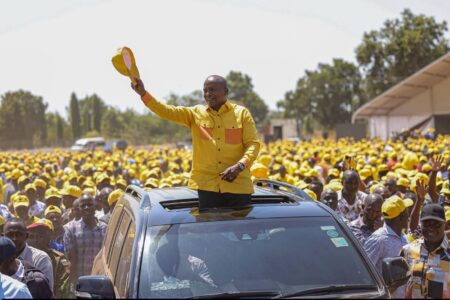
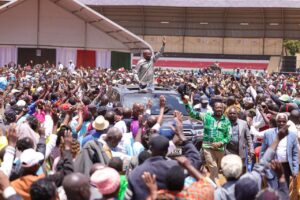
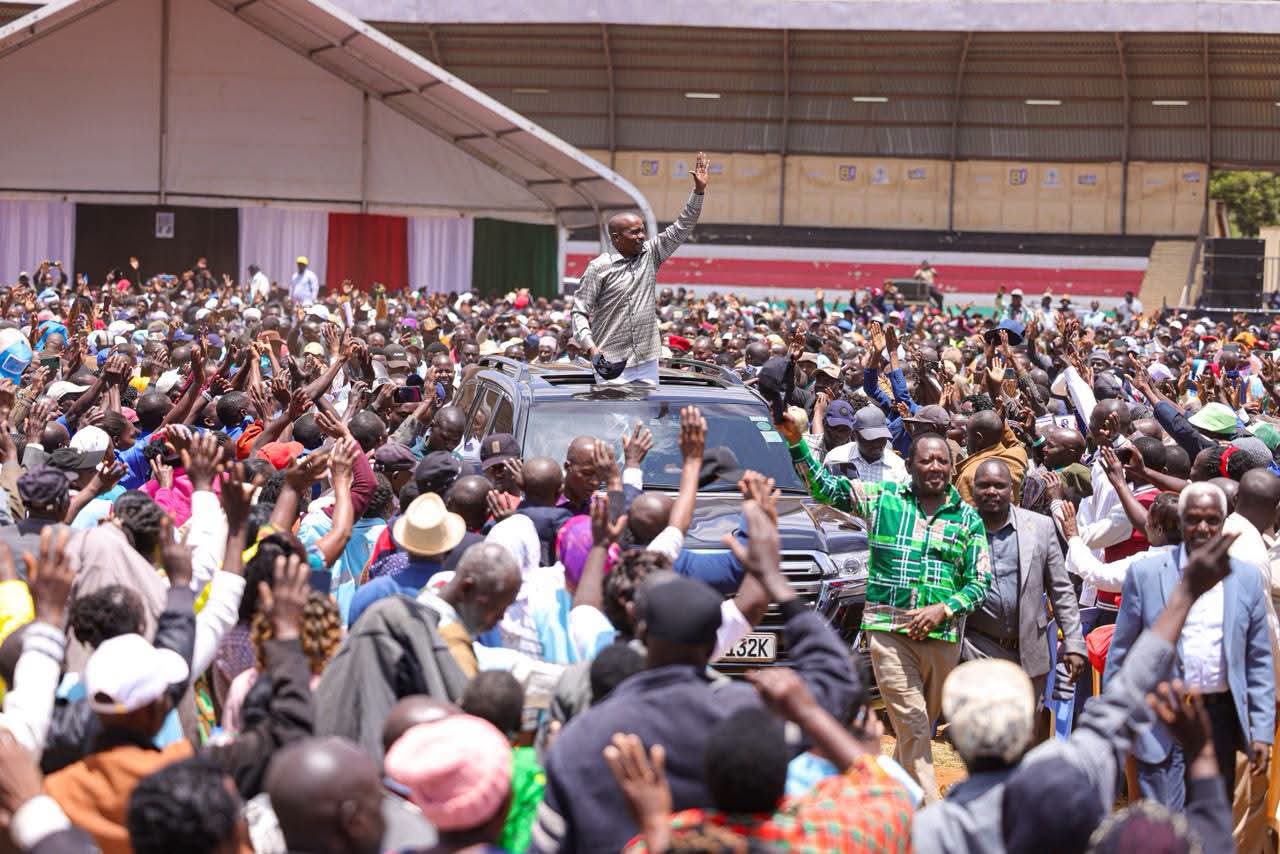
Addressing more than 40,000 grassroots leaders and opinion shapers from Meru, Tharaka Nithi, Embu, Kitui and Kirinyaga counties at Kinoru Stadium on Saturday, Prof. Kindiki said Kenya’s economy was steadily recovering, with key indicators pointing to improved economic stability.
He cited the strength of the shilling, easing inflation, an improved sovereign rating, stronger foreign-exchange reserves and growth in national savings as evidence that the economy was moving in the right direction.
“Kenya’s economic recovery is on course,” Prof. Kindiki said, linking the improvement to measures undertaken by President William Ruto’s administration since taking office.
The Deputy President also highlighted agriculture as one of the sectors where the Government believes it has made notable gains.
He pointed to reduced fertiliser prices and improved earnings from coffee, tea and milk producers, as well as lower costs of sexed semen for dairy breeding, arguing that the interventions were helping raise incomes for farming households.
The Government, he said, had also made progress in education, including streamlining the curriculum and employing an additional 100,000 teachers.
University and tertiary education, Dr Kindiki said, had expanded significantly, with enrolment in tertiary institutions doubling.
He acknowledged that the new university funding model was still being refined, but said the objective was to ensure all qualifying students received financial support to pursue higher education.
Healthcare featured prominently in his scorecard, with Prof. Kindiki saying the Government’s flagship Universal Health Coverage programme, Taifa Care, had expanded its reach from about eight million people under the previous arrangement to 32 million Kenyans.
The figure, he said, represented a major step towards the administration’s goal of making healthcare more accessible and affordable.
Prof. Kindiki also pointed to the Government’s housing and urban-development agenda, citing the construction of affordable homes, fresh-produce markets and student accommodation as part of efforts to transform Kenya’s built environment.
He said electricity connections had been extended to an additional 1.4 million households, while youth programmes were opening new avenues for employment and enterprise.
Among the initiatives he cited was the National Youth Opportunities Towards Advancement (NYOTA) programme, alongside Government efforts to expand overseas employment and digital jobs.
The Deputy President said the administration had also tackled one of the major obstacles to infrastructure development—the accumulation of unpaid bills to road contractors.
According to Prof. Kindiki, the Government had cleared Sh177 billion in road-construction debts that had contributed to the stalling of projects across the country since 2019.
The move, he said, had paved the way for the resumption of construction on about 6,000 kilometres of roads nationwide.
Major infrastructure projects are also being implemented, he said, including the Rironi-Mau Summit road, the planned new airport in Nairobi and railway expansion.
The Government is further constructing 32 new stadiums across the country, among them the flagship Talanta Stadium, as part of efforts to improve sports infrastructure and provide facilities for nurturing talent.
Prof. Kindiki said the newly established National Infrastructure Fund would provide an additional financing mechanism for strategic projects, particularly dams, roads and energy generation.
He said the investments were intended to strengthen Kenya’s infrastructure base and provide the power and connectivity needed to accelerate industrialisation and move the country towards first-world economic status within a generation.
The Deputy President’s address was attended by a large contingent of elected leaders from the five counties, underscoring the political and administrative significance of the Meru engagement.
Among those present were Meru Governor Mutuma M’Ethingia, Tharaka Nithi Governor Muthomi Njuki and Embu Governor Cecily Mbarire.
Senators Kathuri Murungi of Meru, Mwenda Gataya of Tharaka Nithi and Alexander Mundigi of Embu also attended.
The delegation included MPs Rahim Dawood of Imenti North, Mugambi Rindikiiri of Buuri, Moses Kirima of Imenti Central, Shadrack Mwiti of Imenti South, Dan Kiili of Igembe Central, Julius Taitumu of Igembe North, Mpuru Aburi of Tigania East, Dr John Mutunga of Tigania West, George Murugara of Tharaka, Nebert Muriuki of Mbeere South and Nominated MP Dorothy Muthoni.
Tharaka Nithi Woman Representative Susan Ngugi was also present, alongside county assembly speakers and MCAs.
Cabinet Secretary for Water, Sanitation and Irrigation Eric Mugaa and Principal Secretaries Patrick Kilemi of Cooperatives, Betsy Njagi of Blue Economy and Fisheries and Roseline Njogu of Diaspora Affairs were among senior Government officials at the event.
The Kinoru gathering provided Prof. Kindiki with a platform to present the administration’s development record directly to regional political, religious, business and community leaders, while seeking to reinforce support for its economic and infrastructure agenda.
His presentation comes as the Government increasingly seeks to demonstrate tangible progress on the promises contained in its election manifesto, with the 2027 General Election less than a year away.
Prof. Kindiki’s message was clear: the administration wants Kenyans to judge it not only by the challenges that remain, but also by the projects it says have already moved from policy commitments to implementation.