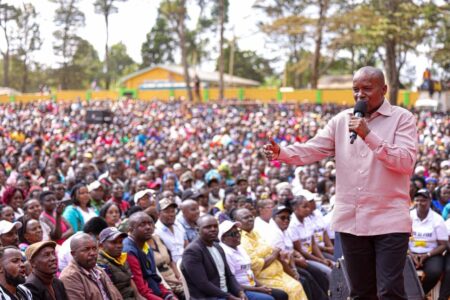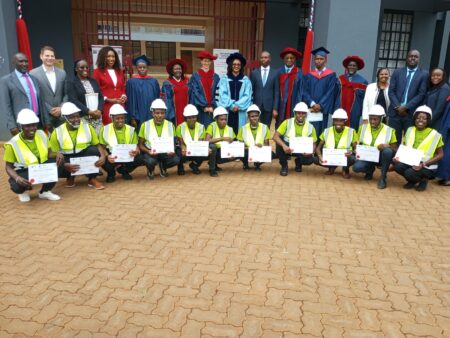







Youth empowerment must move beyond political promises and speeches to programmes that give young people practical skills, access to technology and opportunities to earn a living, Kiambu Town parliamentary aspirant Hezron Gachui has said.
Mr Gachui who is the Riabai ward MCA said the growing number of young people entering the labour market every year demanded a deliberate shift towards skills development, entrepreneurship, mentorship and digital literacy.
He said young people should not only be prepared to seek employment but also equipped to create jobs and build sustainable enterprises.
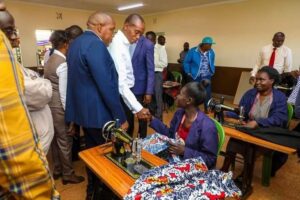
According to the politician, investment in technical and vocational education, digital training and practical mentorship can help bridge the gap between classroom education and the demands of the modern economy.
“Youth empowerment is not about promises; it is about creating opportunities and equipping young people with the skills they need to build their own future,” Mr Gachui said.
He said his focus was on initiatives that expose young people to technical skills, digital literacy, hands-on training and mentorship, arguing that such interventions can transform the way young people participate in the economy.
Mr Gachui said communities need to rethink approaches to youth development by placing greater emphasis on skills and economic independence rather than short-term assistance.
He argued that a young person equipped with marketable skills has a better chance of securing employment, starting a business or developing an innovative solution to a community problem.
“An empowered young person is better positioned to create employment, embrace technology and become self-reliant,” he said.
The remarks come at a time when unemployment, underemployment and the rising cost of living remain major concerns for young Kenyans, with many graduates struggling to transition from education into the workplace.
Mr Gachui said technical training could provide an important bridge by enabling young people to acquire competencies that are directly applicable in the workplace and in enterprise.
He said the emphasis should be placed on areas that are increasingly shaping the economy, including technology, digital services, technical trades and entrepreneurship.
The incoming Kiambu Town MP said youth empowerment programmes should connect learning with practical experience.
He said classroom knowledge becomes more valuable when young people are given an opportunity to apply it through hands-on training, mentorship, internships and enterprise development.
Such an approach, he argued, would help young people build confidence while gaining the experience required to compete for opportunities in an increasingly competitive labour market.
Mr Gachui said digital literacy should also form a central component of youth development, particularly as technology continues to transform employment, business and access to services.
Young people with digital skills, he noted, can tap into opportunities beyond their immediate geographical areas, including online work, digital entrepreneurship and technology-driven businesses.
He said the expansion of technology had created new possibilities for young people but warned that those without the necessary skills risked being left behind.
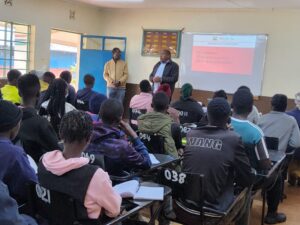
Mr Gachui said empowering young people should also involve creating an environment where they can turn ideas into viable businesses.
He said mentorship was particularly important in helping emerging entrepreneurs understand financial management, marketing, customer relations and business planning.
Many young people, he observed, have innovative ideas but lack the technical knowledge, networks and guidance required to convert those ideas into sustainable enterprises.
He said structured mentorship could help close that gap while encouraging young entrepreneurs to embrace innovation and responsible risk-taking.
The politician said youth-focused interventions should therefore bring together skills training, mentorship, technology and access to economic opportunities.
He said the ultimate objective should be to create a generation capable of competing locally and internationally.
> “Equip, empower and create a generation that can compete, innovate and earn.”
Mr Gachui said investment in young people should be viewed as a long-term development strategy rather than an isolated political programme.
He said an empowered youth population would have a direct impact on households and communities by improving incomes, supporting families and strengthening local economies.
“When we invest in our youth today, we invest in stronger families, better livelihoods and a brighter tomorrow for our community,” he said.
He said the youth should be regarded as partners in development and not merely beneficiaries of government or community programmes.
For Kiambu Town, he said, creating pathways for young people to acquire skills and participate meaningfully in the economy would be critical to the constituency’s future.
Mr Gachui said his vision was to see young people move from dependency to economic participation, with skills serving as the foundation for employment, entrepreneurship and innovation.
He said the success of youth empowerment should ultimately be measured by the number of young people who acquire skills, secure opportunities, establish enterprises and become capable of supporting themselves and their families.
As political activity gathers pace ahead of the 2027 General Election, the youth question is expected to remain central to debates over the future of constituencies such as Kiambu Town, where a large population of young people is seeking education, employment and opportunities to participate in the digital economy.
For Mr Gachui, the answer lies in investing in people particularly young people and giving them the tools to create their own opportunities rather than waiting for jobs to be created for them.