




The government has stepped up efforts to operationalise County Aggregation and Industrial Parks (CAIPs), with eight counties set to have their facilities equipped and commissioned before the end of the year.
Deputy President Kithure Kindiki said the government would work closely with county administrations to ensure the parks move beyond construction to full-scale production, arguing that their success will be critical to Kenya’s industrialisation and economic competitiveness.
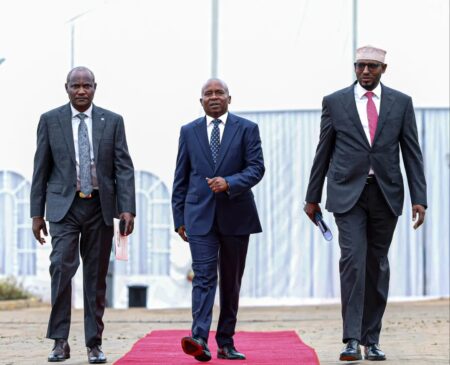
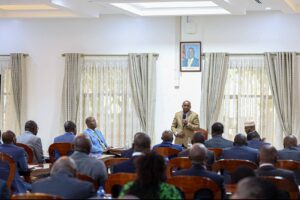
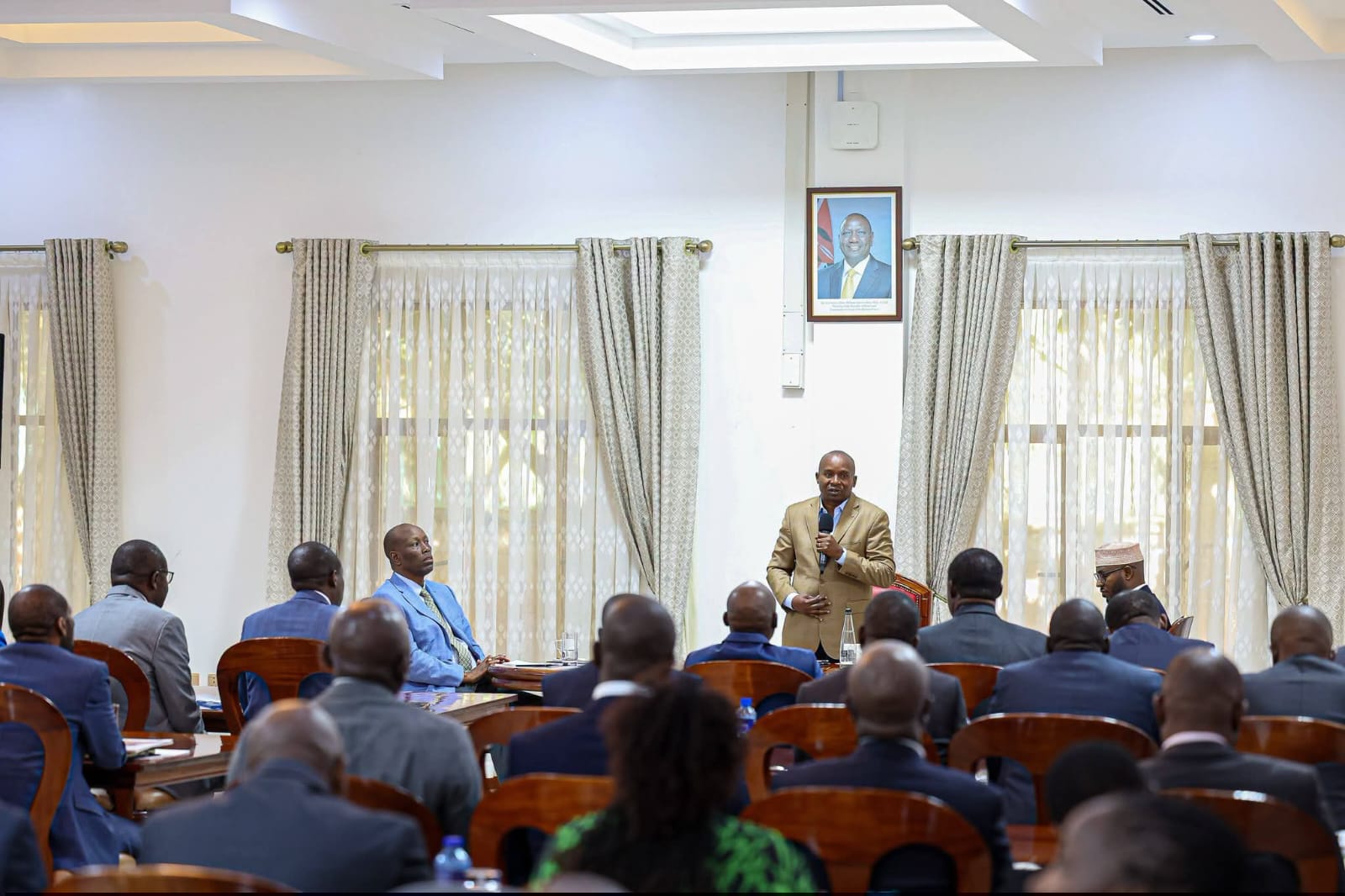
Prof Kindiki spoke on Wednesday at the Official Residence in Karen, Nairobi, during a meeting with Investments, Trade and Industry Cabinet Secretary Lee Kinyanjui, governors and officials from government agencies to review the progress of CAIPs across the country.
The eight counties that have made significant progress and are being prioritised for completion are Meru, Embu, Wajir, Garissa, Kirinyaga, Busia, Migori and Kisii*l.
“We want to request every county to prioritise not only the construction but also the operationalisation of the CAIPs as a way of making the counties competitive and also improving Kenya’s competitiveness,” Prof Kindiki said.
He said the eight counties would benefit from a centralised equipment procurement programme to enable the parks to begin operations once the remaining technical requirements are completed.
The government expects the equipment procurement process, including the installation of common-user facilities, to begin immediately.
Prof Kindiki said the Ministry of Investments, Trade and Industry and the respective county governments would undertake technical assessments within seven days to identify and resolve outstanding issues before the facilities are operationalised.
The government will also fast-track the provision of supporting infrastructure, including roads, electricity, water and waste management systems.
“Utility agencies of government—water, energy, housing and other infrastructure agencies—will work round the clock to provide the necessary support infrastructure,” he said.
The Deputy President cautioned against commissioning CAIPs that are merely completed physically but have no production taking place.
He said future commissioning would only take place once a facility was fully operational and capable of supporting actual production and investment.
“We have said that commissioning will be done at a point where the CAIP is operational. It will not be done for a CAIP that is not producing and is not operational,” he said.
The government is also banking on private-sector investment to drive the parks once they are completed.
Prof Kindiki said investors had already been mobilised in several counties and were ready to commence operations, while counties that had not completed the process of identifying investors and operators had been given more time to do so.
The CAIPs are designed to aggregate agricultural and other locally produced raw materials, facilitate value addition and create a platform for small-scale manufacturers to expand into larger industrial enterprises.
Prof Kindiki described the parks as a critical first step towards manufacturing, saying they would provide an avenue for farmers and producers to move away from selling raw materials and instead earn more through processing and value addition.
“CAIPs are the first step towards industrialisation. You aggregate, you add value and you make the first baby steps towards manufacturing,” he said.
He cited the economic transformation of countries such as South Korea, Malaysia and China, saying their growth was driven largely by value addition, cottage industries, manufacturing and the development of local production chains.
The parks are expected to serve as incubators for cottage industries by linking local production to processing and manufacturing.
In Busia, for example, the county is planning to use locally available cassava to produce starch and other products, alongside edible oils.
Such initiatives, Prof Kindiki said, would enable counties to build industries around products already being produced by local farmers while creating new markets and employment opportunities.
The government is also urging counties to take advantage of Kenya’s growing access to international markets by producing goods that can compete beyond the domestic market.
Prof Kindiki said Kenya had entered into several trade agreements with major markets in Europe and Asia, creating opportunities for locally manufactured and value-added products.
“We have signed many trade agreements that have opened market access for Kenyan products. Some of them are quota-free and others are tariff-free,” he said.
The government has consequently developed guidelines for the operationalisation of CAIPs to provide counties with a common framework and ensure that the facilities meet the required standards before they begin operations.
The guidelines are expected to create uniformity in the development and management of the parks while providing clarity on the infrastructure, equipment, investment and operational requirements.
Prof Kindiki urged counties still constructing their CAIPs to accelerate the process, saying the national government would provide the necessary support to ensure the programme succeeds.
The CAIP programme was included in the manifestos of the major political coalitions that contested the 2022 General Election, underscoring the broad political recognition of industrialisation and value addition as key drivers of economic growth.
The government now wants the parks to translate that policy commitment into functioning production centres across the country.
For counties, the success of CAIPs is expected to have a direct impact on local economies through increased markets for farmers, new manufacturing enterprises, job creation, expanded tax bases and growth of small and medium-sized businesses.
The eight facilities nearing completion will therefore serve as an early test of whether the ambitious county industrialisation programme can move from construction sites to productive enterprises.
Prof Kindiki said the ultimate goal was to ensure every county had a functioning industrial park capable of leveraging local resources and connecting producers to national and international markets.
“These are the engines that will take us to where we want Kenya to go,” he said.