




Kenya has opened public consultations on a proposed policy framework to regulate artificial intelligence (AI) and other emerging technologies, setting the stage for a national debate on innovation, digital rights and the country’s place in the global technology economy.
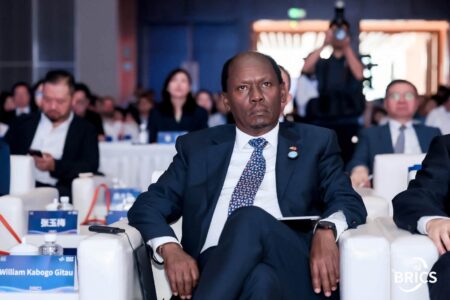
Information, Communications and the Digital Economy Cabinet Secretary William Kabogo said the government wants Kenyans to play a central role in determining how the country develops and uses AI, warning that the rapid technological transformation presents both opportunities and difficult policy choices.
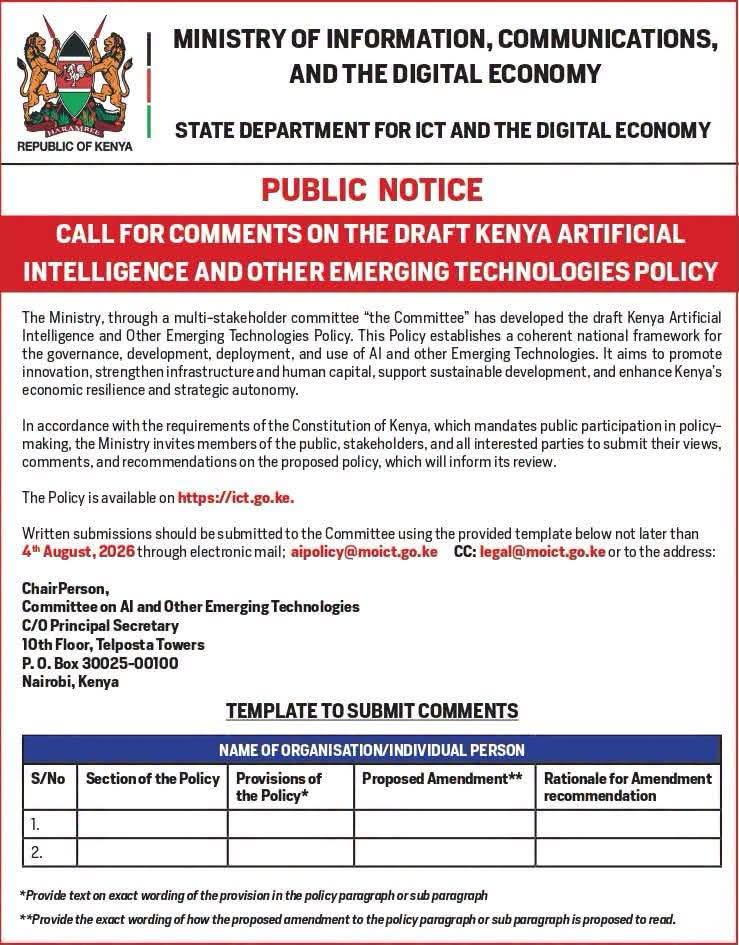
Mr Kabogo urged innovators, researchers, developers, entrepreneurs, academics, industry players, civil society organisations, students and members of the public to submit their views on the Draft Kenya Artificial Intelligence and Other Emerging Technologies Policy 2026.
He said the consultations would help shape a policy framework capable of balancing technological innovation with security, inclusion, protection of fundamental rights and national values.
“Every technological revolution presents a defining choice: to simply adopt innovation or to shape its future,” Mr Kabogo said.
He added that AI and other emerging technologies were already transforming economies, creating new industries and changing the way governments deliver services to citizens.
“Kenya has an opportunity to lead this transformation by developing an AI ecosystem that is innovative, inclusive, secure and anchored in our national values,” he said.
The proposed policy comes as countries across the world race to establish regulatory and institutional frameworks for AI, amid growing concerns over data protection, cybersecurity, misinformation, job displacement and the ethical use of automated systems.
For Kenya, the policy is expected to provide direction on how AI can be deployed to drive economic growth, improve public service delivery, strengthen research and innovation, and create opportunities for young people in the digital economy.
Mr Kabogo said the government was committed to ensuring that the country’s AI agenda was informed by broad public participation rather than being driven solely by policymakers and technology companies.
He said the views collected during the consultation process would inform decisions on how Kenya governs AI, promotes innovation, safeguards fundamental rights, develops digital skills and strengthens its competitiveness in the global digital economy.
The consultation also provides an opportunity for technology companies, universities and research institutions to propose measures that could help Kenya develop local AI capabilities and reduce dependence on imported technologies.
The government has increasingly positioned digital transformation and emerging technologies as key pillars of Kenya’s economic development strategy, with AI expected to play a growing role in sectors including healthcare, education, agriculture, financial services, manufacturing and public administration.
However, the rapid adoption of AI has also raised questions about privacy, accountability, transparency and the future of employment, particularly as businesses and public institutions embrace automation.
The proposed policy is therefore expected to influence how AI systems are developed, deployed and governed while creating an environment that encourages responsible innovation.
Mr Kabogo said the government’s objective was to establish a framework that would “empower innovation, inspire confidence and position Kenya as Africa’s leading digital economy.”
He urged Kenyans to take advantage of the consultation process and contribute ideas that reflect the country’s aspirations and challenges.
“The ideas we receive today will shape how Kenya governs AI, fosters innovation, protects fundamental rights, develops digital talent and strengthens our competitiveness in the global digital economy,” he said.
The Draft Kenya Artificial Intelligence and Other Emerging Technologies Policy 2026 has been made available for public review as the government seeks to gather views from stakeholders before finalising the framework.
Members of the public can access the draft policy and submit their comments through the Ministry of Information, Communications and the Digital Economy’s public participation platform.
The consultation is expected to give Kenyans an opportunity to influence the rules and priorities that will guide the country’s AI journey at a time when technological advances are rapidly reshaping economies and societies.
The government has urged stakeholders to participate actively, saying the success of Kenya’s AI agenda will depend not only on the policies adopted but also on the ability to build public trust, protect citizens’ rights and ensure that the benefits of emerging technologies are widely shared.
The outcome of the consultations could therefore have far-reaching implications for Kenya’s technology sector, digital workforce and wider economic strategy as the country seeks to establish itself as a regional hub for innovation and emerging technologies.