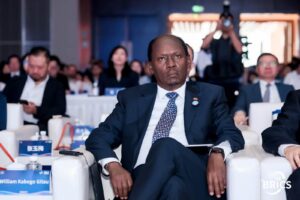




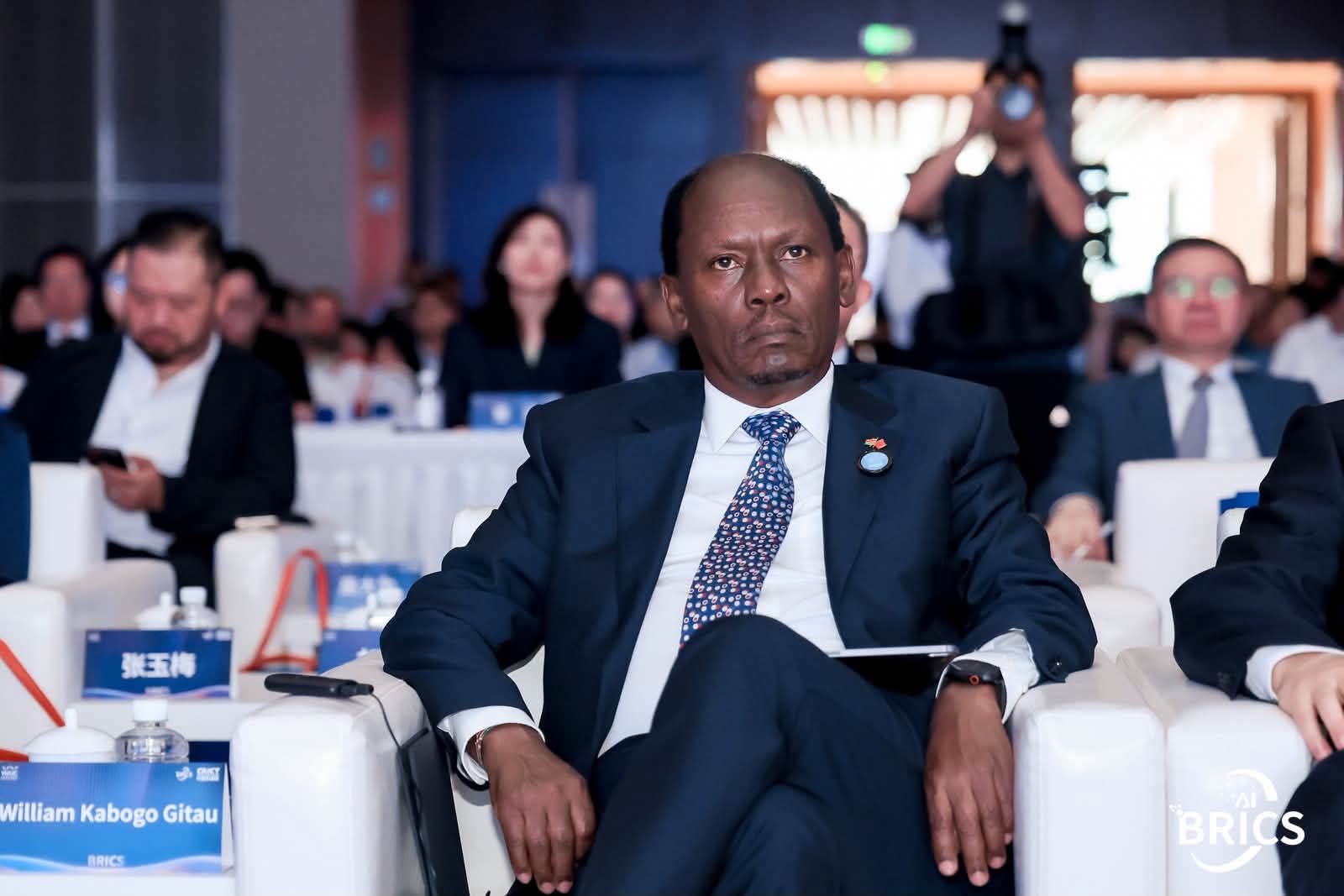
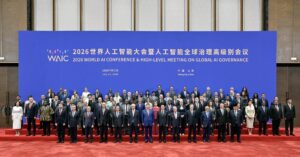
Kenya has strengthened its position as a leading voice for artificial intelligence (AI) development in Africa after signing the Agreement establishing the World Artificial Intelligence Cooperation Organization (WAICO) and calling for a more inclusive global AI governance framework during the 2026 World Artificial Intelligence Conference (WAIC) in Shanghai.
Cabinet Secretary for Information, Communications and the Digital Economy William Kabogo, who represented Kenya at the global summit, said the country joined the new international organization because it believes artificial intelligence should be treated as a global public good that benefits all humanity rather than a privilege reserved for a handful of technologically advanced nations.
Speaking at the prestigious “Win-Win BRICS” Forum on behalf of the Global South, Kabogo urged world leaders to move beyond policy discussions and focus on practical actions that expand AI access, strengthen local innovation and ensure developing countries participate meaningfully in shaping the future of the technology.
He noted that while Africa possesses the youngest population in the world and immense digital potential, significant barriers continue to limit the continent’s participation in the AI revolution.
According to the Cabinet Secretary, nearly 95 per cent of Africa’s AI talent lacks adequate computing power, while the continent attracts only one per cent of global venture capital, making it difficult for innovators to develop and scale world-class AI solutions.
Kabogo said bridging this gap requires deliberate investment in computing infrastructure, digital skills, research and innovation ecosystems, alongside partnerships that support local industries instead of merely creating new markets for foreign technologies.
“The challenge is clear. Moving from consensus to practice means widening access, building local capacity and prioritising real applications in agriculture, healthcare, education and public services,” he said.
He emphasized that Kenya’s participation in WAICO reflects the country’s commitment to ensuring artificial intelligence delivers tangible benefits to ordinary citizens.
Kabogo illustrated how AI can transform lives across Kenya, saying farmers in Nakuru could receive crop advisory services in Kiswahili through their mobile phones, health workers in Kisumu could use AI systems to triage patients more efficiently, while young software developers in Nairobi could gain affordable access to computing infrastructure and advanced AI models.
He said such practical applications demonstrate why AI should be accessible to all countries regardless of their level of economic development.
The Cabinet Secretary noted that Kenya is well positioned to become Africa’s leading AI hub owing to its strong digital innovation record and abundant renewable energy resources.
He pointed to Kenya’s pioneering role in mobile money innovation and the recently launched National Artificial Intelligence Strategy, which provides a roadmap for positioning the country as a continental centre for AI research, development and deployment.
Kabogo also highlighted Kenya’s growing clean energy capacity, particularly geothermal power, as a major competitive advantage for attracting investment in AI infrastructure.
He invited international technology firms and investors to establish data centres in Kenya, saying the country’s reliable renewable energy supply makes it an ideal destination for sustainable digital infrastructure.
He further noted that Kenya’s strategic location provides investors with access to the vast African Continental Free Trade Area (AfCFTA) market.
In a major diplomatic announcement, Kabogo revealed that Kenya has formally proposed to host the Eastern Africa Regional Office of the newly established World Artificial Intelligence Cooperation Organization.
He said the proposal demonstrates Kenya’s readiness to play a leadership role in coordinating AI collaboration across the region while promoting responsible, inclusive and sustainable AI development.
“The future of AI must be inclusive, and Kenya will help build it,” Kabogo declared.
The Cabinet Secretary reiterated that Kenya seeks partnerships focused on knowledge transfer, technology sharing, skills development and industrial growth rather than relationships centred solely on technology imports.
“Our position is simple. We want partnerships that train our people and grow our own industries, not arrangements that only sell to us,” he said.
Kabogo affirmed Kenya’s commitment to working closely with WAICO, the United Nations and other international partners to build a fair, inclusive and collaborative global AI ecosystem capable of addressing challenges in food security, healthcare, education, climate resilience and public service delivery.
The signing of the WAICO agreement and Kenya’s prominent role at the Shanghai conference underscore the country’s growing influence in international digital policy discussions as it seeks to position itself at the forefront of Africa’s artificial intelligence transformation while advocating for equitable participation by developing nations in the rapidly evolving global AI economy.