




Lucy Mukiri Anampiu has taken over as Chief Principal of Kiambu National Polytechnic, marking a new chapter for the institution as her predecessor, CPA Sammy K. Waititu, prepares to retire after more than six years at the helm.
Anampiu, who previously headed PC Kinyanjui Technical Training Institute and Mitunguu National Polytechnic, assumes leadership at a time when technical and vocational education and training (TVET) institutions are under increasing pressure to equip young people with practical skills that match the demands of the labour market.
Her appointment comes with a record of leadership that has earned her recognition in the technical education sector. She was recently named Outstanding Chief Principal of the Year 2026, an accolade that highlights her contribution to institutional leadership and the promotion of excellence in technical training.

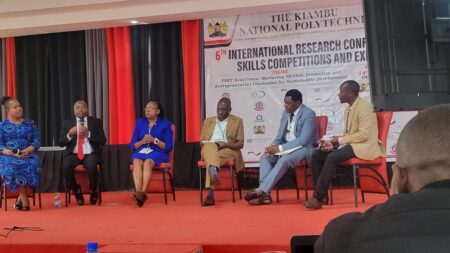
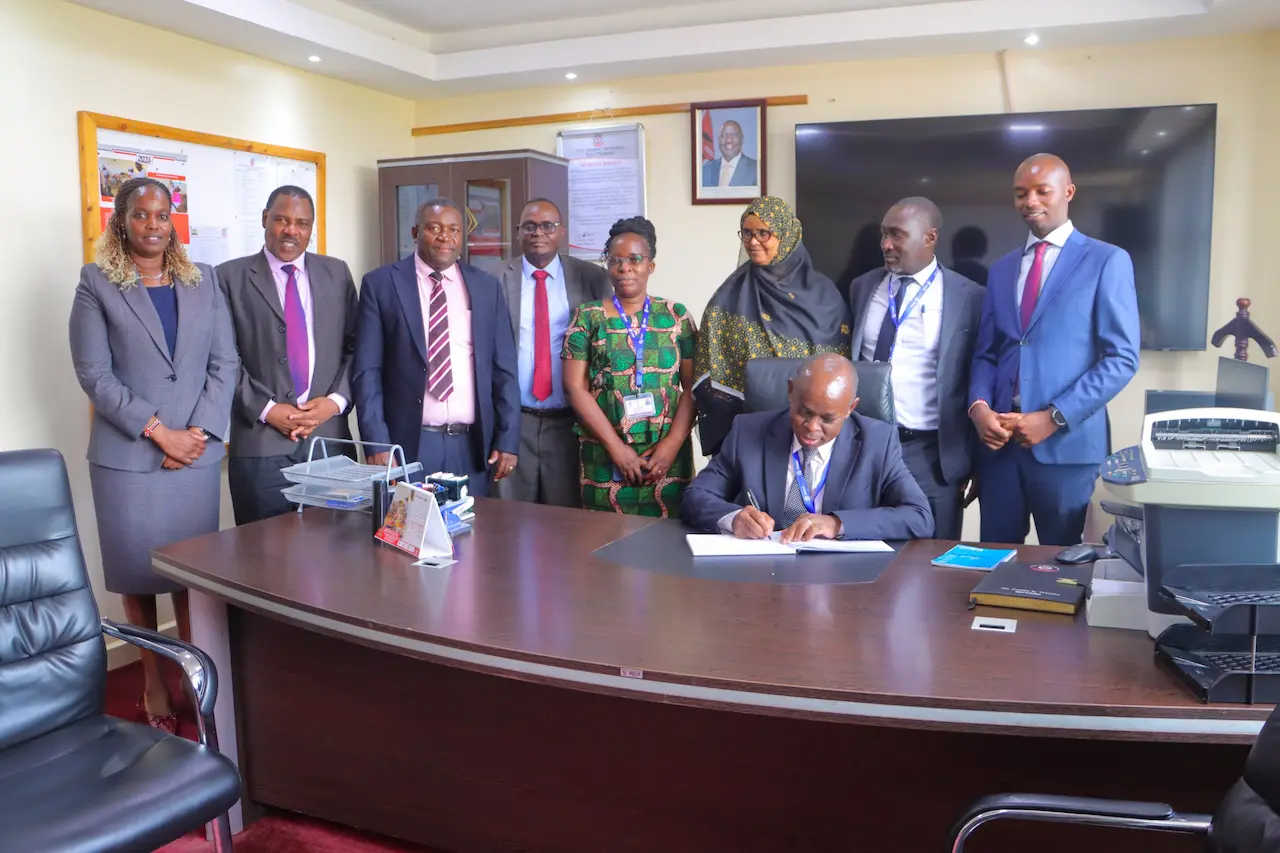
The leadership transition was formalised during a handover ceremony attended by senior officials from the State Department for Technical and Vocational Education and Training, the institution’s Governing Council and representatives of the Ministry of Education.
Those present included TVET Secretary Maryane, Director of Human Resource Dr Mosiori and Director of Quality Training Dr Guantai, alongside other government officials and institutional leaders.
The ceremony marked the end of Waititu’s tenure at the institution, during which he oversaw developments in academic performance, infrastructure and institutional growth.
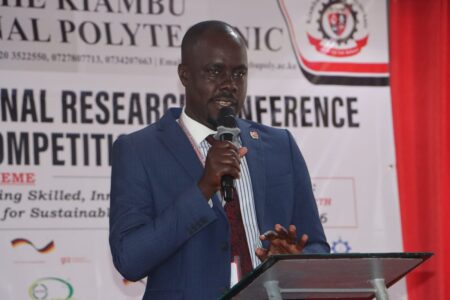
In a message to the management team, Deputy Principal in charge of Planning, Administration and Finance Isaac N. Mokaya commended the outgoing chief principal for his service and contribution to the institution.
Mokaya said the polytechnic had recorded significant progress under Waititu’s leadership, citing improvements in academic excellence, infrastructure development and the institution’s overall growth.
He thanked the outgoing principal for his dedication over the past six years and wished him well as he prepares to leave office and transition into retirement.
The management said a formal farewell ceremony would be organised in consultation with Anampiu and the Governing Council to give staff members and other stakeholders an opportunity to celebrate Waititu’s contribution and bid him farewell in person.
The transition also places Anampiu at the centre of efforts to sustain the institution’s progress while strengthening its role in delivering market oriented technical training.
As demand grows for skilled workers in areas such as technology, manufacturing, construction, business and other technical fields, national polytechnics have an increasingly important role in preparing graduates for employment, entrepreneurship and the changing needs of industry.
For Kiambu National Polytechnic, the change of leadership presents an opportunity to consolidate existing achievements, strengthen institutional management and deepen the link between training and economic development.
Anampiu’s experience at PC Kinyanjui Technical Training Institute and Mitunguu National Polytechnic is expected to inform her approach to managing the institution, although her specific priorities and plans for Kiambu National Polytechnic were not outlined in the handover announcement.
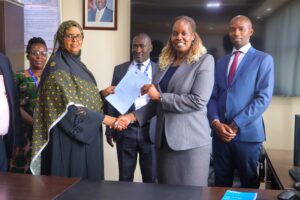
Her recognition as Outstanding Chief Principal of the Year 2026 adds to the significance of her appointment, placing renewed attention on leadership and performance within Kenya’s TVET sector.
Meanwhile, Waititu’s departure closes a chapter in the institution’s leadership history after more than six years of service. The management’s tribute acknowledged his contribution to the polytechnic’s development and expressed appreciation for the foundation he leaves behind.
The handover signals continuity in the institution’s administration, with the new chief principal expected to build on the work of her predecessor as Kiambu National Polytechnic pursues its mandate of providing quality technical and vocational education.
As the institution welcomes Anampiu, the immediate task will be to sustain academic standards, strengthen infrastructure and ensure that training remains responsive to the aspirations of students and the needs of employers.
The transition underscores the importance of stable leadership in technical institutions, where institutional growth depends not only on facilities and resources but also on effective management, quality teaching and the ability to adapt to emerging skills demands.