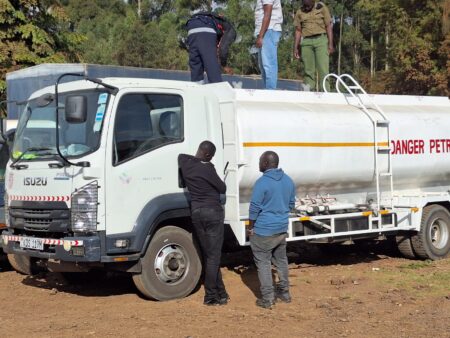







Kiambu Senator Karungo wa Thang’wa said corrupt government officials have failed to enforce safety protocols for industrial ethanol and methanol, leading to the sale of poisonous alcoholic beverages that have killed numerous Kenyans.
While speaking at a local radio station, the senator highlighted that industrial chemicals, which are exempt from strict alcohol control laws, are frequently diverted for illegal use in home-brewed liquor. He said the 2010 Alcohol Control Act does not adequately regulate these substances, creating a loophole that manufacturers exploit to produce toxic spirits.
These dangerous brews often contain denatured alcohol, which can cause blindness, organ failure, and death, according to Thang’wa. He said current regulations regarding the transportation and use of methanol are intended to ensure they are used for legitimate purposes like pharmacy chemicals and paint production, yet these safeguards are bypassed by corrupt individuals within the system.
Following a series of deaths linked to illicit brews in 2024, former Interior Cabinet Secretary Kithure Kindiki announced a policy requiring the Kenya Bureau of Standards to denature industrial ethanol and methanol. This process, often referred to as denaturing, involves adding toxins to the chemicals to render them undrinkable while still allowing them to function for industrial manufacturing.
Thang’wa said this government initiative mirrors historical strategies used in 1920s America, where officials deliberately poisoned industrial alcohol to discourage consumption during prohibition. He noted that despite the government’s efforts to mandate chemical additives, corrupt actors within the regulatory framework continue to allow the substances to leak into the informal market.
Investigations into the distribution chain suggest that the profit motive drives this illicit activity, with manufacturers often obtaining large-scale licenses from the national government. Thang’wa said that while local county governments issue standard business permits, the authority to license the manufacture of alcohol and the oversight provided by the Kenya Bureau of Standards rests with the national administration under President William Ruto.
The senator argued that the government must move beyond simply declaring products illegal and instead implement rigorous tracking systems to monitor the movement of these chemicals from the factory floor to legitimate businesses. He said the persistence of these toxic brews in the Mount Kenya region remains a public health crisis that requires more than policy rhetoric to resolve.
The persistent nature of the illegal alcohol trade, despite police holding exhibits of confiscated toxic chemicals, indicates a failure in enforcement. Thang”wa said the authorities must guarantee that legal alcohol is properly measured and safe for consumption, acknowledging that residents will likely continue to consume alcohol regardless of official pronouncements.
The lack of effective oversight allows manufacturers to continue operating with impunity, often under the protection of political influence. Thang’wa said the core issue is not just the existence of these chemicals, but the systemic corruption that permits their diversion into the consumer market for financial gain.