










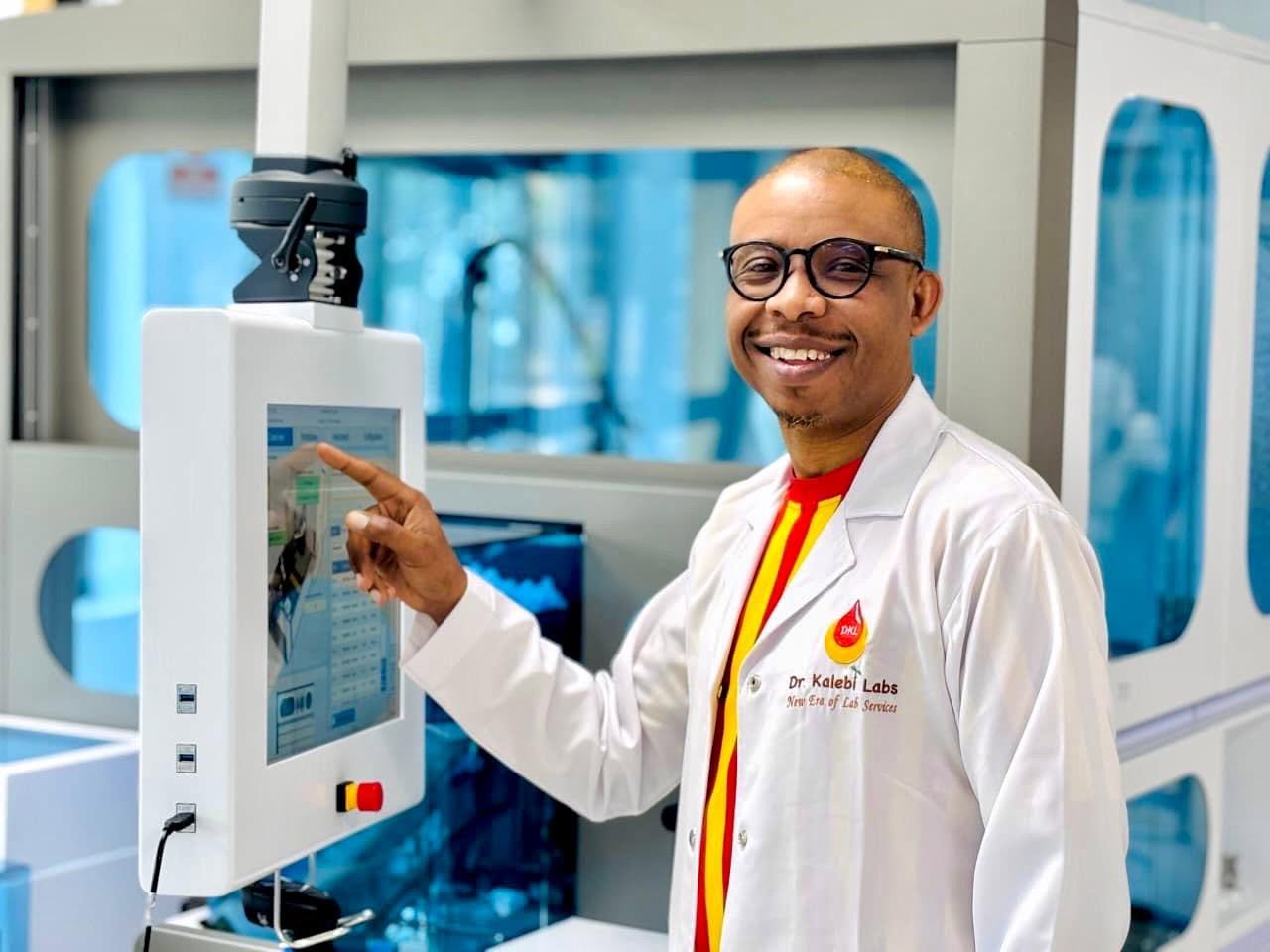
Kenyan pathologist Dr Ahmed Kalebi has earned international recognition after being named among 15 distinguished professionals inducted into the inaugural Hall of Fame by The Pathologist, a global publication covering pathology and laboratory medicine.
Dr Kalebi, who holds the national honour OGW, is the only African and the sole representative from a low or middle income country (LMIC) in the founding class, underscoring the growing contribution of African expertise to advances in medical diagnostics and laboratory science.
The publication describes the inaugural inductees as “fifteen giants of pathology”, bringing together professionals whose work has significantly influenced the development of the discipline and shaped modern approaches to disease diagnosis.
Among those honoured are the late Professor Christopher D.M. Fletcher (1958–2024), formerly of Harvard Medical School and Brigham and Women’s Hospital, and the late Professor Richard Scolyer AO (1966–2026), a globally renowned melanoma pathologist associated with the University of Sydney and Melanoma Institute Australia.
Dr Kalebi’s inclusion places him among an international group of scientists and medical professionals whose contributions have helped advance pathology and laboratory medicine across generations.
His induction also builds on a sustained record of international recognition, having featured six times on The Pathologist Power List in 2019, 2020, 2021, 2024, 2025 and 2026.
His latest appearance on the Power List placed him among 50 influential figures in global pathology and laboratory medicine, recognising his efforts to advance diagnostic technologies in Kenya and promote their responsible adoption in healthcare systems operating under financial and infrastructural constraints.
Reacting to the honour, Dr Kalebi described the induction as a deeply humbling moment, particularly because it places him alongside professionals whose work has helped shape the direction of modern pathology.
“I am deeply honoured and humbled to be inducted into the inaugural Hall of Fame alongside such illustrious and accomplished colleagues, including giants of our profession such as the late Professors Christopher Fletcher and Richard Scolyer,” he said.
He added that joining the distinguished group was an extraordinary privilege, given the lasting influence the inductees have had on the profession and the generations of pathologists they have inspired worldwide.
For Dr Kalebi, however, the recognition carries significance beyond personal achievement.
Being the only inductee from Africa and a low or middle income country among the 15 founding members, he said, highlights the need to recognise the scientific expertise, determination and potential of professionals working across the continent.
He expressed hope that the honour would help draw greater international attention to African pathology and laboratory medicine, fields that remain critical to improving healthcare outcomes but require sustained investment in technology, infrastructure and professional development.
The recognition comes just days after Dr Kalebi Labs (DKL), the specialised diagnostic laboratory he founded in Nairobi, marked its second anniversary on October 16, 2026.
Established in October 2024, the laboratory was conceived as a demonstration of how advanced diagnostic services can be developed and delivered locally, reducing the limitations associated with conducting sophisticated medical investigations in resource constrained environments.
DKL operates as a paperless, digital first referral laboratory, incorporating technologies that include total laboratory automation, digital pathology, molecular diagnostics, flow cytometry, next generation sequencing and artificial intelligence enabled systems.
The facility brings together a range of advanced diagnostic capabilities intended to improve the speed, accuracy and efficiency of laboratory investigations while supporting more informed clinical decisions.
Dr Kalebi established the laboratory to challenge the perception that cutting edge diagnostic technology can only be developed or effectively deployed in wealthier countries.
Through the facility, he seeks to demonstrate that African institutions can adopt sophisticated laboratory systems while building local expertise and delivering services that meet international standards.
The approach also reflects the broader importance of pathology in healthcare. Accurate laboratory diagnosis is essential in identifying diseases, guiding treatment decisions, monitoring patients and supporting the detection of conditions that might otherwise remain undiagnosed or be treated incorrectly.
As healthcare systems increasingly embrace precision medicine and technology driven diagnostics, the capacity of laboratories to provide reliable and timely results has become an important determinant of the quality of care patients receive.
Dr Kalebi credited the colleagues and professionals who have supported his career, saying the Hall of Fame recognition should also be shared with the team behind the Nairobi based laboratory.
“Whatever I have achieved over the years has been made possible by the dedication and support of many talented colleagues with whom I have had the privilege of working,” he said.
He praised the DKL team for demonstrating that sophisticated laboratory medicine can be established and sustained in Kenya, adding that their contribution had been central to the laboratory’s progress.
“Our remarkable team at DKL continues to demonstrate that world class, cutting edge laboratory medicine can be developed and delivered right here in Kenya. This recognition belongs to them as much as it does to me,” he said.
With more than two decades of experience spanning diagnostic pathology, medical education, professional leadership and laboratory innovation, Dr Kalebi has advocated greater recognition of pathology as a fundamental pillar of effective healthcare delivery.
His work has focused not only on advancing diagnostic capabilities but also on strengthening the place of laboratory medicine in healthcare planning and improving access to modern diagnostic services.
The Hall of Fame induction has also renewed attention on the need to expand opportunities for African scientists and medical professionals to participate in international scientific networks, research and innovation.
Dr Kalebi said the continent had the expertise needed to make meaningful contributions to global scientific progress but required stronger institutions and greater investment to translate that potential into improved healthcare services.
“Africa has exceptional talent in pathology, science and laboratory medicine. We must create more opportunities for that expertise to be recognised and celebrated internationally, while continuing to build the diagnostic capabilities, institutions and professional capacity that our healthcare systems urgently need at home,” he said.
His recognition comes at a time when African health systems continue to confront the challenge of improving access to quality diagnostics while balancing the cost of modern technology with the need to serve growing populations.
Strengthening laboratory infrastructure, training specialised professionals and investing in locally based diagnostic services are among the measures that can help reduce gaps in healthcare delivery and improve the continent’s capacity to respond to complex diseases.
For Kenya, Dr Kalebi’s induction provides an opportunity to highlight the role local specialists and institutions can play in advancing medical science beyond national borders.
The inaugural Hall of Fame honour marks another milestone in his professional journey, while placing a spotlight on the capacity of African pathology and laboratory medicine to contribute to global standards, innovation and patient care.
Beyond celebrating an individual career, the recognition reinforces the importance of building strong diagnostic institutions at home while ensuring that African scientific talent receives greater visibility on the international stage.