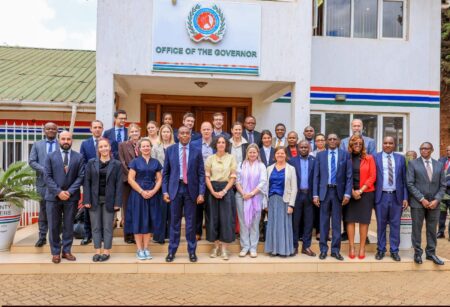







To safeguard lives and property against anticipated El Niño heavy rainfall, the Kiambu County government has rolled out an extensive preparedness and disaster mitigation plan. Key actions include mapping flood hotspots, inspecting water reservoirs, mobilizing emergency response units, and reinforcing public health contingency systems.

The initiatives are being directed by the Kiambu El Niño Preparedness Team, appointed by Governor Kimani Wamatangi. The task force has been conducting field assessments across the county to locate flood-prone zones and identify weather-related risks, recommending both immediate interventions and long-term solutions.
This proactive stance stems from the heavy rainfall experienced in 2023, which caused widespread destruction and washed away several homes in the region.
“In 2023, the county had a bad experience where we saw people’s houses being swept away by large volumes of water and this time, we do not want a repeat of the same. So, we have taken it upon ourselves to make sure we mitigate this before the rains,” said Governor Wamatangi.
To strengthen disaster response capabilities, the county has trained divers, firefighters, and specialized urban search-and-rescue teams. These personnel are equipped to respond to diverse emergencies—including structural collapses, landslides, fallen trees, road crashes, floods, and water rescue operations—while providing pre-hospital first aid.
Operations are being coordinated alongside key partners, including the National Disaster Management Unit, the Kenya Red Cross, and the Kenya Police Service.
Following past incidents where heavy rains compromised water bodies, county officers inspected approximately 45 public and private dams and water pans.
The evaluation confirmed that the vast majority of these reservoirs possess structural stability and adequate freeboard, placing them in the low-risk category. None were found to be in immediate danger of collapse. However, clearing spillways and monitoring freeboard levels remain priority maintenance tasks.
“We have been inspecting the dams and we have found that Kiambu dams are safe and low risk,” stated David Kuria, County Executive Committee Member (CECM) for Water, Environment, Natural Resources and Climate Change. “We are recommending that dam owners keep inspecting their dams and work on any major issues. Residents who live near the dams should also keep alert and raise any concerns.”
Countywide assessments in municipalities revealed that flooding is primarily driven by silted drainage networks, blocked waterways, and flat topography. Work is underway to desilt channels, unblock drains, and install culverts.
Mr. Kuria noted that desilting, culvert installation, and bridge construction are ongoing, routine county initiatives meant to ensure clear waterways year-round, rather than temporary measures limited to El Niño.
Additionally, the county has flagged low-lying settlements, flood-prone neighborhoods with poor drainage design, and areas near dams vulnerable to overspill for potential evacuation. Funding has been allocated across municipalities for disaster readiness, temporary evacuations, and relief aid for affected households.
The county continues to distribute weather advisories from the Kenya Meteorological Department to keep residents informed.
Concurrently, the Department of Health Services has activated measures to maintain healthcare delivery during heavy rains. Priorities include:
* Enhanced disease surveillance and early risk identification
* Reinforced ambulance and referral logistics
* Guaranteed stockpiles of essential medicines and safe drinking water supplies
* Specialized focus on maternal and newborn care, immunizations, chronic disease management, malaria, and diarrheal diseases
> “The county is well prepared in stocking of health products. The emergency operations centre is ready and has been preparing health workers for the same,” explained Dr. Maina, CECM for Health Services.
The central Emergency Operations Centre will manage alerts coming from medical facilities, community health units, and field units to ensure swift response to health threats.
Governor Wamatangi urged the public to cooperate with official safety guidance and avoid known high-risk zones.
“Residents of Kiambu should prepare for the rains by heeding alerts when they are issued, moving from low-lying areas prone to flooding, and contacting the county through the hotlines shared,” Governor Wamatangi advised.