






The Office of the Registrar of Political Parties (ORPP) has intensified civic education at the grassroots, urging Kenyans to understand their political rights and the processes governing political party membership as the country marks the International Day of Democracy.
The office says democracy goes beyond casting a ballot during elections, arguing that citizens need adequate information to participate meaningfully in political processes and make informed choices.

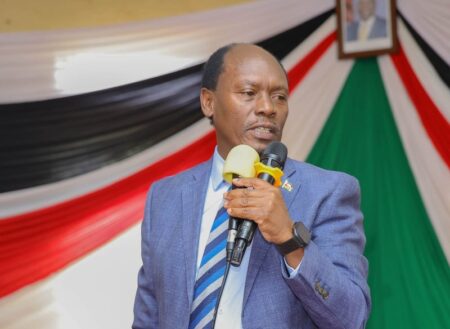
Speaking during a democracy sensitisation exercise in Kiambu County, ORPP Nairobi Metropolitan Regional Coordinator Lucy Kemunto said the office was using the month-long commemoration to take information on political rights and political processes closer to citizens.
The Nairobi Metropolitan region covers Nairobi, Kiambu and Kajiado counties.
Kemunto said the International Day of Democracy, marked on September 15, provided an opportunity to remind citizens that participation in a democratic system begins long before election day.
“Democracy is not just about voting. It is about people understanding the various political processes, understanding their rights and even making informed choices after having that information,” she said.
The ORPP’s outreach comes as political activity gradually intensifies ahead of the 2027 General Election, with political parties expected to recruit members, reorganise their structures and prepare for nominations and other electoral processes.
The office is mandated to register and regulate political parties and administer the Political Parties Fund. Its mandate is anchored in the Political Parties Act, 2011, which provides the legal and regulatory framework for political parties in Kenya.
A key component of the Kiambu exercise was helping members of the public establish whether their names appear in the membership records of political parties.
Kemunto said citizens should take advantage of the services provided by the ORPP to verify their political party membership status and understand the procedures for joining or leaving a political party.
She said the right to political participation includes the freedom to belong to a political party of one’s choice, remain outside political parties or participate in forming a party.

Under the Political Parties Act framework, a person cannot simultaneously be a member of more than one political party, while registration into a party requires the person’s consent. The ORPP is the custodian of political party membership data.
Kemunto clarified that the Registrar does not recruit members on behalf of political parties.
Instead, individual political parties recruit their members and submit the relevant information to the ORPP, which maintains and verifies the national political party membership database.
“Political parties are the ones that register people to their parties. As an office, we are the custodians of the membership data because we are the regulators,” she said.
The distinction is important because the ORPP has repeatedly stated that political parties are responsible for recruiting their own members, while the Registrar maintains the central membership records.
The office has also made it possible for citizens to access political party membership services through digital platforms.
Members of the public can dial *509# to check their membership status and access procedures for joining or resigning from a political party. The service is also available through ORPP’s online platforms and eCitizen.
The system is intended to give citizens greater control over their political party records, including instances where they may have been registered without their knowledge or consent.
ORPP records show that the office has been enhancing its political parties management information system and the *509# service, including work to make the system more user friendly and incorporate additional features relating to recruitment consent.
Kemunto encouraged residents who attended the Kiambu exercise to approach ORPP officials without fear whenever they need clarification about their political rights or membership status.
She said the office was an independent institution established to provide services within its legal mandate.
“We want to call out on the public and inform them that we are an independent office and we are here to give them the service that we are mandated to do,” she said.
The outreach is not limited to members of the public.
Kemunto said the ORPP regularly conducts sensitisation programmes targeting political parties to help them understand their legal obligations and internal structures.
The programmes are aimed at strengthening political parties as institutions and ensuring that their activities are conducted within the law.
The Political Parties Act requires parties to maintain membership records and provides for requirements relating to membership diversity, including regional and ethnic diversity, gender balance and representation of special interest groups.
The ORPP says it also supervises and monitors compliance by registered political parties, investigates complaints relating to compliance and coordinates capacity building programmes for parties.
The office has previously identified inadequate technological literacy, particularly in some rural areas, poor network coverage and system interruptions as challenges that can affect access to digital political party services.
The Kiambu exercise also placed emphasis on the principle that political participation must be based on an individual’s choice.
ORPP guidelines state that Article 38 of the Constitution gives citizens the right to make political choices, including forming or participating in forming a political party, participating in party activities, recruiting members or campaigning for a political party or cause.
The office has further provided mechanisms for people who wish to resign from parties.
According to ORPP, resignation can be initiated through established procedures, including the mobile service, online platforms or written notice, depending on the circumstances.
The Registrar’s role in maintaining an accurate membership database is particularly significant as political parties prepare for the 2027 election cycle.
The ORPP has already published notices relating to timelines and processes for the August 10, 2027 General Election.
For the office, however, the current democracy campaign is less about electioneering and more about ensuring citizens understand the democratic system in which they participate.
Kemunto said the grassroots campaign would continue throughout the month, with the office seeking to reach citizens with information on their rights, political processes and available services.
The message from the Registrar’s office is that an informed citizen is better placed to exercise political rights whether that means joining a party, remaining independent, resigning from an existing party or simply understanding how Kenya’s multiparty political system works.