



Deputy President Kithure Kindiki says the first eight County Aggregation and Industrial Parks will be operationalised before the end of the year, with value addition expected to create jobs, raise farmer incomes and drive manufacturing at the grassroots.
The Government has cleared key hurdles that had delayed the completion and operationalisation of County Aggregation and Industrial Parks (CAIPs), paving the way for the first eight facilities to begin operations before the end of the year.

Deputy President Kithure Kindiki said the parks will provide a new platform for farmers, livestock keepers and other producers to move beyond selling raw commodities and instead earn more from processing and value addition.
Speaking after receiving the final technical preparedness reports for the first cohort of eight CAIPs, Dr Kindiki said the facilities were being equipped for operationalisation, with specific value chains already identified for the initial phase.
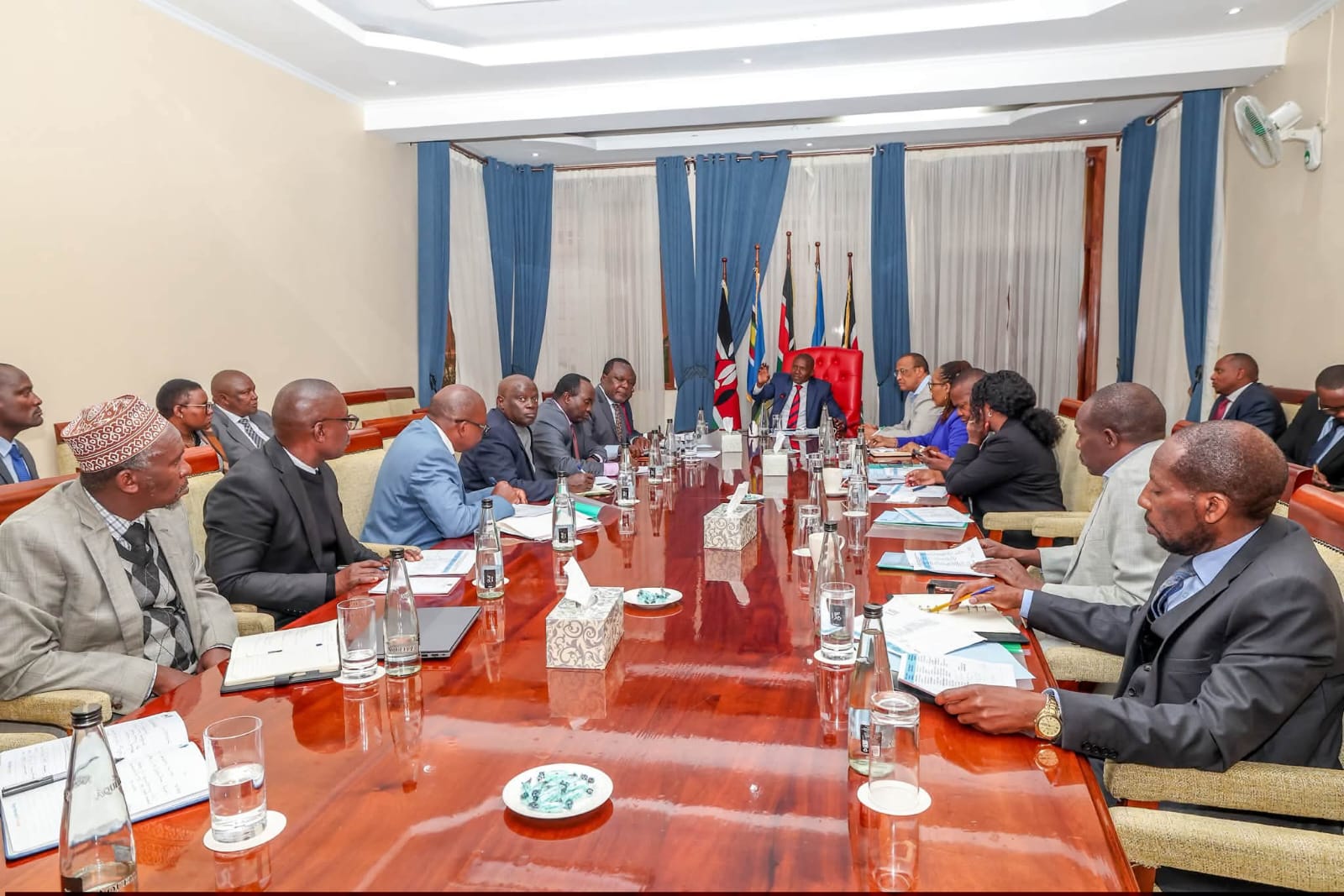
The Deputy President said a high-level meeting held at his official residence in Karen had helped unlock bottlenecks that had stalled completion, commissioning and operationalisation of the parks.
The first facility to be commissioned will be the Meru County Aggregation and Industrial Park, which is expected to be officially opened by President William Ruto this month.
It will be followed by seven other parks in Embu, Kirinyaga, Garissa, Wajir, Migori, Kisii and Busia before December.
The Government plans to commission another 13 CAIPs by March next year, bringing the number of operational parks under the first phase of the programme to 21.
The initiative is designed to decentralise industrialisation by taking manufacturing and value addition closer to areas where agricultural and livestock products are produced.
Under the initial arrangement, each park will concentrate on a specific value chain to establish a commercially viable operation before expanding into additional products.
Meru and Embu will initially focus on macadamia value addition, while Kirinyaga will process tomatoes into tomato paste.
Wajir will focus on leather and camel milk processing, Kisii will produce avocado oil, Busia will process cassava into starch, Garissa will concentrate on sunflower oil, while Migori will manufacture fish feed.
The strategy is intended to provide ready markets for farmers and livestock keepers while reducing post-harvest losses and dependence on the export of unprocessed agricultural commodities.
The parks are also expected to create employment opportunities in rural and peri-urban areas through processing, packaging, transportation, storage, logistics and other support industries.
For farmers, the success of the programme will depend heavily on the availability of adequate and affordable raw materials.
Dr Kindiki used the meeting to highlight Government interventions aimed at reducing the cost of agricultural inputs and encouraging increased production.
He cited reductions in the prices of certified seed and fertiliser, as well as lower costs of sexed semen, saying the measures were designed to increase production of crops, milk, meat and other commodities that will ultimately supply the CAIPs.
The Government’s broader objective is to link production at the farm level with industrial processing, creating a value chain in which farmers benefit not only from selling their produce but also from the growth of manufacturing around it.
The CAIPs therefore form part of the Government’s wider Bottom-Up Economic Transformation Agenda, which places agriculture, manufacturing, job creation and value addition at the centre of efforts to stimulate economic activity outside major urban centres.
Dr Kindiki said the parks should be viewed as engines of local economic development rather than simply industrial buildings.
Their sustainability, he said, would depend on reliable supply chains, sufficient production, efficient management and markets for finished products.
The Deputy President also used the occasion to give an update on the country’s food security situation and preparations for projected above-normal rains associated with the El Niño weather pattern.
He urged Kenyans to work closely with security, disaster management and other relevant authorities as the country prepares for potentially heavy rainfall.
Counties were asked to intensify preparedness measures at the local level, including clearing and unclogging drainage systems, identifying vulnerable areas and ensuring that residents receive timely safety information.
Dr Kindiki cautioned Kenyans against ignoring warnings and directives issued by authorities, saying early action would be critical in preventing avoidable loss of lives and destruction of property.
He said the national Government had put measures in place to cushion citizens against the effects of the anticipated rains but stressed that preparedness must also begin at the county and community levels.
The call comes as counties continue to grapple with the challenge of urban flooding, damaged roads, overflowing drainage systems and disruption of livelihoods during periods of heavy rainfall.
The Government’s approach is therefore expected to combine agricultural preparedness with disaster-risk management, particularly in areas vulnerable to flooding and other weather-related emergencies.
For the CAIPs, the immediate focus now shifts from construction and technical preparation to actual production.
The Government will be under pressure to ensure the parks do not become idle infrastructure but instead attract processors, secure raw materials and establish viable markets.
The success of the first eight facilities could determine the pace and credibility of the planned rollout of the additional 13 parks by March next year.
If effectively implemented, the programme could mark a significant shift in Kenya’s industrialisation model—moving value addition closer to farmers, creating jobs within counties and allowing rural producers to capture a larger share of the value generated from their commodities.
From macadamia in Meru and Embu to fish feed in Migori, cassava starch in Busia and camel milk and leather in Wajir, the Government hopes the parks will transform locally available resources into commercially valuable products while strengthening Kenya’s food security and manufacturing base.