




Deputy President Kithure Kindiki has described the government’s Taifa Care programme as Kenya’s most ambitious and consequential healthcare reform since independence, saying the country is on course to achieve universal health coverage.
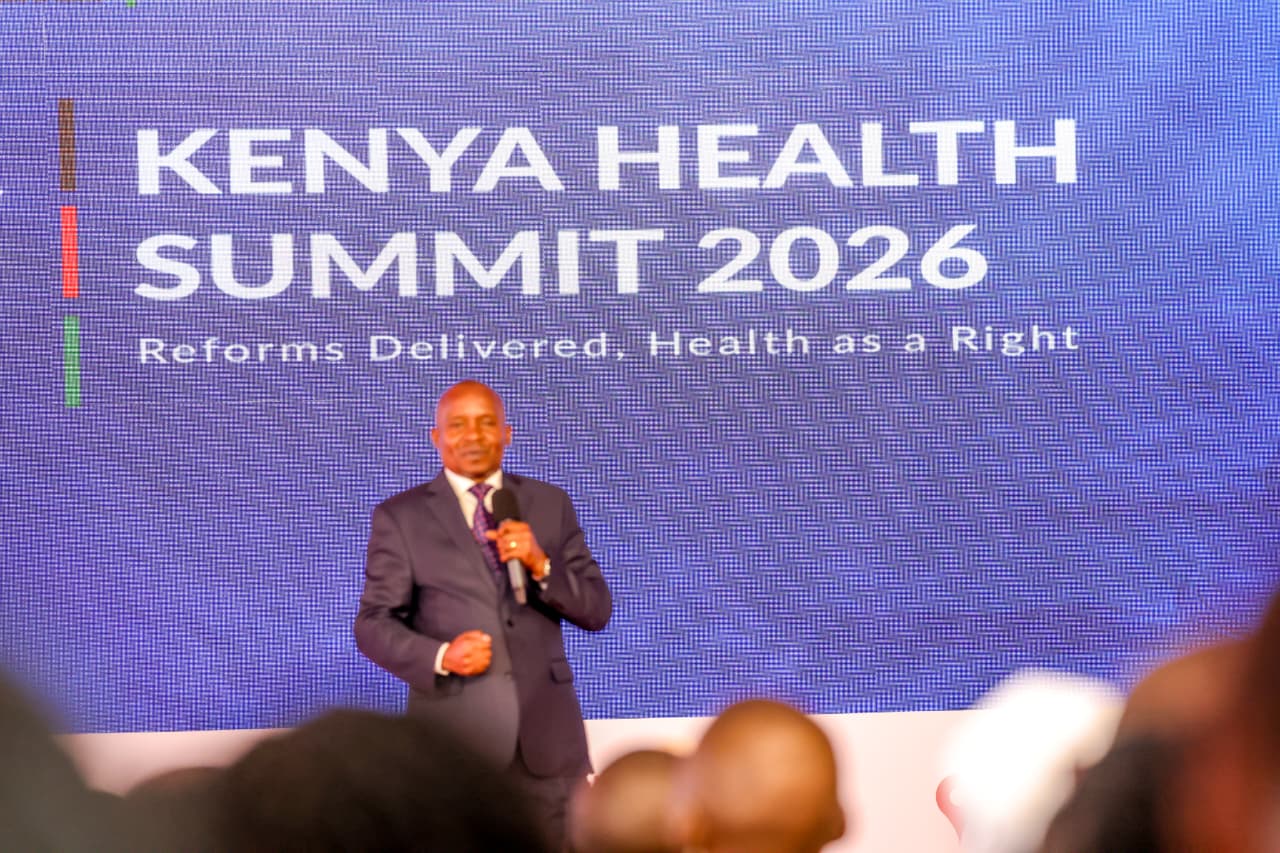
Speaking on Wednesday during the second and final day of the Kenya Health Summit at the Kenyatta International Convention Centre (KICC) in Nairobi, Prof Kindiki said 32 million Kenyans—nearly 60 per cent of the population—have already been registered under the Social Health Authority (SHA).
He said the Government was targeting 40 million registrations by the end of the year and hoped to have every Kenyan enrolled by August next year.
“It appeared impossible four years ago, but now healthcare universality is a possibility. We can smell it,” Prof Kindiki said.
The Deputy President said Taifa Care is built around five critical pillars: the people and healthcare workers, the right professionals, a sound legal framework, modern medical equipment and a reliable supply chain for medicines and other health commodities.
He, however, warned that the reforms would only succeed if the components worked as one system, with the patient at the centre.
“The equation of what must happen for the reforms in the health sector to deliver consistently to the people of Kenya is simple: the right health workers, the equipment with the right products and technologies, and the delivery of the right services at the right time,” he said.
Prof Kindiki said a doctor without medicine cannot treat a patient, while sophisticated equipment without trained personnel, maintenance and consumables cannot improve healthcare.
“Financing cannot improve health if the facility is not ready to deliver care,” he said, stressing that the performance of the health system should be judged by the reliability of the entire patient journey rather than isolated programmes.
The Deputy President singled out primary healthcare as the foundation of Taifa Care, saying county governments would remain central because they control most frontline health facilities and oversee Community Health Promoters (CHPs).
The Primary Healthcare Fund has received Sh27.4 billion and disbursed Sh23.3 billion to more than 9,300 Level Two and Level Three facilities, according to Prof Kindiki.
The funding has supported more than 20 million outpatient visits involving more than 15 million Kenyans.
Primary Care Networks have also increased from two pilot sites in 2022 to 278 across the country.
Prof Kindiki said the next challenge was to ensure that every shilling allocated to primary healthcare translated into better services and patient outcomes.
He called for close monitoring of medicine availability, waiting times, early diagnosis, maternal and child health outcomes and completed referrals.
“Primary healthcare must become the dependable front door of our health system—close to the people, capable of resolving most health needs and connected to higher levels of care when timely referral is necessary,” he said.
The Government has also sought to overhaul emergency medical response through the National Ambulance Dispatch Centre and the SHA 9-2-2 emergency lifeline.
Prof Kindiki said the system would provide a single national emergency number linking citizens to trained dispatchers, ambulances, appropriate healthcare facilities and financing for evacuation and the first 24 hours of emergency treatment.
He challenged counties to make the service dependable, with performance measured by response times, timely ambulance deployment, appropriate referrals and lives saved.
“In an emergency, geography and household income must not determine who survives,” he said.
The Deputy President said the National Equipment Service Programme (NESP) had deployed diagnostic and specialised medical equipment worth Sh9.8 billion to 239 Level Four and Level Five health facilities across 44 counties.
Equipment deployment to Level Three facilities with basic diagnostic capabilities is also being pursued.
The programme covers areas including diagnostic imaging, theatres, intensive care, laboratories and other specialised services.
But Prof Kindiki cautioned against measuring success by the number of machines delivered.
“Equipment delivery is not the same as service delivered,” he said, insisting that the Government must establish whether machines are operational, whether trained personnel are available, whether consumables are stocked and whether patients are receiving services on time.
He said more than half a million surgical procedures and over 50,000 cancer care services had been supported through the Social Health Insurance Fund and the Emergency, Chronic and Critical Illness Fund.
The DP called for complete healthcare pathways in which screening leads to early diagnosis, diagnosis to treatment and treatment to appropriate follow-up and rehabilitation.
“Our ambition is not just to own more machines. It is to shorten the distance, time and cost between a Kenyan and the care that can save their lives,” he said.
Prof Kindiki said the Government had made significant investments in human resources for health, including the deployment of 24,573 interns across all 47 counties since 2022.
It has also sponsored medical registrars for specialist training and committed to recruit an additional 5,000 nurses and midwives.
At the community level, 107,000 Community Health Promoters are serving as the first point of contact between households and the formal health system.
The Government, he said, was replenishing CHP kits while considering improvements to their monthly stipends.
Prof Kindiki said the country must move beyond short-term recruitment and develop a national workforce plan linking training, internship, recruitment, equitable deployment, career development and retention.
He listed primary healthcare, oncology, surgery, anaesthesia, emergency medicine, critical care, biomedical engineering and digital health among the areas requiring specialised skills as the health system evolves.
“A health system cannot perform consistently when its workforce is managed through periodic emergencies,” he said.
He also urged the Government and healthcare unions to maintain dialogue to prevent disruptions in service delivery.
“We cannot have a useful and progressive delivery system if our healthcare workers are disrupted from work,” Prof Kindiki said, describing health workers as a strategic national asset.
The Deputy President said medicine availability remained another crucial test for Taifa Care.
He reported that Kenya Medical Supplies Authority (KEMSA) order-fill rates had risen from 40 per cent to 91 per cent.
The national Government has provided KEMSA with Sh1.5 billion and facilitated access to a Sh10 billion line of credit to strengthen its operations.
Prof Kindiki said the next step was to create an end-to-end supply chain capable of anticipating shortages before facilities run out of essential commodities.
He called for national procurement, county obligations, distribution and facility inventory systems to operate as one transparent and accountable chain.
He also proposed closer integration between KEMSA’s digital supply-chain systems and the Digital Health Agency’s health information infrastructure.
“Supply chain and commodity data must be part of the whole under the Digital Health Agency,” he said.
The Government is also looking to expand local production of medicines, diagnostic devices and other medical products to reduce dependence on imports, create skilled jobs and turn health expenditure into domestic economic opportunities.
Prof Kindiki said Taifa Care was supported by a new legal framework comprising the Primary Health Care Act, Social Health Insurance Act, Digital Health Act and Facility Improvement Financing Act.
The laws have established the Social Health Authority and Digital Health Agency, alongside the Primary Healthcare Fund, Social Health Insurance Fund, Emergency, Chronic and Critical Illness Fund and Facility Improvement Fund.
He said digital technology would be the thread connecting the various components of the health system.
The Digital Health Agency is expected to strengthen patient records, detect fraudulent claims, improve accountability and provide real-time information on healthcare workers, medicines, equipment and referrals.
“The health system performance is not just the total sum of individual programmes; it is the reliability of the complete patient journey,” Prof Kindiki said.
He called for performance indicators covering facility readiness, equipment uptime, medicine availability, workforce coverage, waiting times, referral completion, patient safety and health outcomes.
“These measures should be visible to both facilities and county governments,” he said, adding that strong performance should be recognised while persistent failures should trigger support and accountability.
Prof Kindiki said the national and county governments must maintain close cooperation if the reforms are to deliver.
He commended the Council of Governors for supporting the health reform agenda, saying counties controlled the facilities and frontline services through which most Kenyans would experience Taifa Care.
“County governments are central to the success of this reform agenda through the implementation of Universal Health Coverage and the strengthening of primary healthcare,” he said.
The Deputy President said the Government’s ultimate test was not the number of laws enacted, funds allocated or machines purchased, but whether Kenyans could obtain quality care when they needed it.
“We need one healthcare system, with the citizens at the centre,” he said.
“Our objective is straightforward: a health system that works the first time, in every county and for every Kenyan. That is how we will move from policy pronouncements to programmes, from programmes to performance, from investments to value, and from the promise of reforms to reliable healthcare delivery.”