




As Kenya races to prepare its young population for an economy increasingly shaped by Artificial Intelligence (AI), Kiharu Technical and Vocational College has launched a free digital and AI tools training programme targeting youth in Kiharu Constituency.
The initiative comes amid growing concern over youth unemployment and a widening mismatch between the skills acquired by young Kenyans and those demanded by employers in a rapidly changing labour market.
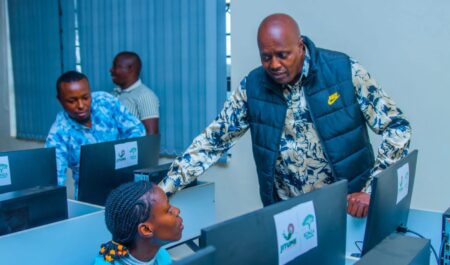
Through the Jitume Programme, Kiharu TVC is offering free training in digital skills and AI tools, giving young people an opportunity to acquire practical competencies that could help them compete for jobs, create online enterprises and adapt to emerging technologies.
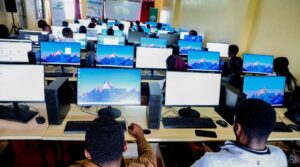
The training, which runs from July 27 to August 21, 2026, is being conducted at the Jitume Digital Lab at Kiharu TVC and is open to all youth in the constituency.
Participants who attend all the sessions will receive certificates of participation.
The programme reflects the growing urgency to equip young Kenyans with skills that go beyond traditional academic qualifications as AI begins to reshape industries, workplaces and the nature of employment.
For a generation entering a job market already under pressure, the rapid adoption of AI presents both a threat and an opportunity. While automation could disrupt some traditional jobs, new opportunities are emerging in areas such as digital services, cybersecurity, software development, data analysis, digital marketing and online work.
The challenge, however, is whether young people can acquire the skills required to take advantage of the new economy.
Kiharu TVC is seeking to respond to that challenge by combining conventional technical and vocational education with training in digital technologies and AI tools.
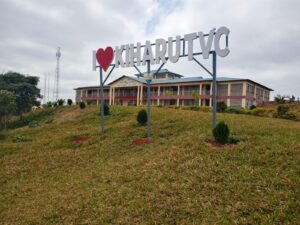
The college, located at Kiambugi Shopping Centre along the Murang’a-Kiria-ini Road in Gaturi Ward, has opened applications for its January, May and September intakes.
It offers a broad range of technical and vocational courses aimed at preparing students for employment and entrepreneurship.
Among the areas available are Building and Civil Engineering, Business and Liberal Studies, Mechanical and Automotive Engineering, Electrical and Electronic Engineering, Computing and Informatics, Fashion and Design, Cosmetology, Hospitality, Social Work and Tourism Management.
The institution’s computing and informatics programmes include Cyber Security Technician, Computer Science, ICT Technician, Cyber Security Operator and ICT Assistant courses.
These programmes come as cybersecurity and digital technology become increasingly important to businesses and government institutions seeking to protect critical systems and data.
The college is also offering short courses designed to provide learners with practical skills that can be acquired within a shorter period.
They include cybersecurity and use of AI tools, web design, computer repair and maintenance, graphic design, computer packages, AutoCAD and ArchiCAD, photovoltaic solar installation, welding and fabrication and other technical skills.
The availability of AI-related training at the TVET level marks a shift in the country’s approach to preparing young people for the future of work, with technical institutions increasingly expected to bridge the gap between education and the rapidly changing needs of industry.
Kiharu TVC is also offering courses in automotive technology, welding and fabrication, refrigeration and air conditioning, electrical installation, plumbing, quantity surveying and other technical disciplines.
In business and professional studies, students can pursue Supply Chain Management, Business Management, Office Administration, Accounting, Human Resource Management and Science Laboratory Technology.
The college has also expanded opportunities in areas such as fashion and design, beauty and personal care, hospitality, caregiving and tourism.
The institution offers programmes at different levels to accommodate students with varying academic qualifications.
Learners seeking Level Six courses require a minimum KCSE grade of C- and above, while Level Five courses require a D plain. Level Four programmes are open to those with a minimum grade of D-, while Level Three courses accept learners with KCPE qualifications.
The college says students can access a range of support mechanisms, including KUCCPS placement, HELB loans and scholarships and Kiharu Constituency Development Fund bursaries.
It also provides Competency-Based Education and Training, free Wi-Fi and hostel and accommodation facilities.
The push for AI and digital skills comes at a critical moment for Kenya’s young population.
For years, the country has struggled to absorb thousands of young people entering the labour market every year, with many graduates facing prolonged job searches or taking up work unrelated to their qualifications.
The rise of AI is adding a new dimension to the employment challenge. Employers are increasingly looking for workers who can use digital tools, analyse data, work with emerging technologies and adapt quickly to changing production systems.
Young people without such skills risk being left behind as businesses adopt automation and AI-driven systems.
At the same time, the digital economy is creating opportunities for those equipped with the right competencies, particularly in freelancing, online work, software development, digital marketing, cybersecurity, creative industries and technology-enabled entrepreneurship.
Kiharu TVC’s Jitume training programme is therefore seeking to place young people closer to these emerging opportunities by exposing them to practical digital and AI tools.
The college is also promoting soft skills alongside technical training, with its Business and Liberal Studies Department welcoming students for the September intake.
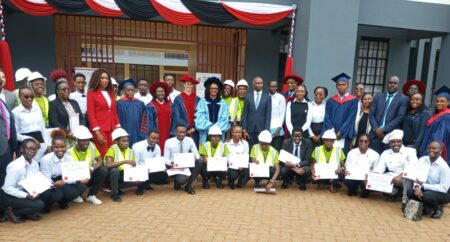
The institution recently held an end-of-module thanksgiving mass as part of its broader student development activities, saying it was committed to nurturing learners both academically and personally.
Its Nursing Assistant and Caregiver students have also been undertaking practical training and preparing for assessments as they seek careers in the healthcare sector.
Kiharu TVC says its training is geared towards producing graduates with practical, industry-relevant skills capable of entering the workforce or starting their own enterprises.
The institution’s programmes are examined by relevant bodies, including NITA and KASNEB, depending on the course.
Prospective students are required to submit documents including KCSE result slips, leaving certificates, birth certificates, national identification cards and KCPE certificates where applicable.
As Kenya confronts the twin pressures of youth unemployment and technological disruption, the battle for jobs is increasingly becoming a battle for skills.
The expansion of AI training into TVET institutions could provide a critical pathway for young people who may not have access to university education but need practical skills to compete in an economy being rapidly transformed by technology.
For Kiharu’s youth, the free Jitume AI programme offers an entry point into that new economy. For policymakers, it underscores a wider national challenge—ensuring that the country’s youthful population is not merely prepared to consume new technologies but is equipped to use them to create jobs, build businesses and drive economic growth.
Kiharu TVC is inviting young people in the constituency to register for the free AI and digital skills training and is continuing to receive applications for its various technical and vocational programmes.
The college can be contacted on 0720 657 630 or through its website, [www.kiharutvc.ac.ke](http://www.kiharutvc.ac.ke).