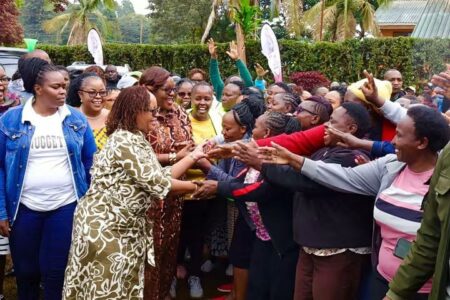









Kiambu Woman Representative Anne Wamuratha has stepped up efforts to promote women’s economic empowerment through the distribution of business equipment to community welfare groups in Githunguri, in a move aimed at strengthening grassroots enterprises and improving household incomes.
The initiative, spearheaded by the National Government Affirmative Action Fund (NGAAF), targets women organised in community groups, providing them with practical resources to expand their income generating activities, improve productivity and achieve greater financial independence.

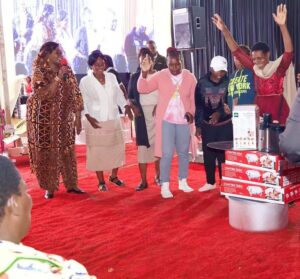
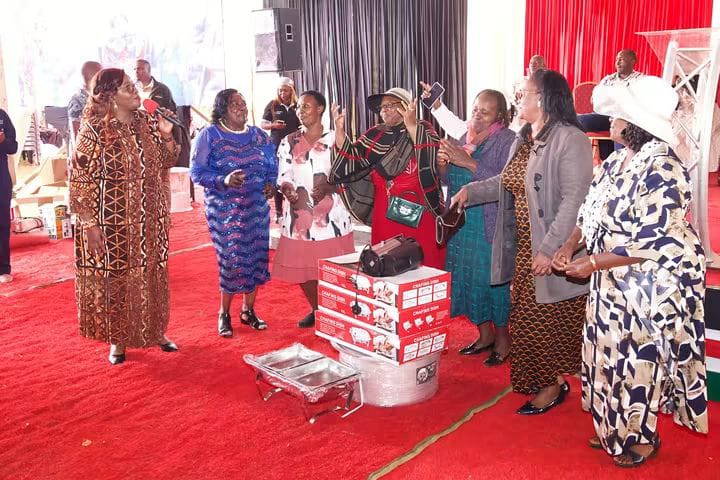
Four welfare groups Thuita Welfare Group, Utheri wa Donga Welfare Group, Nyaga Social Welfare Group and Kwamaguna Welfare Group each received a tent and 100 chairs to support their activities and create opportunities for income generation through event hire services.
Other beneficiaries received a range of business equipment, including chafing dishes, commercial chips fryers, chips cutters, juice extractors and cooking sufurias.
The equipment is expected to support women engaged in catering, food preparation, juice production and other small scale businesses, enabling them to diversify their enterprises and generate additional income.
The distribution forms part of broader efforts to strengthen women led economic activities by moving beyond financial assistance to providing tangible assets that can be used to establish, expand and sustain businesses.
For many grassroots groups, access to equipment remains a major obstacle to business growth, with limited capital forcing members to rely on borrowed tools or expensive rentals. The intervention is intended to ease some of these challenges while encouraging collective enterprise and self reliance.
Wamuratha, who serves as patron of the affirmative action initiative in Kiambu, has made women’s economic empowerment a central part of her grassroots engagement, with community groups providing an avenue for reaching beneficiaries directly.
The initiative also highlights the potential of organised welfare groups as vehicles for economic transformation, particularly in rural and semi urban communities where women rely heavily on small businesses to support their families.
Beyond improving individual livelihoods, the provision of shared business assets is expected to strengthen group activities, promote entrepreneurship and create opportunities for members to build sustainable sources of income.
The programme underscores the importance of equipping women with productive resources that enable them to participate more actively in the local economy rather than remaining dependent on short term interventions.
As pressure from the rising cost of living continues to affect households, initiatives that strengthen small enterprises could offer women an opportunity to improve their financial security while contributing to the economic wellbeing of their communities.
The ultimate test, however, will be whether the equipment is effectively utilised, properly maintained and managed to generate sustainable returns for the beneficiary groups.