







Hundreds of persons living with disabilities in Riabai Ward and neighbouring areas are set to benefit from a partnership between Riabai Member of County Assembly (MCA) Hezron Gachui and Lions International aimed at improving mobility, dignity and access to healthcare through the donation of assistive devices.
The initiative, undertaken in collaboration with Lions International, has seen the distribution of advanced wheelchairs, electric wheelchairs and crutches to vulnerable residents, as well as the donation of mobility aids to Kiambu County Referral Hospital.
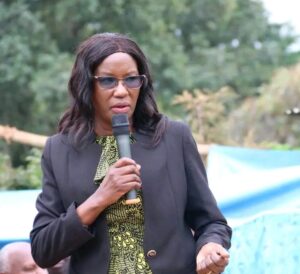
Speaking during the handover of assistive devices, Gachui said the programme is part of a broader effort to ensure that persons living with disabilities are not disadvantaged because they cannot afford essential mobility equipment.

“We partnered with Lions International after discussions on how we could support patients and persons with mobility challenges in our community. They have donated advanced wheelchairs and crutches that will greatly improve the lives of children and adults living with disabilities,” said Gachui.
He said the partnership has already benefited residents across the sub-county and pledged that future donations would continue reaching deserving beneficiaries beyond Riabai Ward.
“When we receive such support, we will continue distributing these assistive devices not only in Riabai but across the sub-county. Disability does not discriminate by county or ward, and we are committed to helping anyone in need,” he said.
Gachui thanked Lions International for its continued commitment to humanitarian work, expressing optimism that the partnership would expand to provide more assistive devices and other healthcare support in the future.
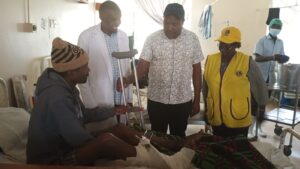
One of the beneficiaries, Samuel Kamande from Kihingo Village, described the donation of an electric wheelchair as life-changing. Having relied on a heavy wooden wheelchair for years, he said daily movement had been physically exhausting.
“Wheeling the wooden wheelchair has been very difficult because it requires a lot of energy. The electric wheelchair I have received today will make movement much easier, faster and more comfortable,” said Kamande.
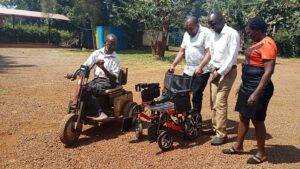
Gachui noted that he had known Kamande for many years and had always hoped to secure him a better mobility aid.
“I have known Samuel for a long time and understood the challenges he has been facing. I am grateful that through our partners we have finally been able to provide him with an electric wheelchair that will significantly improve his quality of life,” he said.
Another beneficiary, seven-year-old Anthony Macharia of Riabai Village, who lives with autism and a congenital spinal condition, received a specialised supportive wheelchair designed to provide proper posture and head support.
Anthony’s father, Maina, said the wheelchair would dramatically ease the family’s daily struggles, particularly during hospital visits.
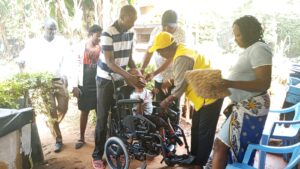
“My son was born with a detached spinal cord and requires constant support for his limbs and head. Previously we had to carry him everywhere, especially when attending clinic appointments. This specialised wheelchair has solved one of our biggest challenges by allowing us to move him safely and comfortably,” he said.
The family said the new wheelchair would not only improve Anthony’s mobility but also reduce the physical burden on caregivers while enabling him to participate more comfortably in daily activities.
Lions International representative Purity Gathoni said the organisation has an ongoing humanitarian programme dedicated to identifying vulnerable persons with disabilities and providing them with assistive devices free of charge.
“As Lions International, we work closely with community leaders, healthcare workers and caregivers to identify people who genuinely need support. Our goal is to restore dignity and independence by providing assistive devices that improve everyday life,” she said.
Gathoni explained that the organisation provides a wide range of mobility and healthcare support, including wheelchairs, electric wheelchairs, crutches, walking sticks, specialised beds, diapers and other assistive equipment depending on the needs of each beneficiary.
She added that Lions International also conducts community sensitisation programmes targeting caregivers and families of persons living with disabilities to improve awareness, promote inclusion and enhance home-based care.
“We do not charge beneficiaries for any of these services. This is our way of giving back to the community and ensuring that vulnerable people receive the support they deserve,” she said.
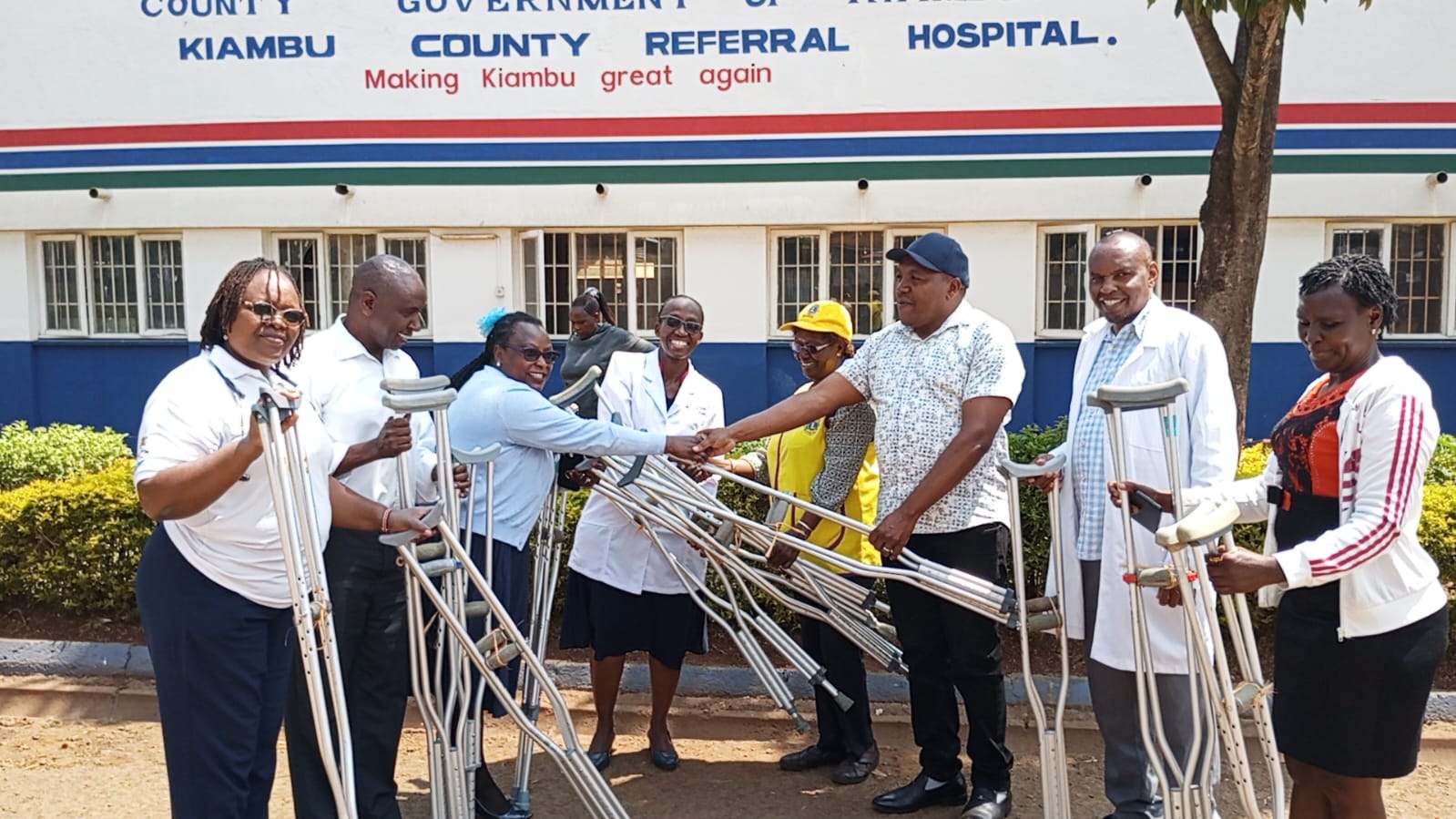
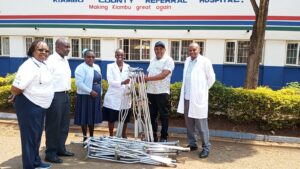
The initiative also extended to Kiambu County Referral Hospital, where Lions International donated 20 pairs of crutches to support patients recovering from injuries and those experiencing temporary or permanent mobility challenges.
Receiving the donation, the hospital’s Medical Superintendent, Dr. Peninah Makau, described the contribution as timely and impactful.
“Today is a special day because we have received support that will directly benefit our patients. A crutch is more than just equipment—it gives someone the power to walk independently and restores dignity to those recovering from illness or injury,” she said.
Dr. Makau noted that partnerships between healthcare institutions, elected leaders and charitable organisations help bridge resource gaps and improve service delivery.
“If we were waiting to procure all these items ourselves, it would have taken much longer. Through partnerships such as this, we are able to respond to patient needs immediately and improve their experience in our hospital,” she said.
She encouraged more organisations, individuals and development partners to support public healthcare facilities through donations of equipment, infrastructure, research collaborations and training opportunities.
“Our mission is to provide dignified patient care delivered by dignified healthcare workers in a dignified healthcare environment. Every contribution that supports patients or strengthens our facilities helps us achieve that mission,” she added.
The donation programme highlights the growing role of partnerships between county leaders, healthcare institutions and humanitarian organisations in promoting inclusion and improving the welfare of persons living with disabilities.
For beneficiaries such as Samuel Kamande and young Anthony Macharia, the assistive devices represent far more than mobility aids—they signify renewed independence, dignity, easier access to healthcare and hope for a better quality of life.