









Private universities have renewed calls for the government to extend higher education funding to students enrolled in private institutions, arguing that their learners should not be disadvantaged by their choice of university.
The institutions say the national higher education funding model should recognise the role played by private universities in expanding access to university education and provide students with equitable opportunities to pursue their academic ambitions.
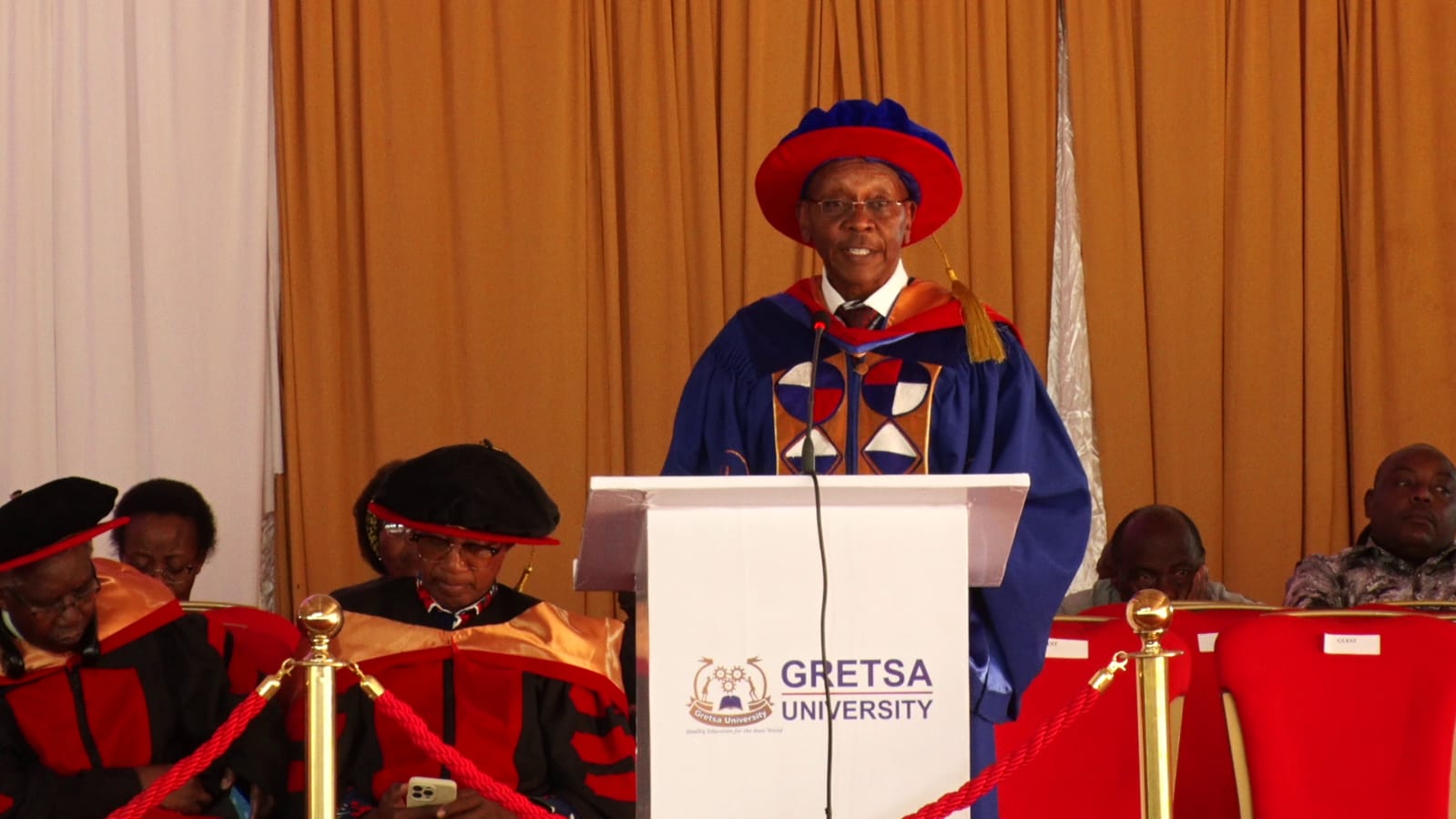
Dr Kibathi Mbugua, Chairman of Gretsa University’s Board of Trustees (BOT), said private universities were an integral part of Kenya’s higher education system and should be included in government funding programmes.


Speaking during the institution’s 17th graduation ceremony in Thika, where more than 800 students were awarded degrees, diplomas and certificates, Dr Mbugua said private universities continued to provide an important alternative to public institutions.
He argued that students pursuing higher education in private universities should not be excluded from government support simply because they had enrolled in institutions outside the public university system.
The funding debate comes amid growing concerns over the cost of university education and the ability of students from financially disadvantaged backgrounds to access higher learning opportunities.
Dr Mbugua said expanding government support to private university students would help promote fairness in the education sector while strengthening the contribution of private institutions to the country’s human capital development.
Beyond funding, the university chairman challenged institutions of higher learning to overhaul their teaching approaches to keep pace with the rapid advancement of Artificial Intelligence (AI), warning that traditional methods of instruction could leave graduates ill equipped for the changing employment landscape.
He urged universities to integrate emerging technologies into their academic programmes while preparing students to navigate a labour market increasingly shaped by automation and digital innovation.
Dr Mbugua also called on young people to embrace entrepreneurship and self employment, saying the growing adoption of AI was changing the nature of work and putting pressure on opportunities for formal employment.
He said graduates needed to develop practical skills that would enable them to create jobs rather than depend solely on conventional employment opportunities.
Gretsa University Chancellor Charles Klasson echoed the call for graduates to adapt to technological changes, urging them to embrace AI and acquire the skills required to apply the technology in their careers, businesses and professional undertakings.
Klasson said although AI had sparked fears of widespread job losses, particularly in banking, corporate services and other sectors increasingly adopting automation, the technology also presented opportunities for innovation and improved productivity.
He said AI could help workers simplify routine tasks, save time and improve efficiency, allowing them to focus on more complex responsibilities and creative work.
The chancellor challenged universities to equip students with the ability to use AI responsibly, while strengthening critical thinking, problem solving and decision making skills.
He cautioned against viewing AI exclusively as a threat to employment, arguing that graduates who understood how to work with emerging technologies would be better positioned to remain competitive in the evolving job market.
Klasson further urged institutions to incorporate entrepreneurship and innovation into their training programmes, saying the changing nature of employment required graduates to explore alternative pathways to economic independence.
He said equipping young people with business skills would enable them to identify market opportunities, establish enterprises and contribute to job creation.
The graduation ceremony came against the backdrop of growing national debate over the future of university education, the sustainability of student financing and the need to align academic training with the demands of a rapidly changing economy.
The university leaders said preparing graduates for the future would require a combination of equitable access to education, technological competence, entrepreneurial thinking and practical skills that respond to the needs of the labour market.
They urged graduates to remain adaptable, innovative and willing to explore new opportunities as technology continues to transform workplaces and redefine traditional career paths.