









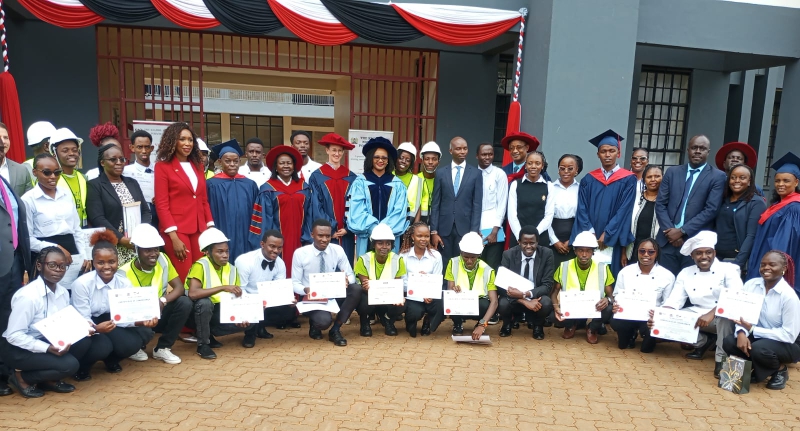
A new chapter in Kenya’s labour mobility agenda was marked on Friday as 31 graduates from Kiambu National Polytechnic (KINAP) completed a specialized Labour Mobility Programme that will see them proceed to Germany for vocational training and employment, in what government officials described as a model for safe, structured and mutually beneficial international labour migration.
The colourful graduation ceremony brought together senior officials from the State Departments for Technical and Vocational Education and Training (TVET) and Diaspora Affairs, representatives of the German Government, development partners, industry leaders and families of the graduates to celebrate a partnership that is increasingly positioning Kenyan youth for opportunities in the global labour market.
The graduating cohort comprised 20 students in Hospitality and 11 in Landscaping, who successfully completed intensive technical and preparatory training designed to meet German labour market standards.
The initiative is implemented through collaboration between the Government of Kenya, the German Government, GIZ, German industry partners and Kiambu National Polytechnic.


Principal Secretary for Diaspora Affairs Roselyne Njogu described the graduation as a personal milestone, noting that the programme originated from diplomatic engagements aimed at creating legal pathways for Kenyan professionals to work abroad.
She revealed that discussions on labour mobility began shortly after she assumed office, following engagements with Austrian and German diplomats who expressed growing demand for skilled workers.
Those discussions culminated in the signing of the Kenya-Germany Comprehensive Migration and Mobility Partnership Agreement in September 2024, which has since given rise to structured labour mobility programmes such as the one graduating at Kiambu National Polytechnic.
Njogu said witnessing graduates prepare to travel to Germany transformed what had once been policy discussions into tangible success stories.
“This programme reflects the strong and growing partnership between Kenya and Germany, especially in the areas of skills development, employment and regular migration,” she said.
She thanked the Government of Germany and its partners for investing in Kenya’s TVET sector and equipping young people with internationally competitive skills.
Addressing concerns that skilled migration could deprive Kenya of talent, Njogu emphasized that the government’s labour mobility strategy focuses on brain circulation rather than brain drain.

She said Kenyans working abroad gain valuable professional experience, establish global networks and accumulate capital before transferring knowledge, skills and investments back home.
To illustrate the point, she cited a recent initiative in which Kenyan diaspora professionals facilitated the arrival of kidney specialists from Minnesota to Kenya to perform specialized surgeries and support technology and knowledge transfer at Kenyatta University Teaching and Referral Hospital.
“The power of the diaspora is that people go abroad, acquire skills, build networks and eventually bring those resources back home,” she said.
Njogu urged the graduates to view themselves as ambassadors of Kenya and encouraged them to maintain professionalism, discipline and integrity while working overseas.
The Diaspora Affairs PS advised the graduates to prepare thoroughly before travelling by learning about Germany’s culture, history and professional environment while remaining rooted in their Kenyan identity.
She encouraged them to immerse themselves fully in German society, embrace new cultures and experiences, and at the same time proudly represent Kenya wherever they live and work.
Njogu also urged them to stay connected with the Kenyan government through the State Department for Diaspora Affairs and Kenya’s Embassy in Berlin, saying government support would remain available throughout their stay abroad.
She reaffirmed the government’s commitment to expanding safe, regular and orderly migration by strengthening TVET programmes aligned to global labour market needs, increasing access to German language training and internationally recognized language examinations, improving recognition of Kenyan qualifications overseas and fostering stronger partnerships between training institutions and international employers.
Principal Secretary for TVET Dr Esther Muoria hailed the graduates as pioneers of Kenya’s expanding international skills agenda, saying the programme demonstrates how TVET reforms are transforming the lives of young people.
She said the graduation represented the realization of years of collaboration between government institutions and development partners aimed at connecting Kenyan skills with global employment opportunities.
According to Muoria, the graduates symbolize the success of competency-based training linked directly to industry demand.
She congratulated the graduates for their discipline and resilience and praised the strong partnership between government, industry and development partners that had made the programme possible.
“This morning we celebrate Kenya’s skills agenda that prepares young professionals to compete successfully beyond our borders,” she said.
Muoria described the programme as an example of partnerships that transform lives, saying creating opportunities for young people remains one of the government’s greatest priorities.
She disclosed that the State Department for TVET continues to seek innovative partnerships, including discussions with financial institutions, to support young people who require financial assistance before travelling abroad.
The PS said such collaborations would enable more Kenyan youth to benefit from international employment opportunities.
She linked the labour mobility initiative to the government’s Bottom-Up Economic Transformation Agenda, saying empowering skilled young people with global opportunities strengthens both household incomes and the national economy.
Muoria echoed Njogu’s sentiments that labour mobility should not be viewed as permanent migration but as an opportunity for professional growth.
She encouraged the graduates to acquire advanced technical knowledge, earn competitive incomes and eventually return home to invest in Kenya’s development.
Hospitality graduates, she noted, could use the experience gained in Germany to establish world-class hotels and tourism enterprises back home, while landscaping professionals could contribute to modern urban development and environmental management.
She urged the graduates not only to succeed individually but also to return with innovative ideas capable of transforming industries in Kenya.
The graduation ceremony featured remarks from representatives of GIZ Kenya, German hospitality industry association DEHOGA Bayern, the Chief Principal of Kiambu National Polytechnic, the institution’s Board Chairperson and development partners.
Student representatives also shared their experiences during training, highlighting the personal growth, technical skills and confidence gained through the programme.
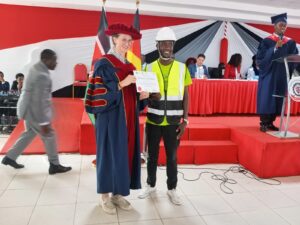
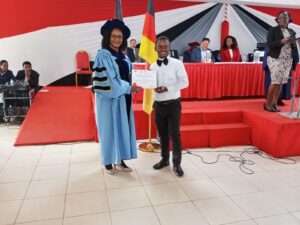
The ceremony concluded with the presentation of certificates to all 31 graduates, gift presentations, an official group photograph and networking sessions involving government officials, development partners and industry representatives.
The Labour Mobility Programme is expected to serve as a blueprint for future Kenya-Germany cooperation, demonstrating how international partnerships can create structured pathways for skilled Kenyan workers while strengthening the country’s TVET sector and expanding opportunities for youth employment.
As the graduates prepare to begin their journey to Bavaria, Germany, government officials expressed confidence that they will uphold Kenya’s reputation as hardworking, resilient and highly skilled professionals, while opening doors for many more young Kenyans to participate in safe and regular labour mobility programmes in the years ahead.