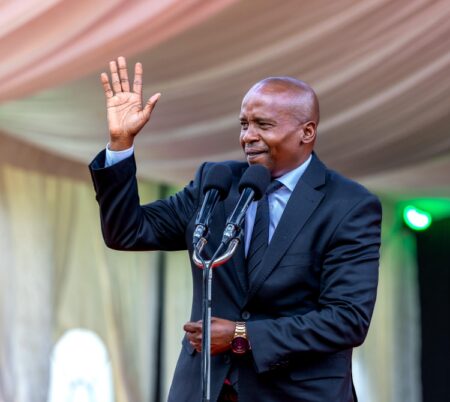




Deputy President Kithure Kindiki has reaffirmed the government’s commitment to strengthening Kenya’s education sector, citing significant gains in technical training and infrastructure development during his ongoing development tour of Kilifi County.
Speaking in Buni Gandani, Rabai Constituency, the Deputy President said deliberate policy interventions aimed at streamlining tertiary education and vocational training are beginning to bear fruit, with a sharp rise in enrollment in Technical and Vocational Education and Training (TVET) institutions.
According to Kindiki, enrollment has more than doubled from 297,000 students in 2022 to the current 718,000, driven by reforms such as the introduction of the Dual Training Policy (DTP), Recognition of Prior Learning (RPL), and modular-based learning systems. The government has also boosted capacity in the sector through the recruitment of 3,300 tutors and the modernization of training equipment.
“These interventions are designed to align education with industry needs, equipping young people with practical skills that enhance employability and productivity,” said Kindiki.
The Deputy President also highlighted the role of the Housing Fund in improving student welfare, noting that the government has rolled out a nationwide programme to construct hostels for university and tertiary students. The initiative aims to provide safe, affordable, and dignified accommodation to support better learning outcomes.
During the visit, Kindiki presided over the groundbreaking ceremony for the Rabai Technical and Vocational College hostel project, which will deliver 340 bed units at a cost of Sh157 million. The project is expected to significantly ease accommodation challenges for students in the region.
Later in Mwawesa, still within Rabai Constituency, the Deputy President pointed to increased government investment in education as a key driver of reforms. He noted that the education budget has grown from Sh500 billion in 2022 to Sh765 billion in the 2026/27 financial year.
Kindiki outlined several measures undertaken by the government to improve the quality and accessibility of education, including the streamlining of the Competency-Based Education (CBE) curriculum, the recruitment of 100,000 additional teachers, and the construction of 23,000 classrooms and 1,600 laboratories nationwide.
He further cited the introduction of a student-centred university funding model and the increase in higher education funding from Sh45 billion to Sh82 billion as transformative steps toward making university education more accessible and equitable.
“As a government, we are focused on ensuring that every learner has access to quality, affordable, and relevant education that meets the demands of a modern economy,” he said.
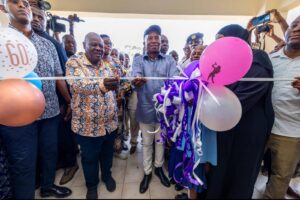
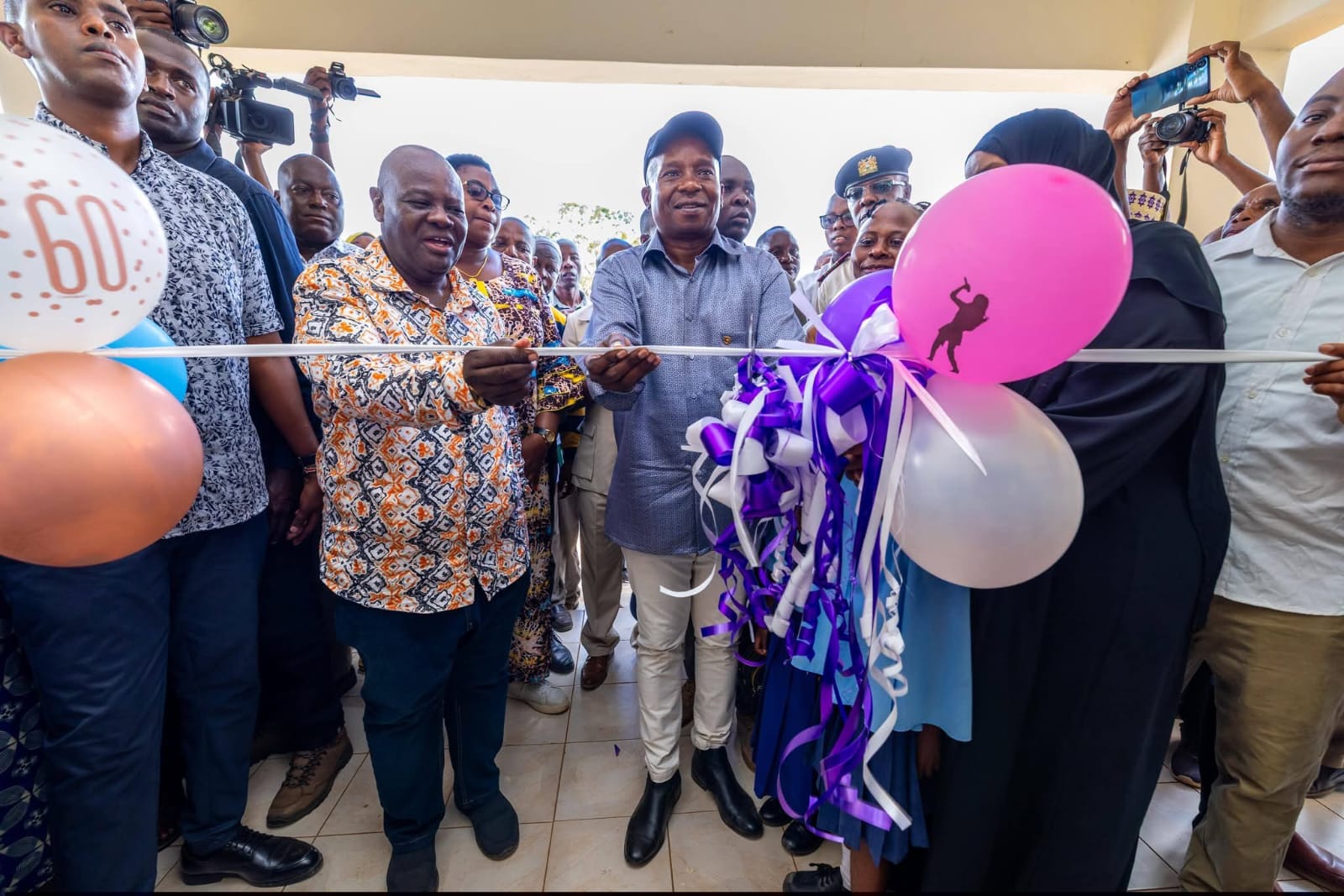
In a separate engagement, Kindiki commissioned the Chonyi Comprehensive School, constructed through the Rabai Constituency Development Fund at a cost of Sh12 million. The facility is expected to expand access to basic education for learners in the area.
The Deputy President was accompanied by Rabai MP Kenga Mupe, Kenya Roads Board Chairperson Aisha Jumwa, Sports, Arts and Social Development Fund Board Chairman George Kithi, Members of County Assembly, and local leaders.
Residents welcomed the projects, expressing optimism that the investments in education and training will open up opportunities for youth and spur socio-economic development in Kilifi County.
The Kilifi tour forms part of the government’s broader nationwide development agenda aimed at expanding access to education, improving infrastructure, and enhancing livelihoods at the grassroots level.