






Deputy President Kithure Kindiki has sought to frame the 2027 General Election as a contest over development performance, challenging political rivals to present their records in office and policy proposals instead of relying on insults, political hostility and violence to win public support.
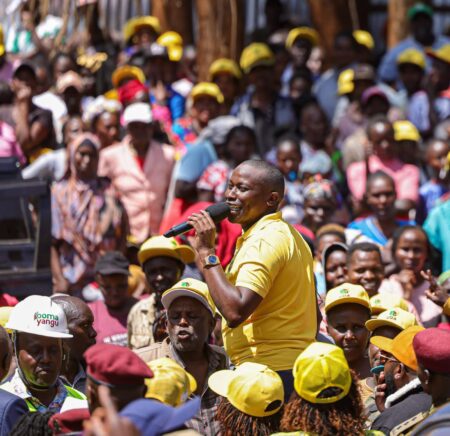
Speaking during public engagements in Gichugu and Ndia constituencies in Kirinyaga County on Friday, October 16, Prof Kindiki said the next election would be determined by the development record of leaders, pointing to ongoing road construction, electricity connectivity, agricultural reforms and market infrastructure as evidence of the Kenya Kwanza administration’s performance.

He maintained that the government, under President William Ruto, was implementing its campaign pledges and would use the remaining months before the election to accelerate ongoing projects and deliver on its manifesto.
“The contest is now clear. It will be a contest between work and noise, work and insults, policies and hostility, unity and division, and inclusion and exclusion,” Prof Kindiki said.
The Deputy President’s remarks come as political activity intensifies ahead of the 2027 polls, with leaders increasingly using development projects, economic performance and competing policy proposals to position themselves before voters.
In Kirinyaga, he pointed to an expanding road construction programme and last-mile electricity connections as part of efforts to improve rural infrastructure, boost agricultural productivity and connect previously underserved communities to essential services.
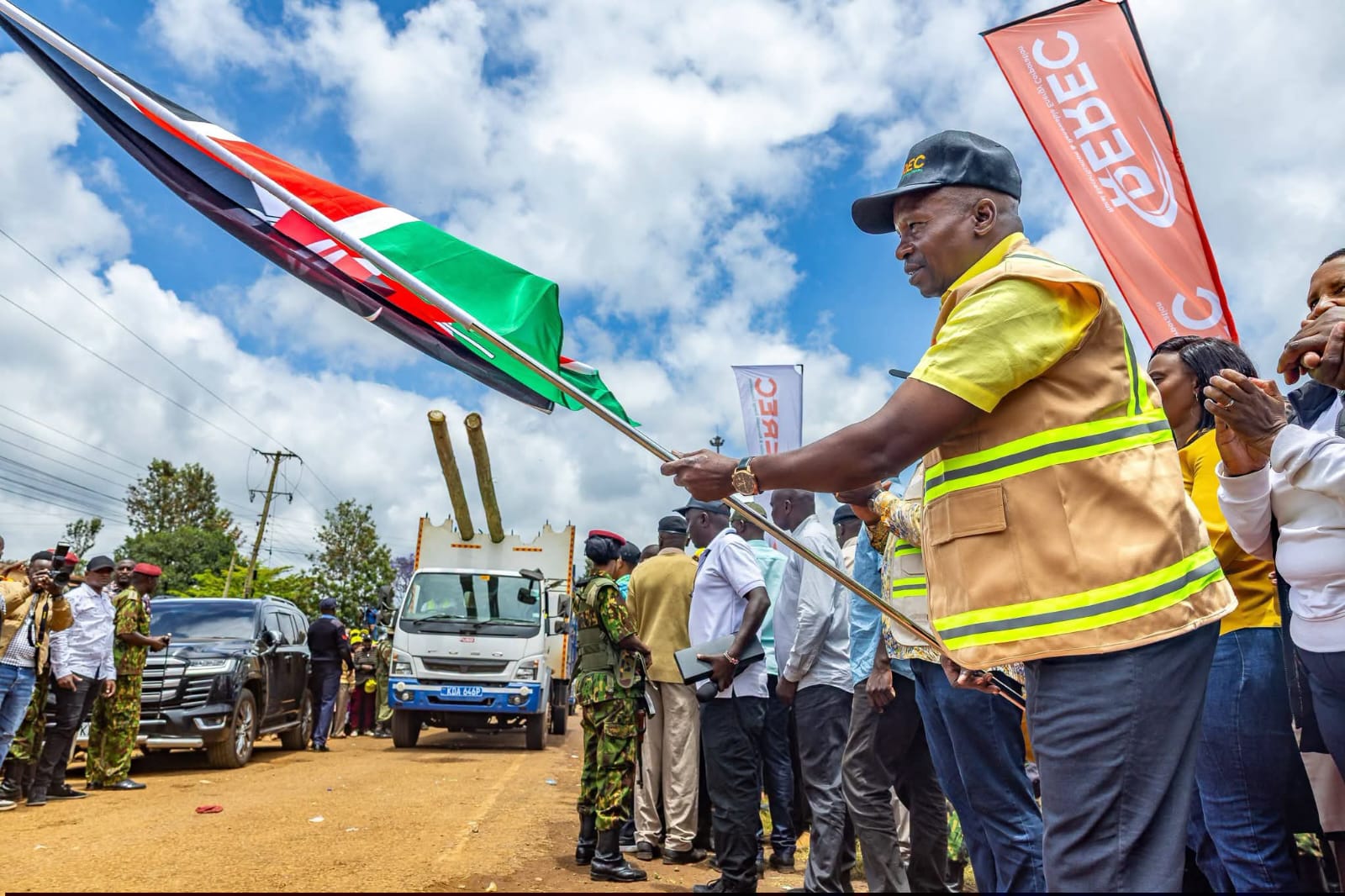
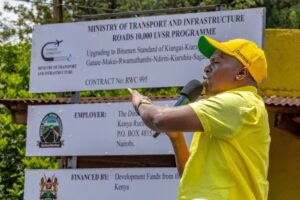
In Gichugu, Prof Kindiki inspected construction works on the 53-kilometre Piai-Mbiri-Ngiriambu-Kiamutugu-Muchagara-Karumandi-Gatugura-Thumaita-Kamugunda-Kamweti-Kavote-Kimunye road, which provides access to Kiamwathi Senior School.
The project, estimated to cost Sh2 billion, is among a wider network of roads being upgraded to bitumen standards across Kirinyaga County.
The government has prioritised 571 kilometres of roads for tarmacking in the county at an estimated cost of Sh42 billion. Of this, construction is ongoing on 472 kilometres, representing an investment of approximately Sh37 billion.
The projects are expected to improve connectivity between rural settlements, schools, trading centres and agricultural production zones, while easing the transportation of tea, coffee, milk and other farm produce to markets.
Prof Kindiki said the road programme was intended to address longstanding infrastructure gaps in Gichugu, where residents had for years complained about inadequate tarmac roads.
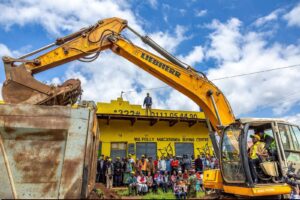
He said approximately 100 kilometres of roads were under construction across the constituency, including about 53 kilometres in its eastern section and 42 kilometres in the western area.
“The people of Gichugu know that, for a long time, this area did not receive enough tarmac roads. The roads were being constructed in other areas, but when it came to Gichugu, the programme seemed to stop,” he said.
He credited President Ruto’s administration with giving renewed attention to infrastructure development in the constituency, arguing that rural communities should receive their fair share of public investment regardless of their political affiliations.
The road projects are part of the government’s broader pledge to upgrade rural transport networks and use infrastructure investment to stimulate economic activity beyond major urban centres.
For farmers, improved roads could reduce transportation costs, shorten travel time to markets and minimise delays in delivering perishable produce. Better access roads are also expected to improve access to schools, health facilities and other public services.
Alongside the road programme, the Deputy President announced the release of materials for last mile electricity connectivity projects targeting communities in Gichugu and other parts of Kirinyaga.
The projects include connections covering Gathoge, Piai and Kiumbui, as well as the Kamagoti-Muthangaini area.
Prof Kindiki said about 32,000 households in Kirinyaga had been connected to electricity since September 2022, with a further Sh845 million allocated to connect an additional 10,800 households.
In Gichugu, he said Sh75 million had been set aside for additional connections.
He directed the Ministry of Energy to expedite the remaining projects, saying the government intended to ensure that communities still without electricity were connected.
“I have instructed the Ministry of Energy to expedite the remaining electricity connectivity projects in Kirinyaga so that the areas that are still without electricity can be connected. The time to act is now,” he said.
Electricity access is considered critical to rural economic transformation, enabling households to improve living standards while giving small businesses, traders and agro processing enterprises opportunities to expand their operations.
For farmers, reliable power can also support value addition, storage and processing, helping communities retain a greater share of the value generated from agricultural production.
Prof Kindiki also cited changes in coffee earnings as evidence of the administration’s efforts to improve agricultural incomes.
He said some coffee factories were paying farmers as much as Sh150 per kilogramme, compared with between Sh50 and Sh60 in 2022.
However, he acknowledged that challenges remained in the tea sector and promised that the government would continue pursuing measures aimed at improving farmers’ earnings.
Agriculture remains a major source of livelihoods in Kirinyaga, where thousands of households depend on coffee, tea, dairy farming and other agricultural activities.
The Deputy President said investment in roads, electricity and agricultural reforms was intended to complement one another by improving production, reducing costs and expanding farmers’ access to markets.
He also cited the completion of the Sh500 million County Aggregation and Industrial Park at Sagana as part of efforts to promote agricultural value addition and strengthen market linkages.
Other projects highlighted included 110 affordable housing units in Kianyaga, student accommodation at Gichugu Technical and Vocational Education and Training institution, and the development of modern markets.
The government has argued that such investments will help create jobs, expand business opportunities and improve access to services, particularly for young people and small scale traders.
Beyond development, Prof Kindiki used the public engagements to appeal for peaceful campaigns, warning politicians against incitement, ethnic hostility, road blockades, destruction of property and looting as the country approaches the 2027 elections.
He said political competition should be based on ideas and policies rather than attempts to portray opponents as enemies.
The Deputy President cited the 1992 multiparty elections, when former President Mwai Kibaki and Kenneth Matiba competed for the presidency, and the 2002 contest between Kibaki and Uhuru Kenyatta as examples of electoral competition that should be conducted through policy arguments.
He argued that political disagreements should not destroy the relationships that hold communities together, noting that Kenyans would remain neighbours and fellow citizens after the elections.
“Political competition does not make us enemies. You cannot insult your own brother because of politics,” he said.
He referred to a recent meeting with elders drawn from the Gikuyu, Mbeere, Embu and Meru communities at Kirigiti, saying they had urged him not to respond to personal attacks but to remain focused on his responsibilities.
According to Prof Kindiki, the elders had also called on political leaders across the country to promote peaceful campaigns and discourage violence.
He warned that those who organise or encourage attacks, looting and destruction of property should face consequences, insisting that such conduct had no place in democratic competition.
“War is not politics, and politics is not war,” he said.
The Deputy President also challenged politicians seeking elective positions to explain what they had achieved while in office and what they intended to do if elected.
He said candidates should account for roads constructed, households connected to electricity, water projects implemented and markets established, rather than rely on insults and political rhetoric.
His remarks sought to place development delivery at the centre of the political debate, while urging voters to scrutinise the competing claims made by leaders as the next election approaches.
Prof Kindiki said the administration would focus on completing ongoing projects during the remaining months before the 2027 General Election.
He maintained that implementation of the government’s manifesto was on course in roads, electricity connectivity, agriculture and market infrastructure, expressing confidence that the administration would meet its commitments.
The Deputy President said public investment should be guided by the needs of citizens rather than political loyalties, arguing that development must benefit communities across the country.
He also urged voters to assess leaders on their performance and proposed programmes, rather than allowing political divisions to undermine national cohesion.
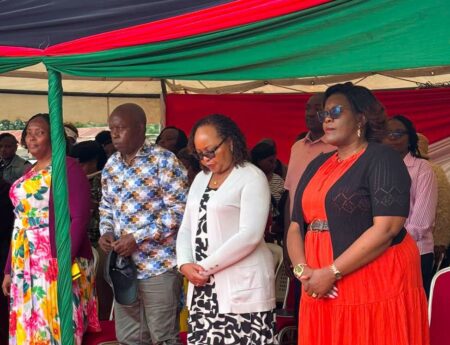
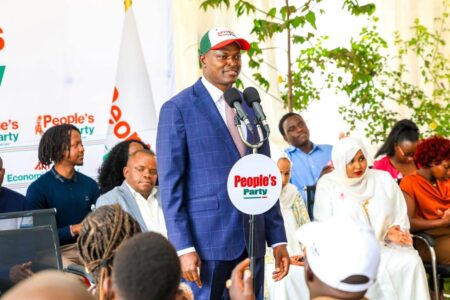
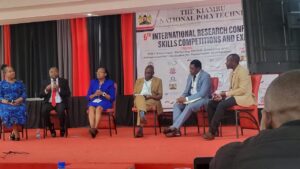
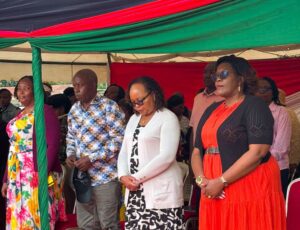
The Gichugu and Ndia engagements brought together Gichugu MP Gichimu Githinji, Principal Secretaries Mary Muthoni of Public Health and Alex Wachira of Energy, alongside MCAs, professionals and grassroots leaders.
As the political contest ahead of 2027 takes shape, the administration is expected to continue using its infrastructure and economic programmes to demonstrate progress, while opposition leaders are likely to offer competing assessments of the government’s performance and alternative policy proposals.
For Kirinyaga residents, the immediate test will be whether the announced investments translate into completed roads, reliable electricity connections, better agricultural earnings and improved economic opportunities.
The scale of the projects announced makes implementation, timely completion and tangible benefits to households central to determining whether the government’s development pledges will deliver the intended impact before voters return to the ballot.