








Deputy President Kithure Kindiki has mounted a spirited defence of President William Ruto’s development record, arguing that the administration is deliberately directing resources to historically marginalised regions in an effort to correct decades of regional inequalities.
Kindiki said the government was determined to end a system in which infrastructure and economic opportunities were concentrated in selected parts of the country, leaving regions such as the Coast and Northern Kenya lagging behind despite their contribution to national development.
Speaking during a development tour of Kwale and Kilifi counties on Wednesday, the Deputy President cited the issuance of thousands of title deeds, expansion of road networks, electricity connectivity and major water projects as evidence of the administration’s commitment to equitable development.
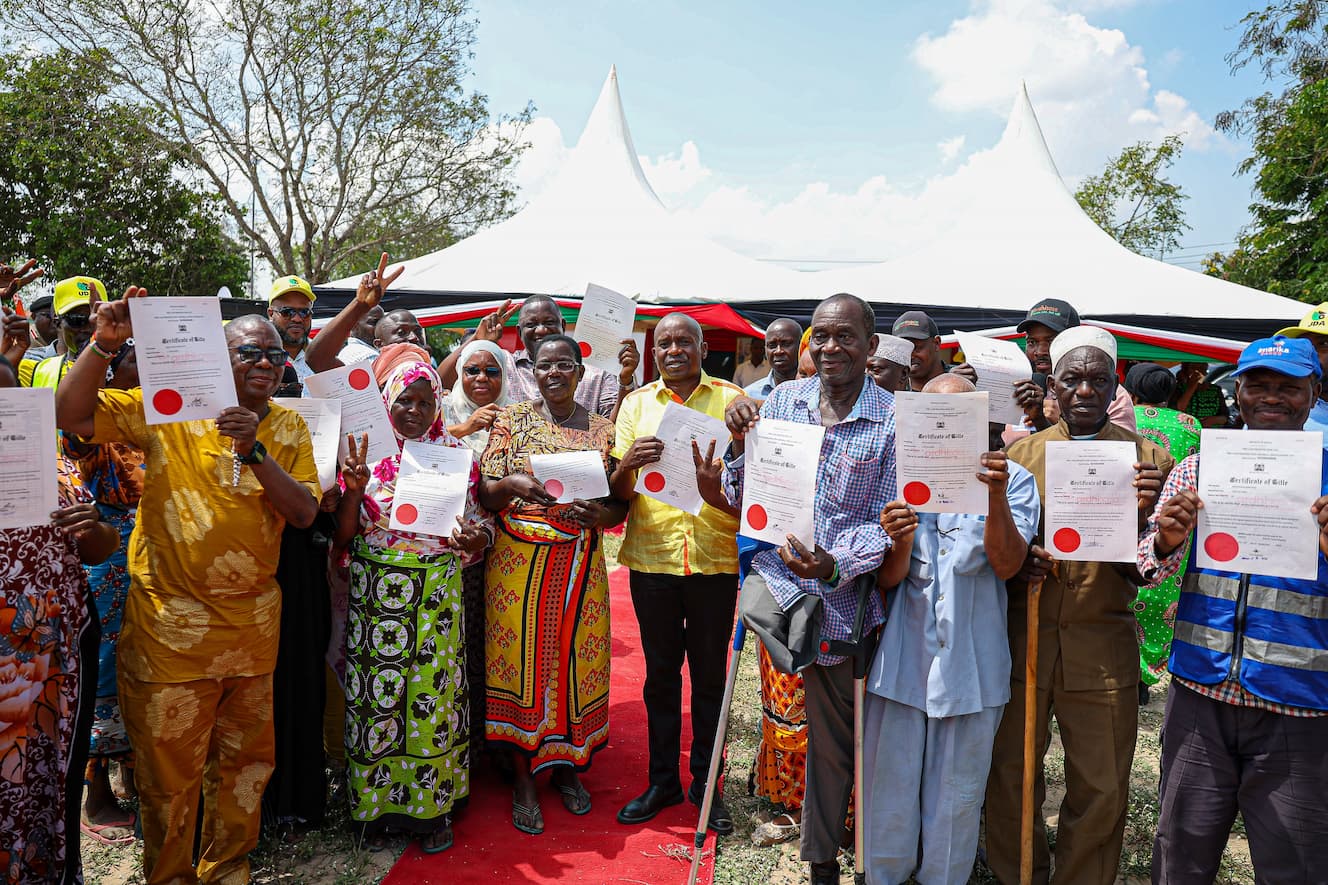
In Kwale, Kindiki presided over the issuance of 20,000 title deeds to residents of Kalalani in Kinango Constituency, describing the exercise as a significant milestone in addressing longstanding land ownership disputes that have affected generations of coastal families.
He said the documents would provide beneficiaries with legal security, protect them against displacement and unlock opportunities to use land as an economic asset.
The Deputy President recalled that President Ruto had promised during the 2022 election campaigns to address historical land injustices, improve infrastructure and expand access to essential services in the Coast region.
He said the President had issued 51,000 title deeds during a previous visit to Kwale, adding that the government would continue processing and distributing the remaining documents until the longstanding problem was resolved.
“Four years later, I stand here without shame or embarrassment to say that we have fulfilled the promises we made, one after another. Even those that remain outstanding will be implemented,” he said.
Kindiki maintained that national development should not be determined by how particular regions voted, insisting that every Kenyan was entitled to benefit from government programmes regardless of political affiliation.
“Is the Government of Kenya meant to serve only those who voted for the President? Kenya has only one government, and it belongs to every Kenyan,” he said.
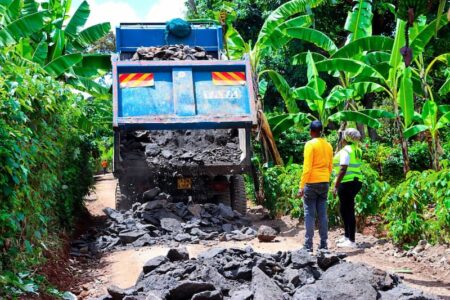
He cited the ongoing construction of 294 kilometres of roads in Kwale at a cost of Sh17.2 billion, alongside Sh1.8 billion allocated to connect 15,300 households to electricity.
He also pointed to the nearly completed Mwache Dam, saying the project would significantly improve water supply in Kwale and Mombasa.
In Kilifi, the Deputy President announced an ambitious programme to construct 692 kilometres of tarmac roads at an estimated cost of Sh33 billion, with 240 kilometres already under construction at Sh14 billion.
He further disclosed that Sh230 million had been released to connect 2,700 additional households to electricity, promising to push for an increase in the allocation to Sh450 million.
Kindiki also defended the proposed National Infrastructure Fund, saying the government had secured Sh350 billion from proceeds of the partial sale of government shares in Safaricom and Kenya Pipeline.
The administration hopes to leverage the money to attract private sector investments of approximately Sh3.5 trillion to finance roads, electricity and water infrastructure.
He said the fund would also support railway expansion, airports and seaports, while accelerating the connection of the remaining 5.3 million households without electricity.
The Deputy President said the government intended to achieve universal household electricity connectivity within two and a half to three years.
However, Kindiki’s development message was accompanied by a strong political appeal, as he urged Coast residents to support Ruto’s reelection bid, arguing that a second term would allow the administration to complete ongoing projects.

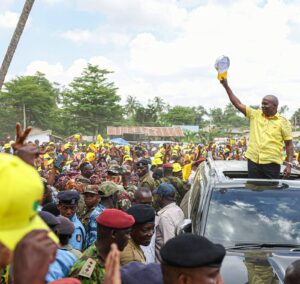
At Mkapuni Grounds in Rabai, he warned politicians against turning the emerging campaign season into a platform for ethnic hostility, insults and political violence.
He challenged leaders seeking elective positions to account for their development records rather than relying on personal attacks against opponents.
“Why should we allow the ambitions of a few individuals to destroy the lives of 55 million Kenyans?” he posed.
He maintained that political competition should be based on policies, ideas and accountability, warning that leaders promoting ethnic divisions and violence would face consequences.
Kindiki was accompanied by Cabinet Secretary Salim Mvurya, Kwale Governor Fatuma Achani and several MPs and local leaders during the tour, which also included the commissioning of Rabai Huduma Centre, the groundbreaking for a digital hub and the launch of a last mile electricity project.
He said the administration would not abandon its development agenda, insisting that equitable distribution of resources was central to building national unity.