



Deputy President Kithure Kindiki has defended the government’s development record, insisting that historical inequalities will not be allowed to determine how national resources are distributed, as he challenged critics to explain why they oppose infrastructure projects in historically marginalised regions.
Kindiki said the Kenya Kwanza administration was determined to dismantle decades of regional discrimination through equitable allocation of public resources, arguing that national unity could only be achieved when every community enjoys tangible benefits of development regardless of its political, ethnic or religious affiliations.
He maintained that no amount of political opposition would derail the government’s commitment to addressing longstanding inequalities, describing resistance to the development agenda as an attempt to preserve a system that had previously favoured certain regions at the expense of others.
“We have made a firm decision that, by all means, we must put an end to divisive politics and discriminatory development agendas that have for many years marginalised Kenyans on the basis of religion, geographical location, ethnicity or their voting choices,” he said.
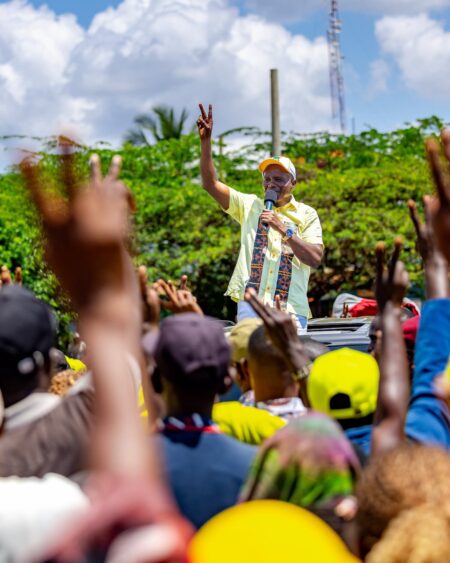
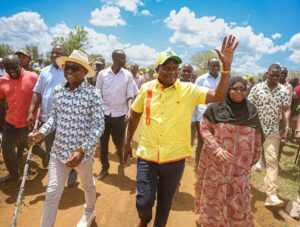
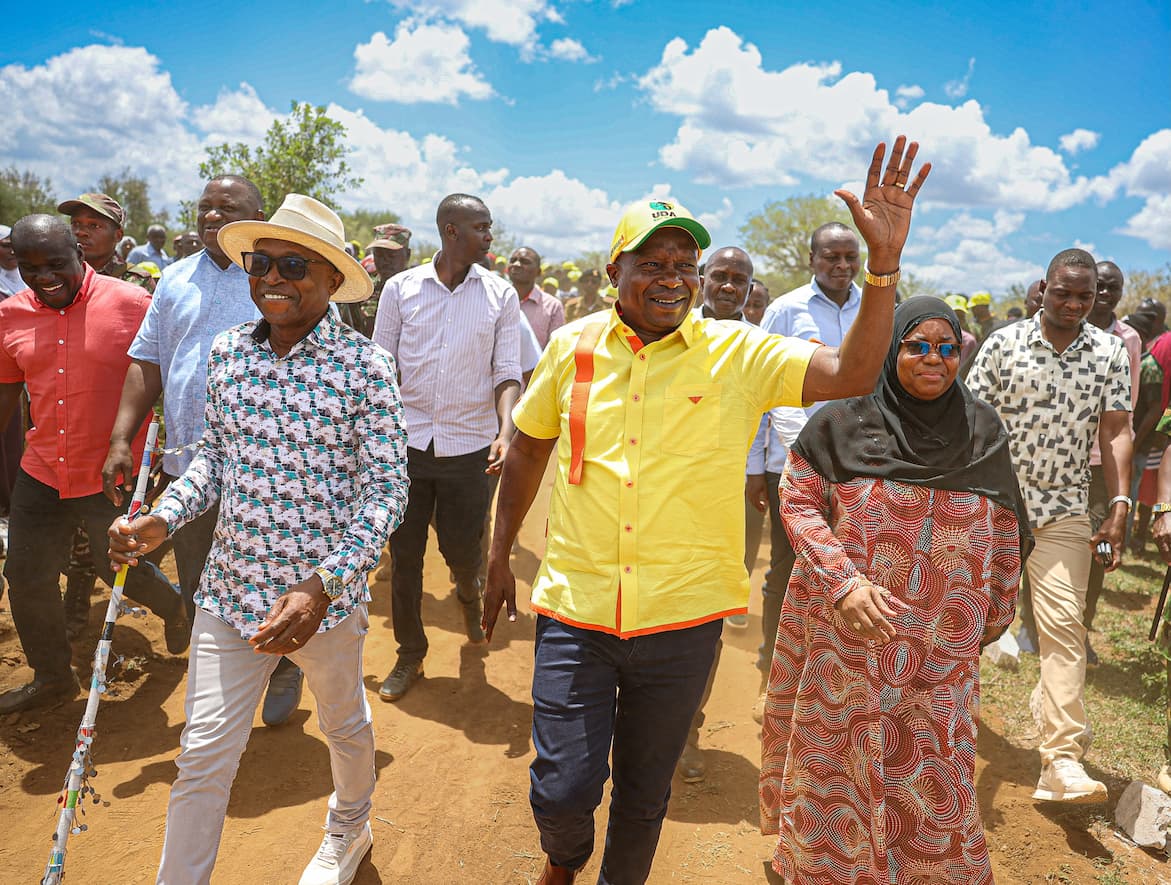
Speaking on Tuesday during a development tour of Lunga Lunga Constituency in Kwale County, Kindiki singled out the Coast region as one of the areas that had suffered decades of neglect, saying the government was directing billions of shillings towards infrastructure, electricity connectivity, markets and other economic projects to reverse the trend.
He argued that public investment should not be determined by how particular communities vote, insisting that an elected government has a constitutional responsibility to serve all citizens.
“The government in power is the Government of the Republic of Kenya, and it must serve every Kenyan, regardless of their race, religion, ethnicity, geographical location or even whom they voted for,” he said.
The Deputy President cited the allocation of Sh17.2 billion towards the construction and upgrading of 294 kilometres of roads in Kwale as evidence of the administration’s commitment to correcting historical development disparities.
He said the investment was unprecedented in the county’s development history and would improve connectivity, open up remote areas, reduce transportation costs and stimulate economic activity.
Among the major projects highlighted were the Samburu-Kinango and Kinango-Kwale roads, which he said were intended to improve access to the county without residents having to travel through Mombasa.
He also pledged that the government would undertake the Mwangulu-Kinango road, adding that infrastructure development was being rolled out systematically across counties and constituencies.
“National unity is built through action. When you construct roads in Kisumu, Mombasa, Garissa, Kwale, Lamu, Nyeri, Bungoma and Kajiado, you demonstrate that every part of the country matters,” he said.
Kindiki also commissioned the Kiruku Last Mile Electricity Supply Project, part of the government’s wider electrification programme in Kwale, which he said was aimed at extending power to households that had remained disconnected for decades.
He said electricity connectivity had been prioritised in historically underserved areas as part of efforts to expand economic opportunities, improve living standards and support small businesses.
The county has received substantial funding for electricity expansion, with the government citing an allocation of Sh650 million targeting an additional 5,300 households. The wider electrification programme was also presented as part of a Sh1.8 billion investment targeting 15,300 homes across Kwale.
Beyond roads and electricity, the Deputy President turned his attention to stalled public infrastructure projects, issuing a stern warning to contractors accused of delaying government funded developments.
He singled out the Lunga Lunga Modern Market and student hostels at the local Technical and Vocational Education and Training institution, accusing the contractor of failing to make satisfactory progress.
Kindiki threatened to use his authority to compel the contractor to resume work, warning that firms receiving taxpayers’ money must honour contractual obligations and deliver projects within agreed timelines.
“Contractors who receive public funds to construct markets for the people must deliver on their responsibilities. If you are paid by the Government using taxpayers’ money to build facilities for wananchi, you have no business delaying projects,” he said.
He further disclosed that Sh14 billion had been allocated towards the development of modern markets, affordable housing and student hostels across Kwale, including Diani, Kinango, Matuga and Msambweni.
The Deputy President said the government was equally addressing longstanding land ownership disputes in the Coast region, particularly the squatter problem, which has affected thousands of families for generations.
He pointed to the recent issuance of thousands of title deeds by President William Ruto as an important step towards resolving historical land injustices and securing land ownership rights for affected residents.
Kindiki said the government was working with county administrations and local leaders to find lasting solutions to the problem.
On national politics, he defended President Ruto against opposition criticism, arguing that the President’s commitment to extending infrastructure to neglected regions had attracted political hostility from individuals uncomfortable with the redistribution of development resources.
He challenged opposition leaders to focus their criticism on substantive policy issues rather than personal attacks and derogatory political nicknames.
“When some politicians come to Lunga Lunga, they do not discuss schools, electricity or where residents will get water. Instead, their politics revolves around insults and giving leaders derogatory nicknames. Name calling is childish and unbecoming of mature leaders,” he said.
He maintained that political competition should not undermine respect among leaders or distract the government from delivering essential services.
Kindiki also appealed to members of the ruling United Democratic Alliance and the Orange Democratic Movement to preserve their working relationship within the broad based government, saying the partnership was founded on a shared commitment to national cohesion.
He recalled the agreement between President Ruto and the late former Prime Minister Raila Odinga to foster cooperation between their respective political parties, describing it as an important initiative towards building a united country.
Following Odinga’s death, he said, the government remained committed to honouring the former Prime Minister’s vision of national unity.
He urged supporters of both parties to avoid political hostility, personal attacks and unnecessary confrontation, even as they prepare for future electoral contests.
“Let us avoid divisions, disrespect and insults. We are all part of the broad based government. Let us build our respective parties, strengthen our unity and move forward together,” he said.
Kindiki was accompanied by Youth Affairs, Sports and Creative Economy Cabinet Secretary Salim Mvurya, Kwale Governor Fatuma Achani, Lunga Lunga MP Mangale Chiforomodo, Taveta MP John Bwire, MCAs and other grassroots leaders.
The visit underscored the administration’s attempt to position infrastructure investment and the redress of historical marginalisation at the centre of its national unity agenda, as political competition intensifies ahead of the 2027 General Election.