



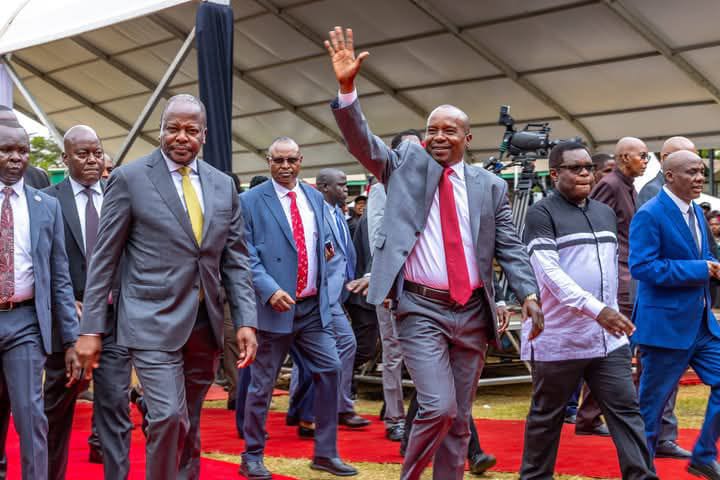
Deputy President Kithure Kindiki has challenged the government to accelerate reforms in the agriculture sector, saying the success of Kenya’s economic transformation will ultimately be measured by the income earned by farmers and the affordability of food for households.
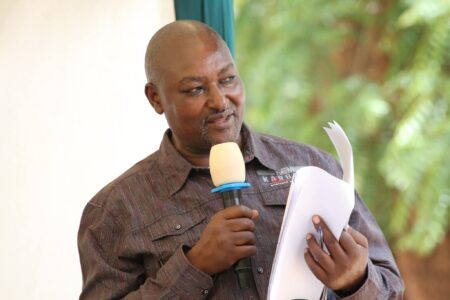
Speaking at the Agriculture and Food Security Transformation Summit 2026 at Jamhuri Park, Nairobi, Prof Kindiki said the government must move beyond increasing agricultural production to building an integrated food system capable of delivering higher incomes, jobs, value added products and greater food self sufficiency.
The three day summit, held under the theme “Advancing Food Sovereignty, Job Creation and Shared Prosperity under the Bottom Up Economic Transformation Agenda (BETA)”, brought together farmers, pastoralists, fisherfolk, county governments, researchers, private sector players, financial institutions and development partners.
Kindiki said agriculture remained at the heart of President William Ruto’s economic agenda because of its central role in feeding the population, creating employment, supplying raw materials to industry and generating export earnings.
“When agriculture works, Kenya works,” the Deputy President said.
He said the government had deliberately focused on reducing the cost of production, improving productivity, expanding access to finance and insurance, strengthening extension services, opening markets and promoting value addition.
However, Prof Kindiki acknowledged that the reforms were still a work in progress and said more needed to be done to ensure that farmers translated increased production into better household incomes.
“The journey is not yet complete. We have not reached where we want to be,” he said.
The Deputy President said Kenya had made significant progress in increasing agricultural output, citing maize production as one of the areas where the government had recorded gains.
He said maize production had risen from about 34 million bags to 75 million bags, while production of major cash crops such as coffee and tea had also increased.
The government, he said, would continue working to lower the cost of farm inputs as part of efforts to make agriculture commercially viable.
Kindiki also announced a further reduction in the price of certified seed, saying a two-kilogramme packet that previously cost Sh600 would now retail at Sh300.
He said the government was also working on measures to reduce the cost of livestock feed, particularly for dairy farmers, to increase the amount of money farmers retain from milk sales.
The Deputy President noted that the price paid to dairy farmers for milk had increased from about Sh36-37 per litre in 2022 to approximately Sh50, but said the government wanted farmers to earn even more.
“We still have work to do on livestock feeds. We will announce further measures to reduce the cost of production in the livestock sector so that the dairy farmer can put more money in the pocket,” he said.
The summit comes as the government seeks to reposition agriculture from subsistence activity into a modern commercial enterprise driven by technology, finance, research, processing and reliable markets.
Kindiki said the transformation being witnessed in the sector was visible in the growing adoption of digital technologies, value addition and new approaches to farming.
He said farmers were increasingly moving from selling raw commodities to producing processed goods, while technology was helping connect them to inputs, information, finance and markets.
“The farmer needs to know three things, how much it will cost to produce, how much they will earn and where they will sell,” he said.
He said this required an agricultural ecosystem that links affordable inputs and finance to extension services, aggregation, storage, processing and markets.
The government, he added, was increasingly using digital platforms and e-vouchers to connect farmers with subsidised inputs and agricultural services.
According to the Deputy President, the next phase of agricultural transformation should build a seamless system stretching from research and seed development to the farm, factories and markets.
“The food system begins with research and seed. It moves to inputs and finance, reaches the farmer through extension, moves from the farm through aggregation and storage, enters factories through processing and ultimately reaches consumers through markets,” he said.
Kindiki said the government also wanted to change its role from being the main actor in agriculture to becoming an enabler of private investment, innovation and enterprise.
He urged the private sector, cooperatives, financial institutions, manufacturers, processors, researchers and development partners to work with farmers and national and county governments to unlock the sector’s full potential.
The Deputy President also called for greater investment in fisheries and aquaculture, saying Kenya’s agricultural economy extended beyond farms and livestock.
He cited increased fish production and the need to strengthen processing and value addition so that more wealth generated from Kenya’s lakes, rivers, coastline and ocean remained within the country.
The government, he said, was also seeking to increase the value earned from traditional export commodities.
Tea earnings, he said, had increased significantly, while the value of meat exports had also risen, demonstrating the potential of agricultural value chains to generate foreign exchange and employment.
Agriculture Cabinet Secretary Mutahi Kagwe said the summit provided an opportunity for stakeholders to examine what had been achieved, assess the current state of the sector and chart a future path for agriculture.
He said the meeting would focus on where Kenya had come from, where the sector was currently and where it should be headed.
The CS said the summit would also examine the future of agriculture as Kenya approaches its centenary in 2063.
“We must ask ourselves what agriculture will look like in 2063 when Kenya will be 100 years old,” he said.
Council of Governors Agriculture Committee chairman Kenneth Lusaka said counties remained central to the transformation because agriculture was a devolved function.
He commended the national government for reducing the price of fertiliser and seed, saying lower input costs were critical to improving farmers’ productivity and incomes.
Lusaka said governors would continue implementing agricultural programmes at the grassroots while working with the national government to address challenges that remained unresolved.
He singled out the cost of animal feeds as one area requiring further intervention.
The summit also showcased agricultural enterprises and technologies, with Kindiki noting that exhibitions demonstrated how farmers were increasingly adopting modern production methods and turning agriculture into viable businesses.
He said the government’s ultimate test should not simply be the number of farmers registered or the volume of produce harvested.
Instead, success should be judged by whether farmers earn more, Kenyan families can access affordable food, young people secure jobs and businesses in agriculture, industries obtain locally produced raw materials and the country earns more from its exports.
Kindiki urged stakeholders to use the summit to move beyond discussions and agree on practical measures that can accelerate the sector’s transformation.
He said the country must shift from production to productivity, productivity to prosperity, raw commodities to value added Kenyan products, and imports to greater self reliance.
“Government alone cannot deliver the full potential of Kenyan agriculture,” he said, calling for stronger partnerships between farmers, pastoralists, county governments, cooperatives, researchers, innovators, manufacturers, processors, traders, financial institutions and the private sector.
He said the broader BETA agenda was ultimately about creating an agricultural economy that is productive, competitive, resilient and commercially viable.
For millions of Kenyan farmers, however, the most important measure will remain the money they take home after every harvest or sale of livestock and other agricultural products.
Kindiki said the government would therefore continue pursuing interventions aimed at lowering production costs while expanding productivity, markets, value addition and export opportunities.
As the summit continued, stakeholders were expected to examine emerging technologies, financing models, climate resilience, agricultural research, value chains, food security and opportunities for young people to enter agriculture as entrepreneurs rather than merely as labourers.
The Deputy President said Kenya had made progress, but warned that the gains should be treated as a foundation for the next phase rather than the final destination.
The government’s stated ambition is to build a food system capable of feeding the country, creating jobs, supporting industries and positioning Kenyan agricultural products competitively in regional and global markets.