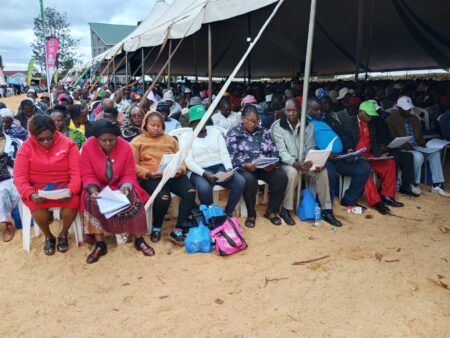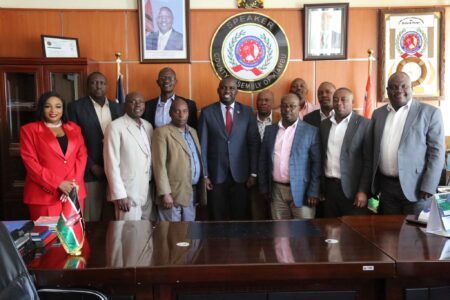









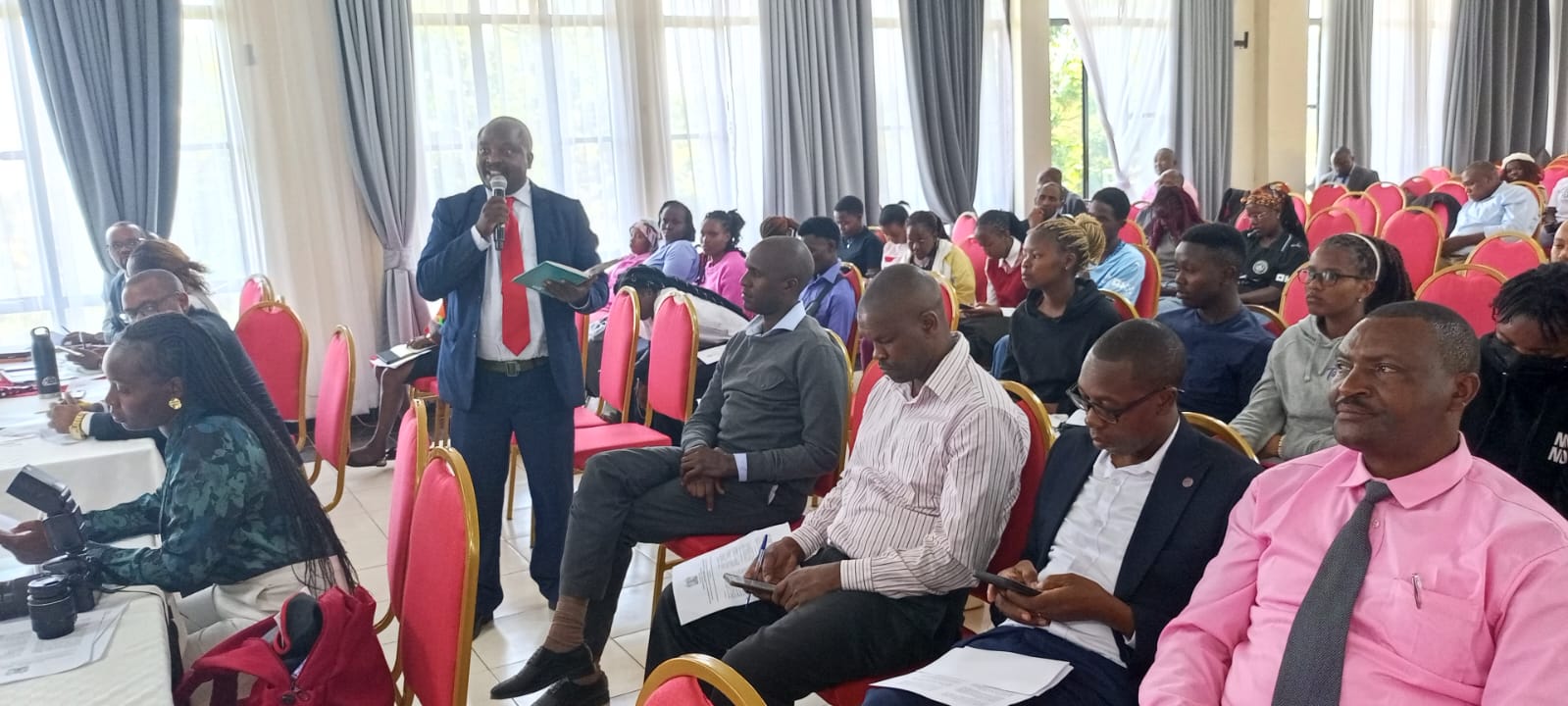
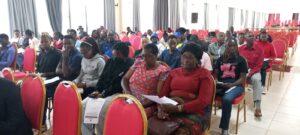
Residents of Kiambu County on Tuesday turned out in large numbers at the Kiambu National Polytechnic (KINAP) to submit their views on the proposed partial divestiture of Government of Kenya shares in Safaricom PLC, during a public participation forum convened by the National Assembly’s Departmental Committees on Finance and National Planning, and Public Debt and Privatisation.
The forum forms part of a nationwide public engagement exercise by Parliament to collect views on the government’s proposal to sell part of its shareholding in the telecommunications giant, with proceeds earmarked for infrastructure development.
Speaking during the meeting, Baringo North MP Joseph Makilap, a member of the National Assembly Committee on Public Debt and Privatisation, said the government intends to release about 15 per cent of its Safaricom shares, potentially to strategic investor Vodacom, in order to raise funds for infrastructure projects.
“The Government of Kenya is intending to sell or release 15 per cent of its shares in Safaricom with the view of raising enough money to invest in infrastructure,” Makilap said. “We want to thank the people of Kiambu for responding and coming in large numbers. We have collected their views, and we assure the public that all submissions will be taken into consideration.”
Makilap noted that the two joint committees are conducting similar hearings in 30 counties across the country, after which all views—both physical and online—will be consolidated and tabled in the National Assembly for debate.
“This bill will either be supported, amended, or rejected based on the views of wananchi,” he added, urging those unable to attend the meeting to submit memoranda through the parliamentary website.


National Assembly Finance and National Planning Committee Chairperson and Turkana South MP John Ariko led the joint committees and emphasized that Parliament was executing its constitutional mandate of representation, oversight, and public participation.
“We are here because we represent the people of Kenya, not just our individual constituencies,” Ariko said. “This engagement is meant to inform you and also to hear from you. That is the essence of public participation.”
Ariko highlighted key concerns raised by Kiambu residents, including the absence of a clearly defined infrastructure fund, calls for priority allocation of the shares to Kenyan citizens rather than foreign investors, and challenges faced by members of the public in attending participation forums due to distance and cost.
“The people of Kiambu want to invest. They want these shares sold to them, not to Vodacom,” he said.
Several residents and professionals expressed strong opposition to the proposed sale, arguing that Safaricom is a strategic and highly profitable technology company whose divestiture could harm Kenya’s long-term economic interests.
Rosemary Muthoni, a Kiambu leader, questioned the rationale of selling a profitable asset to address debt and infrastructure gaps.
“You do not sell a tech company. The rest of the world is preserving their technology firms because that is the future,” she said. “This government has overtaxed citizens, yet we see nothing on the ground. What guarantee do we have that the billions raised will be used properly?”

Muthoni also cited rising public debt—now nearing KSh12 trillion—and warned legislators that Kenyans expect firm representation of their views.
“We are rejecting this sale, and you better hear us. 2027 is coming,” she said.
Former Capital Markets Authority technical expert FCPA Reuben Gitahi raised concerns over potential insider trading, arguing that Vodacom, as a major Safaricom shareholder, may possess privileged information influencing its interest in acquiring more shares.
“Vodacom should first be investigated for insider trading,” Gitahi said, citing provisions of the Capital Markets Act and drawing parallels with past privatisation cases such as Telkom Kenya.
Gitahi and other professionals urged Parliament to consider global best practices, noting that major economies are increasing investments in technology, not divesting from them. He advocated for any sale to prioritize local investors, pension funds, and Kenyan institutions.
Similar sentiments were echoed by Mary Njeri of the Kenya National Chamber of Commerce and Industry, who questioned the process through which Vodacom was identified as a potential buyer.
“If Safaricom shares were offered openly, just like the initial public offer, they would likely be oversubscribed by Kenyans,” Njeri said. “Selling a performing asset goes against principles of good governance.”
Njeri also warned against excessive foreign ownership, arguing that it could lead to profit repatriation at the expense of local reinvestment, and called on the government to focus on cutting recurrent expenditure instead of selling revenue-generating assets.
The parliamentary committees assured residents that all views—supportive or opposing—would be documented and analyzed before the matter is debated in the House.
As the public participation exercise continues across the country, the proposed Safaricom divestiture is shaping up to be one of the most contested economic policy issues currently before Parliament, with Kenyans demanding transparency, accountability, and a people-centered approach to national asset management.