







Cabinet Secretary for the National Treasury John Mbadi has mounted a robust defence of the government’s plan to divest selected public assets, arguing that Kenya must adopt bold and creative financing strategies to safeguard economic stability, expand infrastructure and ease the tax burden on ordinary citizens.
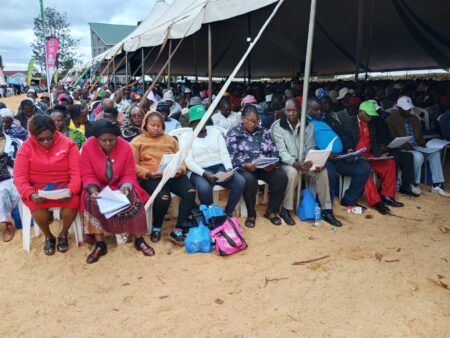
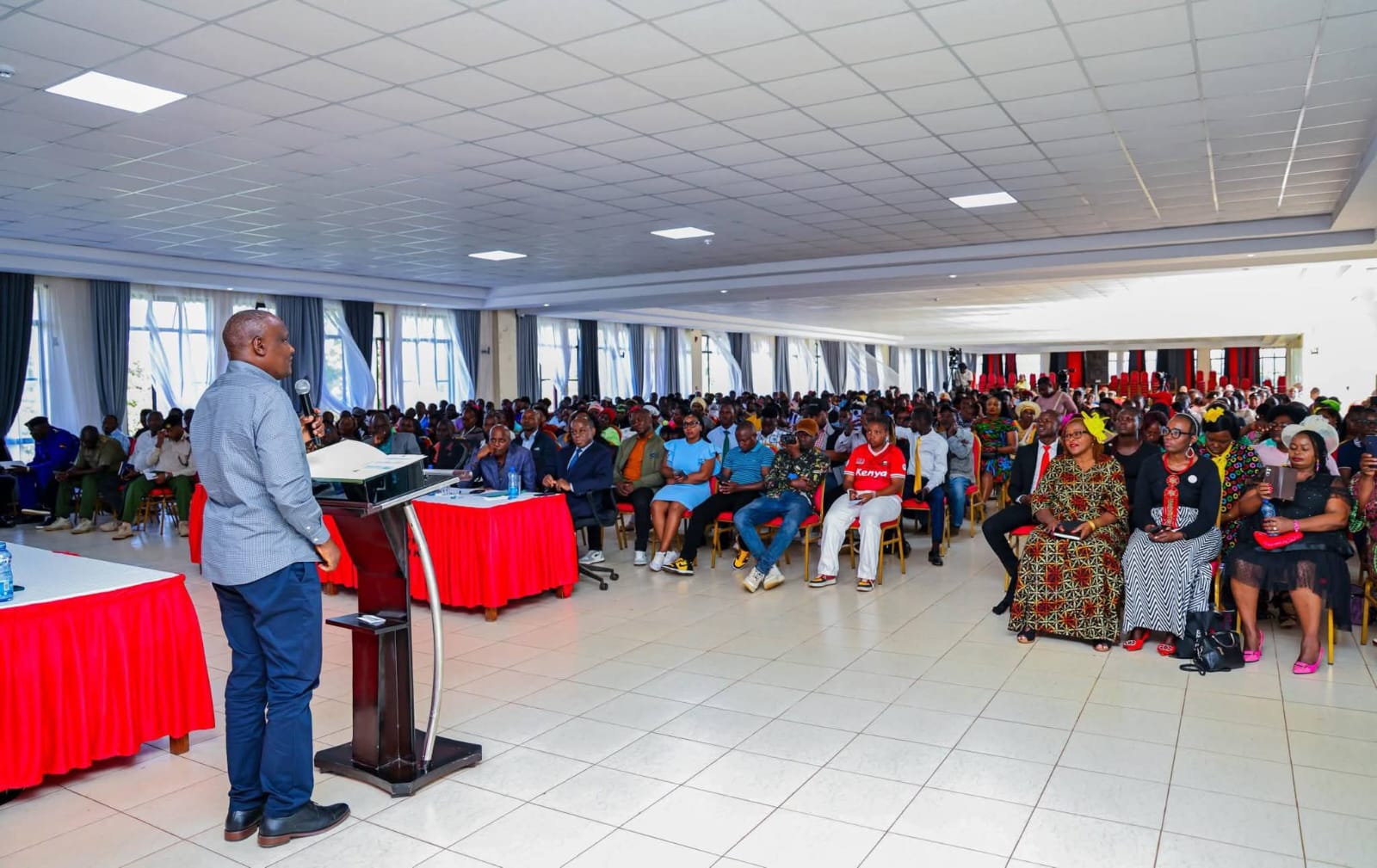
Speaking during a public engagement at Kiambu National Polytechnic (KINAP) that brought together representatives from the University Students Association (UNSA), student leaders, the business community, Bunge la Wananchi, and other civil society actors in a wide-ranging dialogue on public financial management and the national budget process, Mbadi said his focus as Treasury chief was not political longevity but leaving a lasting impact, even if some initiatives prove controversial or unsuccessful.
“It doesn’t matter whether I come back as Cabinet Secretary or not. While I am here, I must leave a mark. Even if an attempt fails, let people remember that there was a minister who tried,” Mbadi said.


At the centre of Mbadi’s remarks was the proposed partial privatisation of mature state-owned enterprises, including the Kenya Pipeline Company (KPC), as part of a broader strategy to mobilise domestic resources without increasing taxes or piling up new debt.
He argued that Kenya could no longer rely on traditional revenue-raising methods, external aid or excessive borrowing, noting that global dynamics had shifted.
“Those days when America, Europe or even China would come rushing to give money are gone. We must think internally. How do we raise our own money for development?” he said.
Mbadi stressed that proceeds from asset divestiture would not be used for recurrent expenditure, warning that doing so would be akin to “selling a house to buy food.” Instead, the funds would be placed in a dedicated investment fund aimed at financing economically viable infrastructure projects.
“I want to leave a fund with trillions of shillings—at least Sh3 trillion—so that future generations benefit long after I have left this office,” he said.
The Treasury CS singled out Jomo Kenyatta International Airport (JKIA) and major highways as critical infrastructure projects requiring urgent investment if Kenya is to maintain its status as a regional logistics hub.
Despite being the sixth-largest economy in Africa, Mbadi said Kenya risks losing its competitive edge to neighbours such as Rwanda and Ethiopia due to inadequate facilities.
“We call ourselves the elephant and the lion of the region, yet we have an airport that does not match our status. Shame on us. If we are not bold, people will move their business elsewhere,” he warned.
Responding to concerns about the privatisation of KPC, Mbadi outlined a detailed and, he said, inclusive shareholding model designed to keep the company largely Kenyan-owned.
Under the proposal, the government would retain 35 per cent ownership, while 65 per cent would be divested. Of this:
- 5 per cent would go to KPC employees;
- 15 per cent to oil marketing companies;
- 20 per cent reserved for individual Kenyan citizens;
- 20 per cent for institutional investors such as pension funds and insurance firms;
- 20 per cent allocated to regional and international investors, including East African countries like Uganda.
Mbadi noted that Uganda accounts for about 32 per cent of KPC’s revenue and should be considered a strategic partner. He added that individual Kenyans would be protected through minimum and equal share allocations, with entry starting from as low as Sh900.
“By all standards, KPC will remain a Kenyan company, with about 70 per cent ownership directly or indirectly in Kenyan hands,” he said.
Mbadi reiterated his long-held view that government should not be in the business of running commercial enterprises but should instead create an enabling environment for private sector growth.
“The government already benefits through taxes. We don’t need dividends of Sh4 billion if that money cannot build an airport or decongest our roads,” he said.
He cited the congestion on the Thika Superhighway and the Namanga Road as examples of infrastructure bottlenecks hurting productivity and daily life.
In a move likely to resonate with salaried workers, Mbadi announced plans for sweeping tax relief targeting low- and middle-income earners.
He said the government had agreed, in principle, that Kenyans earning Sh30,000 and below per month should pay zero income tax, while those earning up to Sh50,000 would receive significant relief.
“We have 3.5 million salaried Kenyans carrying the burden of almost everyone else. It is not fair. People need money in their pockets so that demand in the economy can recover,” Mbadi said.
According to the CS, the proposal would be implemented immediately through amendments, without waiting for the next Finance Bill.
Mbadi also defended the government’s recent debt management decisions, crediting them with steering Kenya away from default at a time when several African countries—including Ghana, Ethiopia and Mozambique—had failed to meet their obligations.
He recalled the severe pressure on the shilling and foreign exchange reserves in early 2024, when the currency slid to around Sh160 to the dollar amid looming Eurobond repayments.
“We chose to be proactive. We paid a 2027 Eurobond early and over 60 per cent of another due in 2028. We refused to gamble with the economy,” he said.
Emphasising that Kenyans have rejected further tax increases, Mbadi said neither higher taxes nor more borrowing were viable options.
Drawing on his background in public finance, he argued that good tax policy should focus on wealth rather than overburdening income and trade.
“Don’t overtax business. Let people trade, expand, create jobs. That is how you grow an economy,” he said.
While acknowledging public scepticism due to past corruption scandals, Mbadi urged Kenyans to judge the current proposals on their merits and hold leaders accountable for transparent use of funds.
“We know people fear this money may end up in pockets. That is your role now—to hold us to account,” he said.
Mbadi concluded by saying the ultimate goal was a progressive Kenya with sustainable growth, affordable education and opportunities for future generations, warning that economic collapse would hurt everyone regardless of political affiliation.
“The economy does not discriminate,” he said. “If it collapses, we all suffer.”