










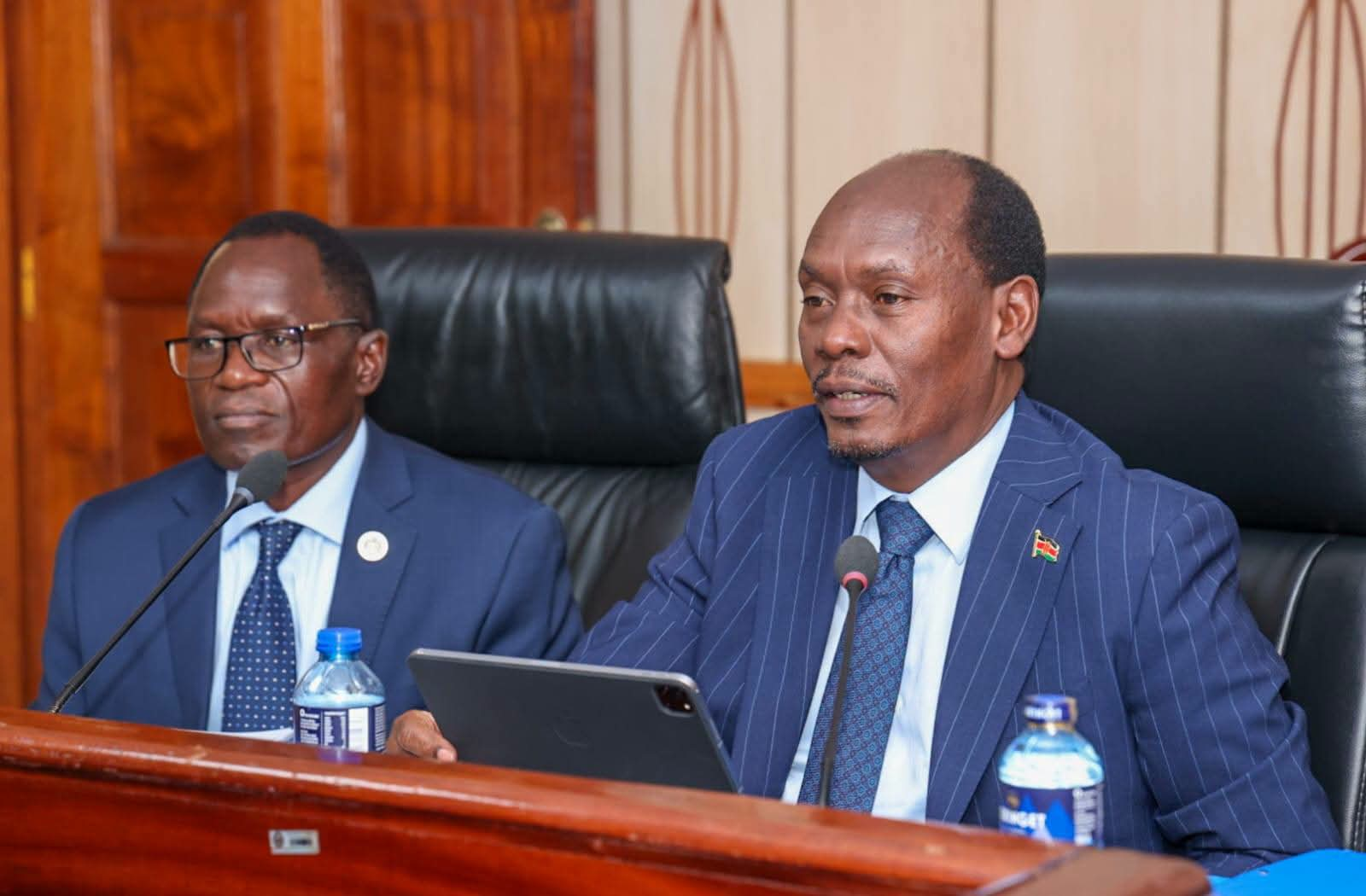
Information, Communication and Digital Economy Cabinet Secretary William Kabogo has warned of significant funding gaps threatening the implementation of key digital infrastructure projects, seeking Sh63.38 billion to finance the ministry’s programmes against a proposed allocation of Sh16.1 billion.
Kabogo, who appeared before the National Assembly Committee on Information and Innovation to present the ministry’s budget proposals under the 2027 Budget Policy Statement, said the funding shortfall could constrain the rollout of critical projects aimed at expanding connectivity, strengthening cybersecurity and accelerating the country’s digital transformation.
The CS outlined the ministry’s priorities and reviewed its performance in the current financial year, highlighting programmes whose implementation requires additional resources to meet the Government’s digital economy ambitions.
Among the projects facing funding constraints are the last mile connectivity programme, cybersecurity management, establishment of digital hubs, connectivity to health facilities, the Mombasa–Nairobi Internet Gateway and development of the National Data Centre.
Kabogo said the investments were critical in expanding access to digital services, improving the resilience of the country’s ICT infrastructure and creating an enabling environment for innovation, digital business and service delivery.
The ministry is also undertaking a range of programmes aimed at expanding public access to digital platforms and equipping young people with skills to participate in the growing digital economy.
Kabogo told the committee that the ministry had maintained 850 digital sites and established 870 public Wi-Fi hotspots, initiatives intended to improve access to digital services and bridge connectivity gaps.
The Government has also continued work on the Konza Conference Facility and the National Data Centre, two flagship infrastructure projects expected to strengthen Kenya’s digital ecosystem and support the expansion of technology driven services.
On digital skills development, the CS said 10,187 young people had been trained, underscoring the ministry’s efforts to equip the youth with competencies needed in an increasingly technology driven economy.
The Office of the Data Protection Commissioner has also continued handling complaints and enforcing compliance with data protection requirements as digital platforms and technology based services expand.
Kabogo further outlined the performance of institutions under the broadcasting and telecommunications portfolio, including the Kenya Broadcasting Corporation, Kenya News Agency and Media Council of Kenya, which continue to discharge their respective statutory mandates.
He told MPs that funding deficits across the two State Departments remained a major challenge in implementing priority programmes, warning that addressing the gaps would be critical to expanding connectivity, improving broadcasting services, strengthening cybersecurity and supporting institutions tasked with delivering ICT and communication services.
The budget engagement comes as the Government continues to prioritise digital infrastructure, online service delivery, digital skills development and technology driven economic growth as part of its broader transformation agenda.
Kabogo was accompanied by Principal Secretary for Broadcasting and Telecommunications Stephen Isaboke, ICT Authority chief executive Jesse Maruti, Konza Technopolis Development Authority chief executive John Paul Okwiri, Media Council of Kenya chief executive David Omwoyo and Kenya Broadcasting Corporation managing director Agnes Kalekye.
The committee is expected to scrutinise the ministry’s proposals and funding requirements as Parliament considers priorities for the next financial year.