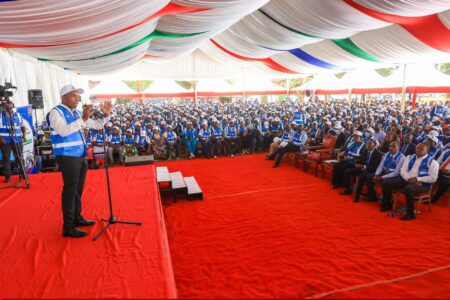




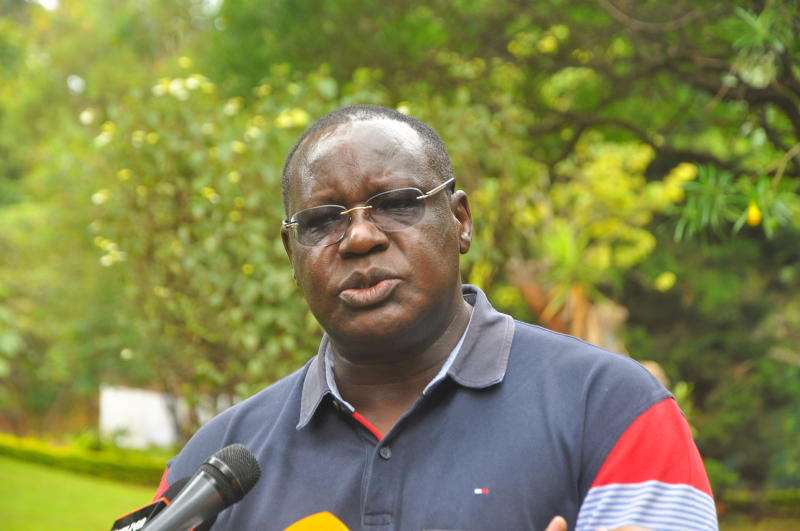
Former Kiambu Governor James Nyoro has formally announced his campaign to reclaim the county’s executive seat, launching a sharp critique against the current governor, Kimani Wamatangi. Nyoro promised to shift the county away from superficial public relations tactics and focus instead on large-scale industrialization, sustainable economic development, and inclusive leadership.
In an exclusive interview with The Kiambu Observor,Nyoro criticized the Wamatangi administration, accusing it of operating as an isolated “one-man show” and relying on short-term political handouts that do not resolve the underlying causes of poverty in Kiambu.
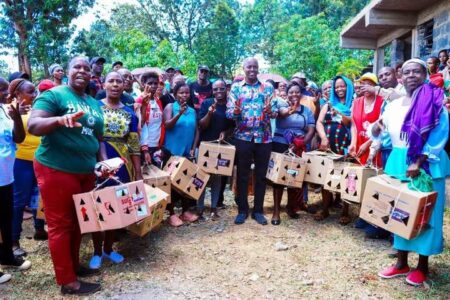
Nyoro specifically criticized the governor’s signature agricultural distribution initiatives, which provide chickens and pigs to individuals. He argued that offering livestock without supporting infrastructure fails to deliver lasting economic relief to struggling families.
“You cannot give those tokens to a person who then has to transport them through dilapidated roads. Some end up selling them at the gate out of desperation,” Nyoro stated. “Furthermore, a person holding a chicken and a pig cannot get medicine when they fall sick because our hospitals are hollowed out.”
The former governor argued that real transformation requires value-addition processing plants and intensive farming models. While livestock keeping is beneficial, he explained, it only creates a viable livelihood if the county establishes local processing facilities.
Acknowledging shifting demographics across Kiambu, Nyoro noted that rapid land subdivision in areas such as Ruaka, Uthiru, Kabete, and Kiambu Town has drastically reduced space for traditional farming. To address this, he proposed structured economic support programs led by youth and women groups.
He pledged to restart the stalled Uplands Bacon Factory project in Lari, which was paused due to legal challenges. Nyoro explained that although Kiambu lost the court case, his administration planned to appeal, promising to revive the facility upon returning to office so farmers can directly supply and sell pigs to the plant. He also suggested replicating large-scale cooperative models, pointing to Kenchic’s poultry processing plant in Ngoliba as a viable template.
Regarding the dairy sector, Nyoro highlighted his past partnerships, noting that Kiambu hosts 23 dairy firms. He recalled that during his tenure, the World Bank awarded the county KSh 100 million for milk coolers, adding that his goal is to secure further donor backing to equip these companies with modern pasteurization technology. Additionally, he proposed leveraging Lari’s high fruit production to supply raw materials to commercial wineries.
Nyoro expressed strong concern over the current administration’s strained relations with major private investors, specifically mentioning Tatu City. He argued that Wamatangi’s demand for a 10 percent land surrender harmed key public-private partnerships.
“The land the current governor is demanding is nothing compared to the thousands of jobs and billions in taxes that Tatu City can yield for Kiambu,” Nyoro said. “We must attract investors the way counties like Murang’a do, by establishing Special Economic Zones (SEZs).”
If elected, Nyoro promised that his administration would require companies operating within Kiambu to implement robust Corporate Social Responsibility (CSR) initiatives that prioritize local youth employment.
Defending his past performance, Nyoro contrasted his healthcare record with that of the current administration. He emphasized that despite the intense pressures of the COVID-19 pandemic, his administration managed the health sector smoothly without any strikes by doctors or nurses, while installing 12 ICU beds at Tigoni Level 4 Hospital and 10 at Kiambu Level 5 Hospital.
Responding to public outrage regarding declining conditions at county mortuaries—including reports of rats damaging human remains—Nyoro attributed the issue to administrative negligence. He claimed his administration constructed a modern mortuary with refrigeration units at Gatundu Level 5 Hospital, but the current regime has kept it closed.
Nyoro also highlighted his infrastructure record, pointing to major water projects and road improvements, such as cabro paving in Ruiru Town and expanding water connections and roads to 20,000 households in Ndeiya, turning it into a thriving real estate area. He added that his leadership style remained accessible, featuring regular consultative roundtables with boda boda operators and small-scale traders (mama mbogas).
Looking ahead, Nyoro committed to establishing a leadership college to mentor young adults, noting that the current political environment disadvantages qualified young aspirants who lack financial resources. Furthermore, he pledged to engage Kiambu’s diaspora population—which remits over KSh 8 billion to the county—by launching a diaspora investment bank and creating sister-city partnerships between Kiambu and global cities like Seattle to improve public services.