





The trade in illicit and counterfeit alcoholic beverages remains a persistent security and public health challenge across Kenya.
Unscrupulous manufacturers often use smuggled or diverted industrial ethanol to blend high-potency “second-generation” liquor. These illegal brews pose severe risks to public safety, frequently leading to health complications or fatalities, while depriving the government of tax revenue.
Major transport arteries like the Nairobi–Nakuru Highway serve as critical transit routes for cartels attempting to sneak raw materials into urban manufacturing dens.
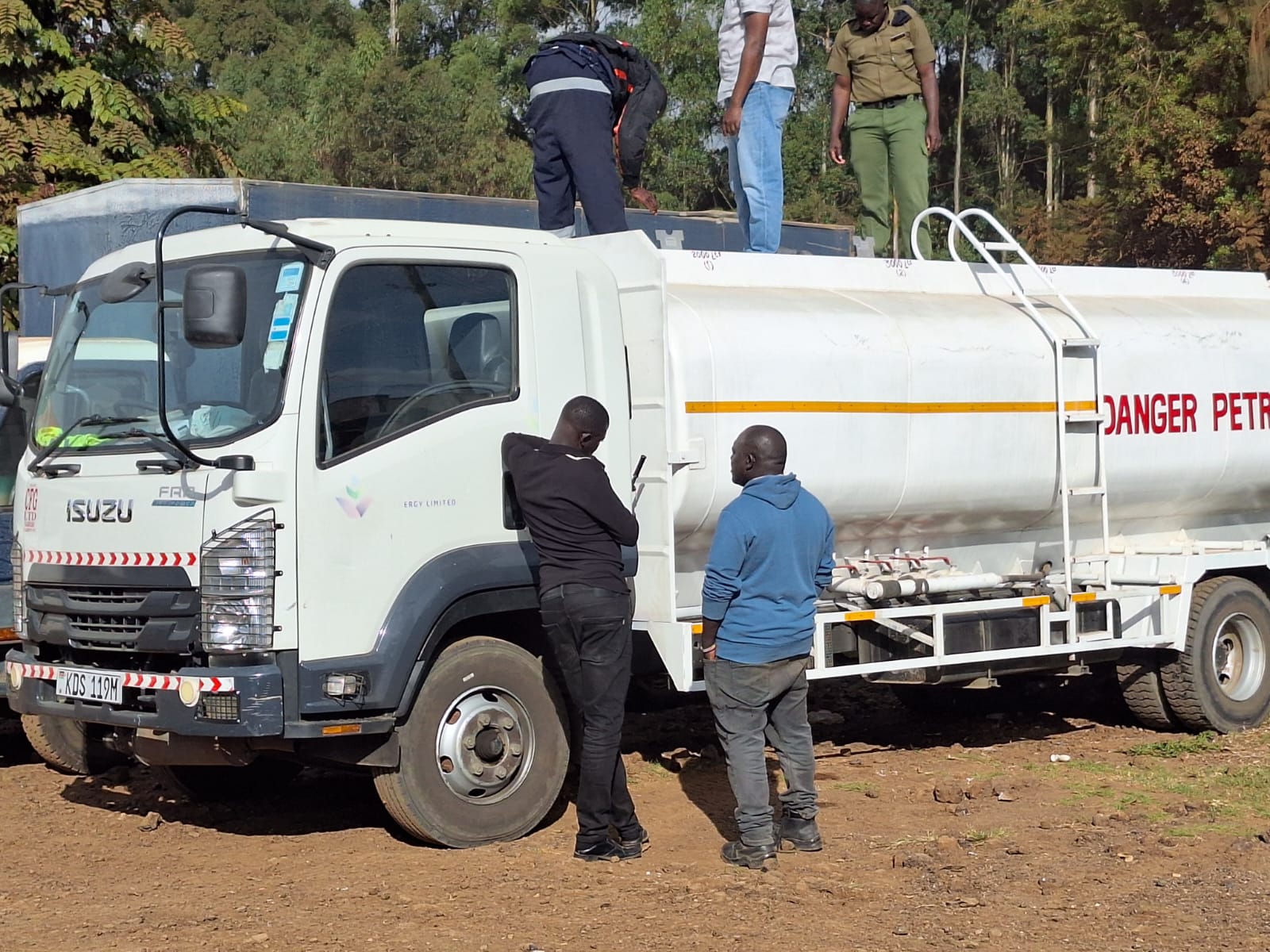
Police officers in Lari Sub-County have impounded a tanker carrying 10,000 litres of suspected industrial ethanol along the busy Nairobi–Nakuru Highway. Authorities suspect the consignment was earmarked for an illegal alcohol manufacturing facility in Nairobi.
To evade detection, the tanker was disguised as a standard fuel delivery truck—a tactic that has sparked fresh concern among law enforcement over the increasingly sophisticated methods used to traffic illicit raw materials.Arrests and Financial Impact
Three individuals onboard the vehicle were taken into custody. They are currently aiding detectives in tracing the origin of the substance and identifying the intended recipients.
According to County Commissioner George Matundura, samples of the liquid have been dispatched to the Government Chemist for verification.
Matundura noted that had the batch reached its target destination, it could have been processed into second-generation alcoholic drinks with an estimated street value of KSh 28 million.
Heightened Security Measures
In response to the interception, Kiambu County Police Commander Kennedy Samani has directed the immediate setup of strategic police roadblocks across major entry points into the county.
These checkpoints will enforce thorough vehicle inspections to stem the transit of contraband and dismantle illicit supply chains passing through the region.