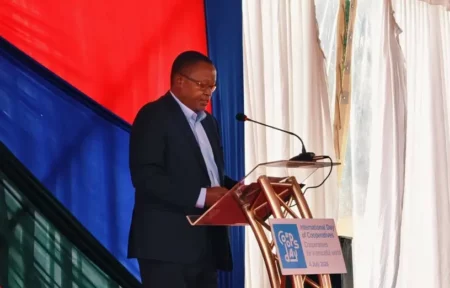






William Kabogo has intensified Kenya’s push to become a leading digital economy by holding a series of high-level bilateral meetings and multilateral engagements in Geneva, Switzerland, aimed at unlocking strategic partnerships in artificial intelligence (AI), digital infrastructure, online child protection and digital skills development.
The Cabinet Secretary for Information, Communications and the Digital Economy used the global technology meetings in Geneva to engage leaders from the European Union, the Netherlands, Germany, the International Telecommunication Union (ITU), and the Africa AI Council, reaffirming Kenya’s commitment to transforming agreements into tangible projects that will drive economic growth and technological innovation.
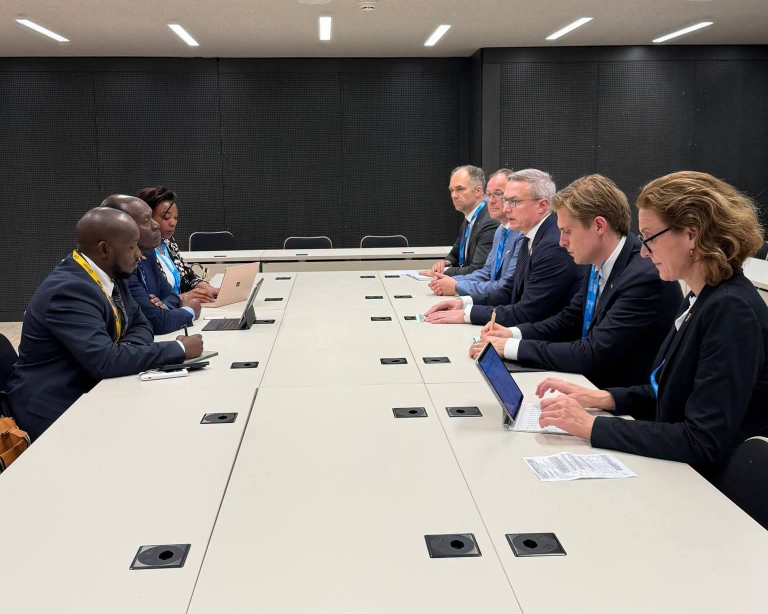
During discussions with European Union officials, Kabogo said the talks focused on strengthening Kenya-EU cooperation under the Global Gateway Phase II initiative, expanding AI computing access for Kenyan researchers, enhancing the resilience of undersea communication cables and advancing Kenya’s bid for EU data adequacy recognition, a milestone expected in September.
He said the discussions marked an important step towards deepening digital cooperation between Kenya and Europe, emphasizing that the focus would now shift from negotiations to implementation.
The Cabinet Secretary also held bilateral talks with a delegation from the Kingdom of the Netherlands, where both countries pledged to move beyond signing Memoranda of Understanding and instead prioritize measurable implementation of agreed projects.
The discussions centred on child online safety, responsible use of artificial intelligence and expansion of Kenya’s digital infrastructure. Among the key proposals was the exploration of a minimum age requirement for social media use, alongside initiatives to equip parents and teachers with tools to protect children from online harm.
Kabogo noted that the meeting also explored how AI could be deployed to improve drought prediction, boost agricultural productivity and address the growing energy demands associated with data centres.

He highlighted Kenya’s ambitious digital agenda, which includes expanding the national fibre optic network from the current 47,000 kilometres to 100,000 kilometres, establishing digital hubs in all 1,450 wards across the country and increasing the digital economy’s contribution beyond its current 8.5 per cent of the country’s Gross Domestic Product.
He invited Dutch government officials and private investors to visit Nairobi to explore opportunities in green data centres, regional AI computing infrastructure and broader digital investments.
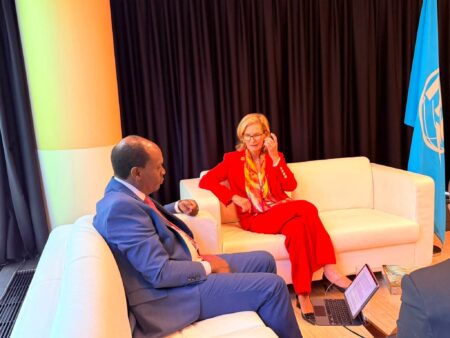
In another key engagement, Kabogo met Karsten Wildberger of Germany, where the two governments agreed to operationalise the Kenya-Germany Memorandum of Understanding on Digital Policy and Infrastructure.
The agreement will be implemented through a joint working group tasked with accelerating fibre optic expansion, promoting artificial intelligence in public service delivery, developing Swahili language AI models and strengthening digital skills training for Kenyan youth.
Kabogo also extended an invitation to the German minister and German technology companies to visit Kenya and explore investment opportunities in the country’s expanding digital sector.

At the continental level, the Cabinet Secretary joined fellow members of the Africa AI Council during its second meeting at the ITU headquarters, convened by the Smart Africa on the sidelines of the AI for Good Global Summit.
The council validated a two-year strategic plan designed to strengthen Africa’s AI sovereignty by investing in computing infrastructure, governance frameworks, local data, talent development and financing.
Among its flagship targets is training at least three million Africans in artificial intelligence over the next three years, while promoting AI solutions designed to address African challenges using African data and expertise.
Kabogo reaffirmed Kenya’s commitment to a coordinated continental approach that ensures artificial intelligence technologies are developed in Africa for African realities.
Kenya also joined Spain, the European Union and France in launching the Coalition for Children’s Rights and Protection in the Age of Artificial Intelligence, an international initiative aimed at safeguarding children from emerging AI-related risks.
Kabogo observed that by 2050, one in every four people globally will be African, making it essential for AI systems to recognise African languages and cultural contexts while providing equal protection to children regardless of geography or language.
Under the initiative, Kenya committed to serving as a regional hub for the rapid removal of AI-generated child sexual abuse material, developing practical online safety tools for schools and child protection institutions, and contributing findings from its nationwide child online protection survey covering all 47 counties.
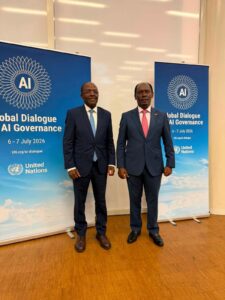
The Cabinet Secretary concluded his Geneva engagements with a meeting with Cosmas Zavazava, Director of the ITU Telecommunication Development Bureau, where they reviewed the progress of Kenya’s partnership with the global telecommunications agency.
The discussions focused on AI governance, data sovereignty, affordable internet connectivity and digital capacity building. Kenya received recognition for its expanding connectivity infrastructure and progressive regulatory environment, while both parties explored ways of supporting the government’s plan to establish a digital hub in every ward.
Kabogo emphasized that locally generated, high-quality data remains critical to ensuring AI systems fairly reflect African realities and deliver meaningful benefits to communities across the continent.
The Geneva engagements underscore Kenya’s growing role in shaping global conversations on artificial intelligence, digital governance and online safety, while positioning the country as a regional leader in digital transformation through strategic international partnerships and practical implementation of technology-driven initiatives.