









Principal Secretary Esther Muoria has challenged technical and vocational training institutions to place practical competence at the centre of training, saying the true measure of TVET is what graduates can confidently do with their skills.
The Government has renewed its emphasis on practical, industry driven training as it seeks to ensure that graduates of technical and vocational education and training (TVET) institutions are equipped with skills that respond directly to the needs of the labour market.


State Department for TVET Principal Secretary Esther Muoria said the success of technical training should not be judged merely by the number of certificates issued, but by the ability of trainees to apply what they have learnt to solve real world problems, create products and services and earn a livelihood.
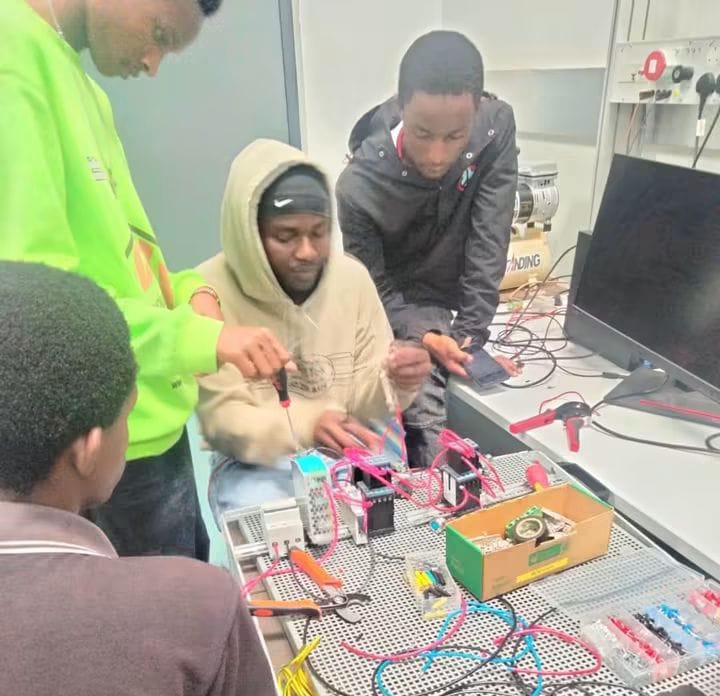
Muoria said it was encouraging to see trainees confidently handling tools, operating equipment, solving technical problems and producing goods with their own hands, describing such practical competence as the real value of TVET.
“There is something deeply encouraging about seeing trainees confidently at work, handling tools, operating equipment, solving a problem or producing something with their own hands,” Muoria said.
She added that technical training must ultimately enable graduates to do, make, repair, create, solve and produce, rather than simply demonstrate theoretical knowledge.


The PS commended principals and management teams in TVET institutions for their role in creating conducive learning environments and steering institutions towards quality training.
Muoria said the leadership of the institutions was critical in ensuring that investments in infrastructure, equipment and modern training facilities translated into meaningful skills for trainees.
She reserved special praise for TVET trainers, describing them as the people who ultimately turn government investments in equipment and infrastructure into usable skills.
“Equipment and infrastructure matter, but it is the trainer who turns these investments into skills,” she said, thanking trainers for their dedication in demonstrating procedures, guiding trainees, correcting mistakes, assessing competence and patiently building skills.
According to the PS, trainers remain central to the transformation of technical education because practical competence requires continuous demonstration, supervision and assessment.
She also commended trainees who have chosen technical education and committed themselves to mastering occupations that can provide them with employment and entrepreneurial opportunities.


Muoria said the growing demand for skilled workers made TVET an important pillar in Kenya’s efforts to expand employment, productivity, industrialisation and enterprise development.
She urged trainees to take advantage of the practical nature of technical education by developing competencies that could enable them to secure jobs, establish businesses or provide technical services in their communities.
The PS further emphasised the importance of partnerships between TVET institutions and industry, saying such collaborations ensure that training remains relevant to changing technologies, workplace practices and professional standards.
Industry partnerships, she said, expose trainees to real workplaces while creating opportunities for industrial attachment, employment, technology transfer and enterprise development.
The collaboration also enables training institutions to understand the skills required by employers and adjust their programmes accordingly.
Muoria said the relationship between TVET institutions and industry should therefore go beyond occasional engagements, with employers and training institutions working together throughout the skills development process.
She described the approach as TVET “from industry, with industry and for industry”, reflecting the need for training to remain closely connected to the realities of the workplace.

The emphasis on industry linked training comes as Kenya continues to position TVET as a major pathway for young people seeking employment and self employment.
The sector has expanded its network of institutions and programmes while placing greater emphasis on competency based education and training, practical assessment and alignment with labour market requirements.
Muoria said principals, trainers, trainees and industry partners all have a role to play in ensuring that TVET produces graduates who are ready to contribute to the economy from the moment they leave college.
She said the ultimate objective was to prepare young people not only to access existing opportunities but also to create new ones through innovation, enterprise and technical expertise.
Among the institutions involved in advancing technical training are Kisii National Polytechnic, The Nyamira National Polytechnic, Mukurweini Technical Training Institute, The Nyeri National Polytechnic, Siala Technical Training Institute, Mathenge Technical Training Institute, Machakos Town Technical and Vocational College, Gatanga Technical and Vocational College, Kericho Township TVC, The Meru National Polytechnic, Bumbe National Polytechnic and Nyandarua National Polytechnic.
Other key institutions supporting the TVET ecosystem include the Kenya National Qualifications Authority (KNQA) and the TVET Curriculum Development, Assessment and Certification Council (TVET CDACC).
Muoria’s message places trainers and trainees at the centre of the country’s technical skills agenda, while reinforcing the Government’s call for closer collaboration between colleges and employers.
As Kenya seeks to address youth unemployment and meet the skills requirements of a rapidly changing economy, the PS said TVET institutions must remain focused on producing graduates who can translate knowledge into measurable competence.
The test of successful technical training, she suggested, is ultimately simple that whether a trainee can confidently pick up the tools, face a problem and solve it.