







Deputy President Kithure Kindiki has urged leaders and supporters of parties allied to President William Ruto’s administration to close ranks and avoid political infighting ahead of the 2027 General Election, warning that divisions could undermine their collective strength.
Prof Kindiki appealed to members of the United Democratic Alliance (UDA), Orange Democratic Movement (ODM) and other parties supporting the broad based government to maintain unity, even as they compete for elective positions, saying political rivalry should not degenerate into hostility or weaken cooperation within the coalition.
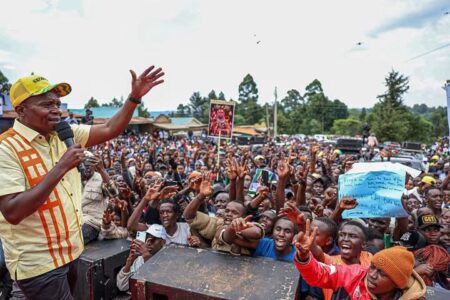
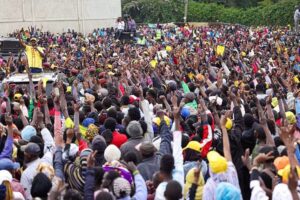
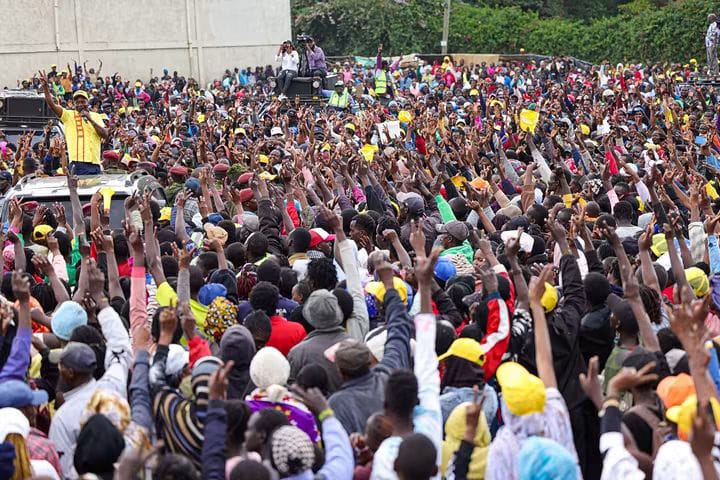
Speaking during a public rally at Kiratina Grounds in Nakuru East Constituency on Friday, the Deputy President said parties working together in government must remain focused on service delivery and national transformation rather than unnecessary confrontations.
“I appeal to all our political parties supporting the Government to work together in unity. Let us not undermine one another or engage in unnecessary confrontations,” he said.
Prof Kindiki acknowledged that coalition parties could field candidates against one another in next year’s elections but urged their supporters to preserve cordial relations, arguing that political contests should not be mistaken for permanent divisions.
“We need one another today, tomorrow and the day after tomorrow,” he said, calling for a strong political bloc anchored in the ideologies of the constituent parties.
He challenged opposition leaders to pursue issue based politics, saying they were entitled to criticise the government but should offer alternative policies and development programmes instead of fuelling hostility.
“Politics is not enmity. Politics is not war. Do not incite wananchi or turn them against one another. We are all members of one community and one nation,” he said.
The Deputy President urged voters to assess leaders on their performance, development record and commitment to national values, including patriotism, inclusivity and unity.
He said President Ruto, governors, senators, MPs and MCAs should be prepared to account for their achievements and outline what they intend to deliver, adding that the government was ready to defend its record during the campaigns.
Prof Kindiki also warned against ethnic mobilisation, citing Nakuru’s diversity as a reflection of Kenya’s multicultural character.
“The Kikuyu, Kisii, Luo, Luhya and other communities are all here. This place belongs to all of you. It is not exclusive to any one community,” he said.
He questioned why competition for about 2,000 elective positions should be allowed to divide a country of more than 55 million people, insisting that national unity and security must take precedence over individual political ambitions.
The Deputy President also outlined the government’s development programmes in Nakuru County, citing plans to tarmac 830 kilometres of roads at a cost of Sh38 billion, alongside investments exceeding Sh47 billion in housing, markets and institutional accommodation.
He said the government was also targeting an additional 25,000 households for electricity connections at a cost of Sh3 billion, while investments in health facilities, schools and ICT hubs continued.
During the visit, Prof Kindiki inspected Kiratina Comprehensive School, which he said was 90 per cent complete, and the ongoing upgrading of Nakuru town roads to bitumen standards under a Sh1.2 billion project.
He said the education sector had received increased funding, with the budget rising from Sh521 billion in 2021 to Sh784 billion, while 120,000 teachers were expected to have been recruited by next month.
The 30 classrooms at Kiratina Comprehensive School are part of 23,000 classrooms constructed nationally over the past four years, with 1,600 science laboratories also under construction, he said.
Prof Kindiki further cited the planned six lane upgrading of the Rironi-Naivasha-Nakuru-Mau Summit highway as part of the government’s broader infrastructure investment in the region.
He urged political leaders to keep campaigns peaceful and development centred, saying Kenyans should be allowed to make electoral choices without intimidation, ethnic antagonism or political violence.