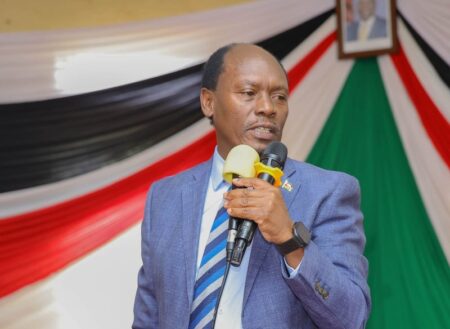








A proposed overhaul of Kenya’s higher education financing system has come under fresh scrutiny, with Kiambu Senator Karungo wa Thang’wa warning that the Tertiary Education Placement and Funding Bill, 2026 could leave poor students carrying substantially heavier debt after graduation.
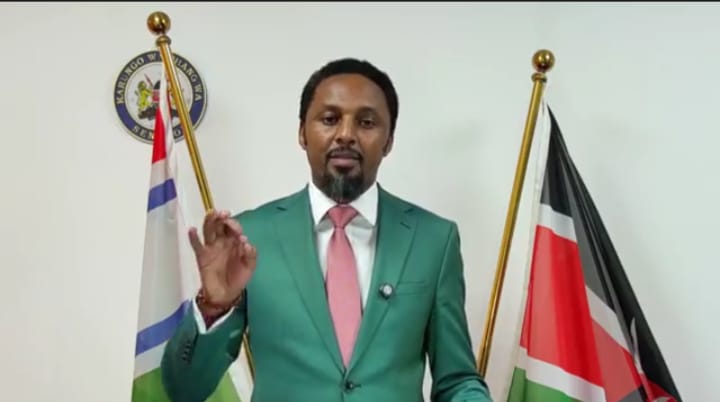
Speaking during a media briefing, Mr Thang’wa questioned whether the proposed law adequately protects students from vulnerable and low-income households, particularly if university and technical training costs are financed predominantly through repayable loans.
The senator’s central argument is that Kenya must distinguish between equal access to financing and equitable access to education.
The Bill seeks to establish a new framework for tertiary education placement and funding, bringing existing higher education financing arrangements under a consolidated system. Mr Thang’wa said the consolidation itself was not the problem. Rather, he questioned the balance between scholarships, grants and loans, the terms of repayment, the proposed financing structure and the treatment of students already admitted under the existing funding system.
He cited the recommendations of the Presidential Working Party on Education Reform, chaired by Prof Raphael Munavu, which proposed a variable funding model in which scholarships and loans would be allocated according to a student’s financial circumstances.
According to the senator, the working party recommended that students classified as vulnerable would receive 82 per cent of their funding through scholarships and 18 per cent through loans. Extremely needy students would receive 70 per cent scholarships and 30 per cent loans, while needy students would receive a combination of scholarships, loans and family contributions.
The principle, Mr Thang’wa argued, was that the poorer the student, the smaller the debt burden.
He said the proposed legislation departs from that approach by placing greater emphasis on repayable financing.
“Equality is not equity,” the senator said, arguing that an identical loan obligation would have very different consequences for a student from a wealthy household and one from a subsistence-farming family.
A major concern raised by the senator is whether scholarships for vulnerable students will be guaranteed in law and supported by a dedicated source of funding.
He argued that although the Bill refers to scholarships, it does not, in his reading, establish a dedicated scholarship fund, prescribe specific scholarship allocations according to levels of need or guarantee a defined proportion of funding for the most vulnerable students.
Mr Thang’wa contrasted this with the education reform working party’s proposal, which he said envisaged both loans and grants under the tertiary education financing framework.
He also questioned how students already admitted to universities under the current funding system would be treated if the new law takes effect.
The Government has previously indicated that first year applications would initially be processed under the existing needs based system, with transitional arrangements to follow once the new legislation is enacted.
For the senator, however, the transition provisions need to spell out more clearly what happens to students who entered higher education expecting scholarship support.
The senator also raised concerns over the proposed repayment terms.
He cited a provision that would allow deductions of up to 25 per cent of a graduate’s salary towards repayment of an education loan. He stressed that the 25 per cent figure represents a maximum rather than an automatic deduction applicable to every graduate.
Using a hypothetical graduate earning Sh100,000 a month, Mr Thang’wa argued that a deduction of Sh25,000 would leave the borrower with substantially less disposable income after statutory deductions and other living expenses.
He acknowledged that loan repayment is not technically a tax, but argued that the financial effect could nevertheless be significant for young graduates beginning their working lives.
The senator further questioned the absence of what he described as a clearly stated interest rate ceiling in the Bill.
He said the legislation should specify the maximum interest that can accrue on student loans rather than leave the rate entirely to subsequent administrative arrangements.
This issue, he argued, becomes particularly important where students accumulate large debts over several years of study.
Medicine provided Mr Thang’wa with his strongest illustration of the potential consequences of a loan-heavy financing system.
Using cost figures attributed to the education reform working party, he estimated that pre clinical medical training could cost about Sh360,000 a year and clinical training about Sh720,000.
On a hypothetical six-year programme divided equally between the two phases, he calculated total tuition-related costs at roughly Sh3.2 million.
If the entire amount were financed through loans, he argued, a graduate repaying Sh25,000 a month would require more than a decade to clear the principal alone, before interest was considered.
Under the variable scholarship and loan model cited by the senator, the loan component for a vulnerable student would be considerably smaller.
Mr Thang’wa said the implications extend beyond individual graduates because medicine, engineering and health related disciplines have been identified as areas of national importance.
His concern is that a heavily debt based financing model could affect the choices made by students from poorer households when considering expensive professional course.
Another issue raised by the senator is how the proposed financing authority would raise sufficient money to sustain tertiary education funding.
He noted that the proposed framework envisages money flowing into the fund from loan repayments and interest, while also allowing the authority to raise funds through borrowing and other financial arrangements.
The legislation, he said, also provides for mobilisation of capital from private-sector and institutional sources.
Mr Thang’wa drew attention to recent comments by education officials concerning capital market financing and securitisation of assets or future revenues.
He was careful to distinguish those public statements from the wording of the Bill itself, saying the legislation does not expressly state that student loans will be securitised.
However, he argued that the possibility of using future loan repayments to raise capital warrants stronger statutory safeguards and greater public disclosure.
The senator said Parliament and the public should know the terms of any arrangement involving investors, financial advisers or intermediaries, including the risks associated with borrowers who are unemployed or unable to repay.
At the heart of the debate is a question that could affect thousands of graduates that when should repayment begin if a student completes university but cannot find a job?
Mr Thang’wa said the proposed framework provides for repayment to begin within a specified period after completion of studies, rather than expressly linking commencement of repayment to securing employment.
He argued that the distinction matters in an economy where many young graduates may spend extended periods searching for work.
He called for the legislation to state clearly what happens to a borrower who has completed studies but has no income.
The senator also questioned how the repayment rate would be determined below the proposed 25 per cent ceiling and whether borrowers would have sufficient protection against excessive deductions.
The dispute over the Bill comes as Kenya grapples with the financial difficulties facing universities and the broader question of how tertiary education should be funded sustainably.
Supporters of a consolidated financing system have argued that Kenya needs a framework capable of expanding access while addressing the financial pressures facing institutions.
Mr Thang’wa does not dispute the need for reform. Instead, he is demanding stronger guarantees for poor students before Parliament approves the new system.
He wants the Bill to provide clear answers on at least five issues that the guaranteed scholarship component for vulnerable students; the interest rate and any statutory cap, the commencement of repayment; the method for determining deductions below the maximum; and whether student loan repayments can be pledged or securitised.
If such repayments can be used to raise financing, he wants the Government to disclose the relevant feasibility studies, financial models, legal opinions and contractual terms before any transaction is concluded.
The senator also wants Parliament to establish precisely how students currently in universities and colleges will be treated during the transition.
Mr Thang’wa urged students, parents, lecturers and graduates to participate in the ongoing public hearings and submit their views before the parliamentary process is completed.
His intervention has widened the debate beyond the technical question of how to consolidate tertiary education financing.
At stake, he argued, is the type of social contract Kenya wants to establish around higher education that whether access to university and technical training should principally be supported through public investment, family contributions, scholarships, repayable loans or a combination of all four.
For poor households, the distinction is consequential.
A student whose family can afford tuition may graduate without an education loan, while another student from a low-income household may depend entirely on borrowed money to obtain the same qualification.
That difference, Mr Thang’wa argued, means that equal access to a loan does not necessarily produce equal economic opportunity.
The debate over the Bill is therefore likely to centre not simply on how much money students receive, but on who ultimately bears the cost of higher education and how that burden follows graduates into the labour market.
As Parliament considers the proposed framework, the key questions will be whether it can expand access, provide sustainable financing for institutions and protect students from unsustainable debt at the same time.
For Mr Thang’wa, those safeguards must be written into the law before it is passed.