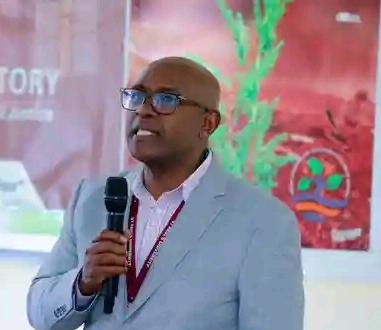




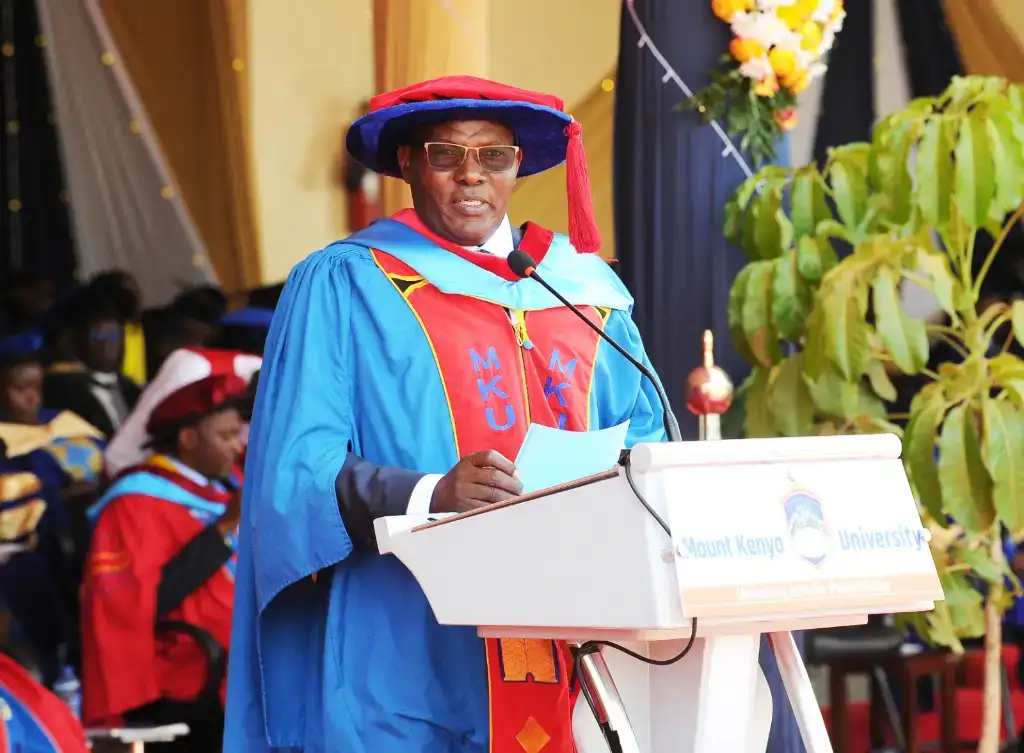
Dr. Vincent Gaitho, the Pro-Chancellor of Mount Kenya University (MKU), has issued a strong appeal to politicians, urging them to disengage from the education sector. He emphasized that political interference negatively impacts the nation’s future, with his remarks surfacing amidst a significant controversy surrounding the placement of Grade 10 learners.
Gaitho firmly stated that the education sector operates with its own established leadership, encompassing teachers, education officials, students, parents, private sector investors, and government representatives. He asserted that this internal structure leaves no void for external political intervention, suggesting that politicians should limit their pronouncements on educational matters. He highlighted that education flourishes best in a calm and stable environment, recalling how past generations, including his own, pursued studies in diverse schools across various regions of the country, promoting national cohesion.
His comments directly address the ongoing dispute over the placement of Grade 10 students into senior schools. Former Deputy President Rigathi Gachagua previously criticized this process as discriminatory and unfair, attributing the centralized placement at Jogoo House to corruption. Gachagua contended that bureaucrats within Jogoo House lack the necessary capacity to manage student placements effectively.
Gachagua also pointed out that the placement exercise exposed significant inequalities within the education system, despite substantial investments through devolution and the National Government Constituency Development Fund (NG-CDF). Echoing concerns about infrastructure, Dr. Gaitho advocated for counties to bolster local schools, envisioning every part of Kenya as a potential education hub. He emphasized that education serves as a powerful equalizer and unifier, stressing that children should have the freedom to learn anywhere across the nation.
Dr. Gaitho further identified several challenges confronting learners, including the high costs of uniforms and fees. He called for a shift in approach, criticizing the government for its slow disbursement of capitation funds. Conversely, he commended Kiharu Member of Parliament Ndindi Nyoro for judiciously investing NG-CDF funds into local schools, demonstrating proactive leadership.
Praising the Competency-Based Education (CBE) system, Gaitho noted its focus on practical skills and real-world application. He stated that CBE actively creates diverse pathways in fields such as sciences, technology, arts, and sports, with an overarching goal to train future global civil servants.
Finally, Dr. Gaitho advocated for constructive dialogue between publishers and the government regarding outstanding bills. He also underscored the critical importance of proper funding and called for a ruthless approach to combating corruption within the sector, recognizing its corrosive impact on educational progress.
These calls from both academic and political figures collectively emphasize the crucial need for fairness, adequate resource allocation, and a stable operational environment within Kenya’s education system. The focus remains steadfast on ensuring that the sector effectively fulfills its core mission: empowering learners without undue external influence.