










Kenya must strengthen its cybersecurity systems, tighten data protection safeguards and promote responsible artificial intelligence adoption as businesses, government agencies and financial institutions accelerate their digital transformation, Information, Communications and the Digital Economy Cabinet Secretary William Kabogo has said.
Kabogo said the growing use of artificial intelligence (AI) was creating new opportunities to improve public service delivery, boost business efficiency and detect cyber threats, but warned that the technology was also exposing individuals and institutions to increasingly sophisticated digital attacks.


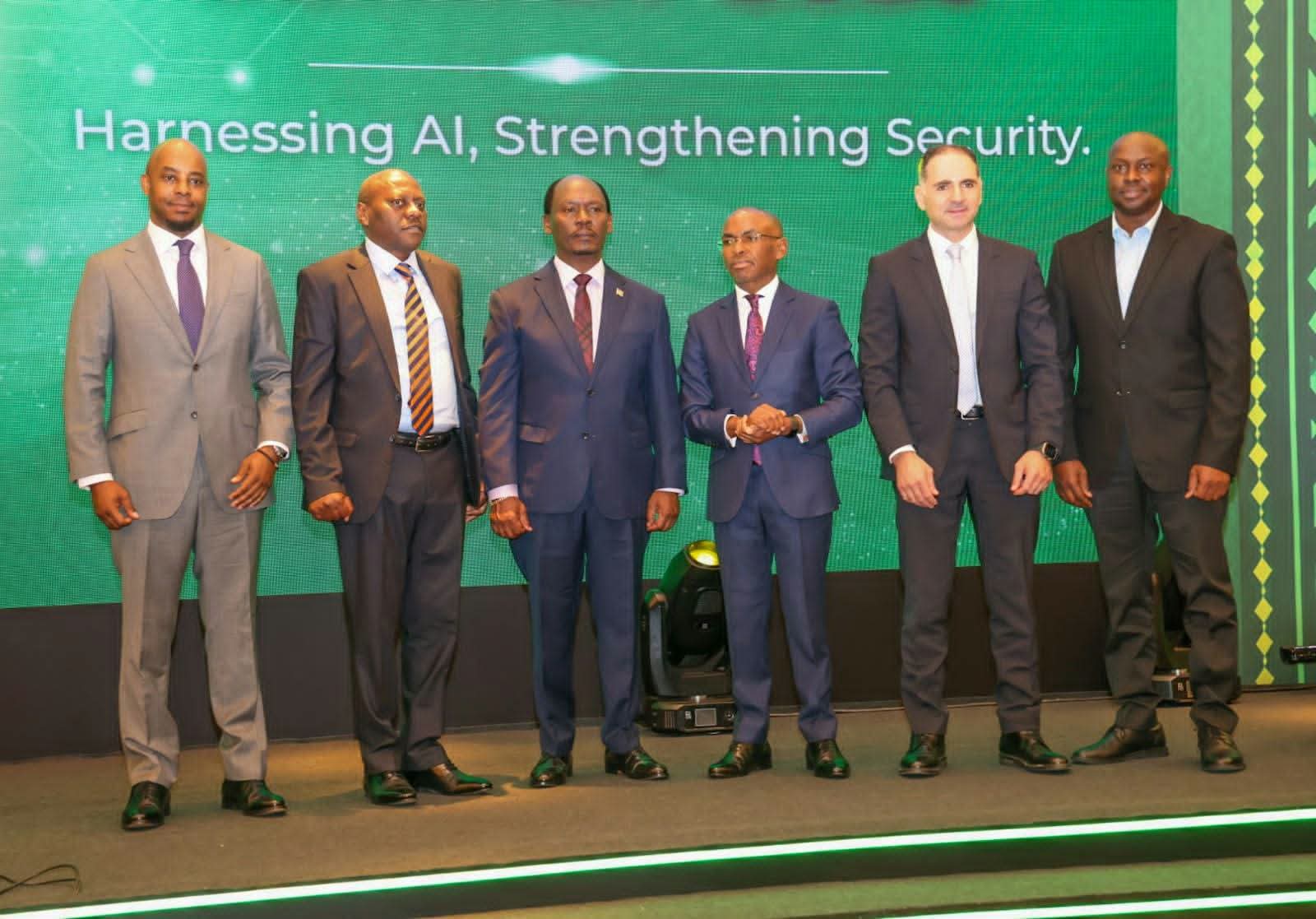
Speaking on Wednesday, October 14, 2026, when he presided over the Safaricom Cybersecurity Summit 2026 at the JW Marriott Hotel in Nairobi’s Westlands area, the Cabinet Secretary called for stronger collaboration between the government, private sector, regulators, technology companies and other stakeholders to safeguard Kenya’s digital economy.
The summit, held under the theme Harnessing AI, Strengthening Security, brought together cybersecurity specialists, corporate executives, technology providers and industry leaders to examine emerging threats and strategies for building resilient digital infrastructure.
Kabogo said Kenya’s digital transformation must be accompanied by effective security frameworks capable of protecting citizens, businesses, public institutions and critical infrastructure against cybercrime.
“Artificial intelligence presents immense opportunities to enhance service delivery, improve business efficiency and strengthen cyber threat detection. However, it also introduces emerging risks, including AI-powered fraud, phishing attacks, identity impersonation and manipulated digital content,” he said.
He called for responsible AI adoption anchored in sound governance, accountability, human oversight and robust data protection frameworks.


The ministry, he added, remained committed to strengthening the country’s cybersecurity ecosystem through policy development, implementation of the national cybersecurity strategy and closer cooperation with industry stakeholders.
Kabogo also called for greater attention to child online safety, warning that cyberbullying, online exploitation and harmful AI-generated content posed growing challenges as more Kenyans embraced digital platforms.
He said a secure digital economy would require collective responsibility to ensure that technological advancement did not come at the expense of public safety and confidence in digital services.
Safaricom Group chief executive Peter Ndegwa and other industry stakeholders attended the summit.
Ndegwa challenged business leaders to make trust a central consideration in their artificial intelligence strategies, arguing that the continent’s success in the emerging technology would depend on more than computing power or the sophistication of AI models.
“Africa’s AI future will not be decided by who has the biggest model. It will be decided by who earns the most trust,” he said.
The Safaricom chief executive drew parallels between the public’s growing confidence in digital financial services and the need to ensure that AI powered solutions remained secure, reliable and accountable.
Nearly two decades after Kenyans began trusting mobile phones to conduct financial transactions, Safaricom is increasingly deploying AI powered systems to identify suspicious transaction patterns and detect potential fraud.
Ndegwa also pointed to the company’s Managed Security Operations Centre, which helps organisations monitor cyber threats and respond to incidents in real time.
He said customer protection needed to be incorporated into the design and development of digital products rather than treated as an afterthought.
Ndegwa challenged business leaders to identify specific organisational problems that AI could solve while outlining practical measures to strengthen trust as they adopted the technology.
His remarks underscored a central concern running through the summit that organisations must balance the commercial and operational benefits of AI with the responsibility to protect sensitive information and maintain public confidence.
Safaricom Group chief risk officer Nicholas Mulila, who delivered the opening remarks, highlighted the growing challenge facing organisations as cybercriminals adopt the same technological tools businesses are using to improve their operations.
He warned that AI capable of helping security teams identify threats more quickly could also enable scammers to develop more convincing messages and sophisticated fraud schemes.
The challenge, he said, was to accelerate AI adoption without allowing security measures to lag behind technological change.
The concern was explored further in a keynote address by Akili AI chief executive Dr Simon Bransfield Garth, who highlighted risks arising from the way generative AI systems operate.
Bransfield Garth argued that some vulnerabilities associated with generative AI were inherent in the technology’s design and behaviour rather than simply technical defects that could be eliminated through conventional software fixes.
His presentation highlighted the importance of understanding how AI systems process information, generate responses and interact with other digital systems before deploying them in sensitive business environments.
For organisations increasingly relying on automated systems, understanding these limitations is critical to identifying vulnerabilities and establishing appropriate safeguards.
The discussions also pointed to the need for clear rules governing the development, deployment and monitoring of AI applications, particularly where they handle confidential customer information or influence important business decisions.
Beyond the risks associated with AI, the summit examined how organisations could strengthen their wider cybersecurity architecture to counter increasingly complex attacks.
Sessions led by Safaricom Business, Cloudflare and NETSCOUT Systems focused on securing enterprise networks, protecting digital applications and maintaining reliable connectivity as businesses move more operations to cloud based platforms.
Safaricom Business explored the threat posed by unauthorised or poorly governed AI tools, commonly referred to as rogue AI, and the importance of establishing clear policies and technical safeguards for their use within organisations.
The discussions emphasised that businesses need to know which AI applications employees are using, what information those tools can access and how sensitive data is handled.
Cloudflare presented its Connectivity Cloud approach, which combines secure connectivity, Zero Trust access controls and application protection to help organisations manage risks across increasingly distributed digital environments.
The Zero Trust model operates on the principle that users and devices should not automatically be trusted simply because they are connected to an organisation’s network. Access must instead be verified and restricted according to established security policies.
Safaricom Business also highlighted software defined wide area networking, or SD WAN, as organisations seek to improve connectivity while maintaining control over traffic moving between offices, cloud services and remote users.
NETSCOUT Systems presented layered network edge defence, including protection against distributed denial of service (DDoS) attacks, which seek to overwhelm digital services with large volumes of malicious traffic.
The sessions highlighted the importance of real time monitoring, rapid threat detection and coordinated security measures in protecting business continuity.
As organisations become more dependent on digital platforms, an attack that disrupts connectivity or disables a critical application can have consequences extending beyond technology departments to customers, employees and business partners.
Safaricom’s managed security services manager Reuben Waweru and senior security engineer Joel Muigai led discussions on data security, focusing on where information travels, how it is processed and who has access to it.
The session addressed a growing concern among organisations adopting AI powered tools and cloud services: the movement of sensitive information across interconnected systems and platforms.
As businesses integrate AI into their operations, they must understand how data is collected, stored, shared and processed, including whether third-party service providers can access it.
Weak controls over information can expose organisations to unauthorised access, data leakage and misuse, undermining customer confidence and potentially disrupting operations.
The discussions highlighted the need for stronger access controls, clear data handling policies and continuous monitoring to ensure that information remains protected throughout its lifecycle.
The issue is particularly important for organisations handling financial records, personal information and other sensitive data, where a breach can damage both institutional credibility and customer trust.
A panel discussion brought together Microsoft Africa Development Center principal product manager Ben Mann, Safaricom head of cloud, Internet of Things and security Richard Muthua, Intel Corporation principal engineer Dr Markus Leberecht, Stima DT Sacco Society systems security team lead Eugene Wadeya and Cloudflare’s sub Saharan Africa lead for managed security service providers, Graham Turnbull.
The panel examined how AI could strengthen cybersecurity, help organisations respond to emerging threats and support the development of more trusted digital services.
The discussion highlighted the importance of cooperation among technology companies, telecommunications providers, financial institutions and enterprise users in addressing threats that increasingly cut across organisational and national boundaries.
No single institution can address the entire cybersecurity challenge in isolation, particularly as attacks become more automated and digital services rely on multiple interconnected platforms.
The participants stressed the importance of combining technological innovation with effective governance, shared expertise and practical security measures.
The summit also featured a CEO breakfast, during which business leaders considered the growing cyber risks facing their organisations and the importance of assessing preparedness before an incident occurs.
The engagement challenged executives to examine their organisations’ cyber resilience, including their capacity to identify threats, protect critical systems, maintain operations during an attack and recover quickly after an incident.
Cybersecurity, the discussions suggested, should no longer be treated solely as a technical responsibility delegated to information technology departments. It is increasingly a leadership and business continuity concern requiring board level attention.
The summit came as organisations increasingly turn to AI to automate processes, improve customer service, analyse information and strengthen fraud detection.
But the same capabilities can be exploited by malicious actors to impersonate individuals, generate convincing fraudulent communications and scale attacks against businesses and consumers.
This creates a difficult balancing act for institutions seeking to benefit from emerging technology without exposing customers, employees and operations to additional risks.
The discussions at the summit pointed to several priorities that stronger governance of AI systems, improved data protection, secure network infrastructure, continuous threat monitoring and closer collaboration between public and private institutions.
For Kenya, the challenge extends beyond preventing cyberattacks to ensuring that citizens can confidently use digital services as the country expands its technology driven economy.
Kabogo’s call for responsible AI adoption and Ndegwa’s emphasis on trust reflected a shared message from the summit that technological progress must be matched by safeguards that protect users and preserve confidence in digital platforms.
As AI becomes more deeply embedded in financial services, public administration, telecommunications and everyday business operations, the ability to anticipate and manage cyber risks will increasingly shape the success of the country’s digital transformation.
The central question confronting organisations is therefore no longer simply how quickly they can adopt AI, but how securely and responsibly they can put it to work.