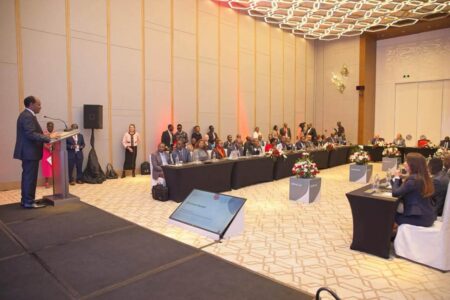


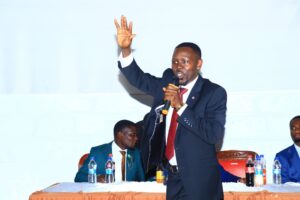






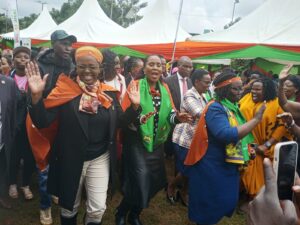
Kiambu town was a hive of activity on Wednesday as over 1,000 women entrepreneurs converged at the Kiambu National Polytechnic for a high-level Women Empowerment Forum. The event, organized by the Women Enterprise Fund (WEF), served as a powerful demonstration of the government’s commitment to the Bottom-Up Economic Transformation Agenda (BETA), bringing together top state officials, legislators, and grassroots business leaders to unlock the economic potential of women in the region.
The forum was headlined by the Cabinet Secretary for Gender, Culture, and Children Services, Hanna Wendot Cheptumo, who was joined by a powerful delegation including Gender Principal Secretary Anne Wang’ombe, Correctional Services Principal Secretary Dr. Salome Beacco, Thika Town MP Alice Ng’ang’a, and Kiambu Sub-County Senior Deputy County Commissioner Titus Macharia. The presence of these leaders underscored a unified national and local government front dedicated to dismantling the barriers that hinder women from full economic participation.

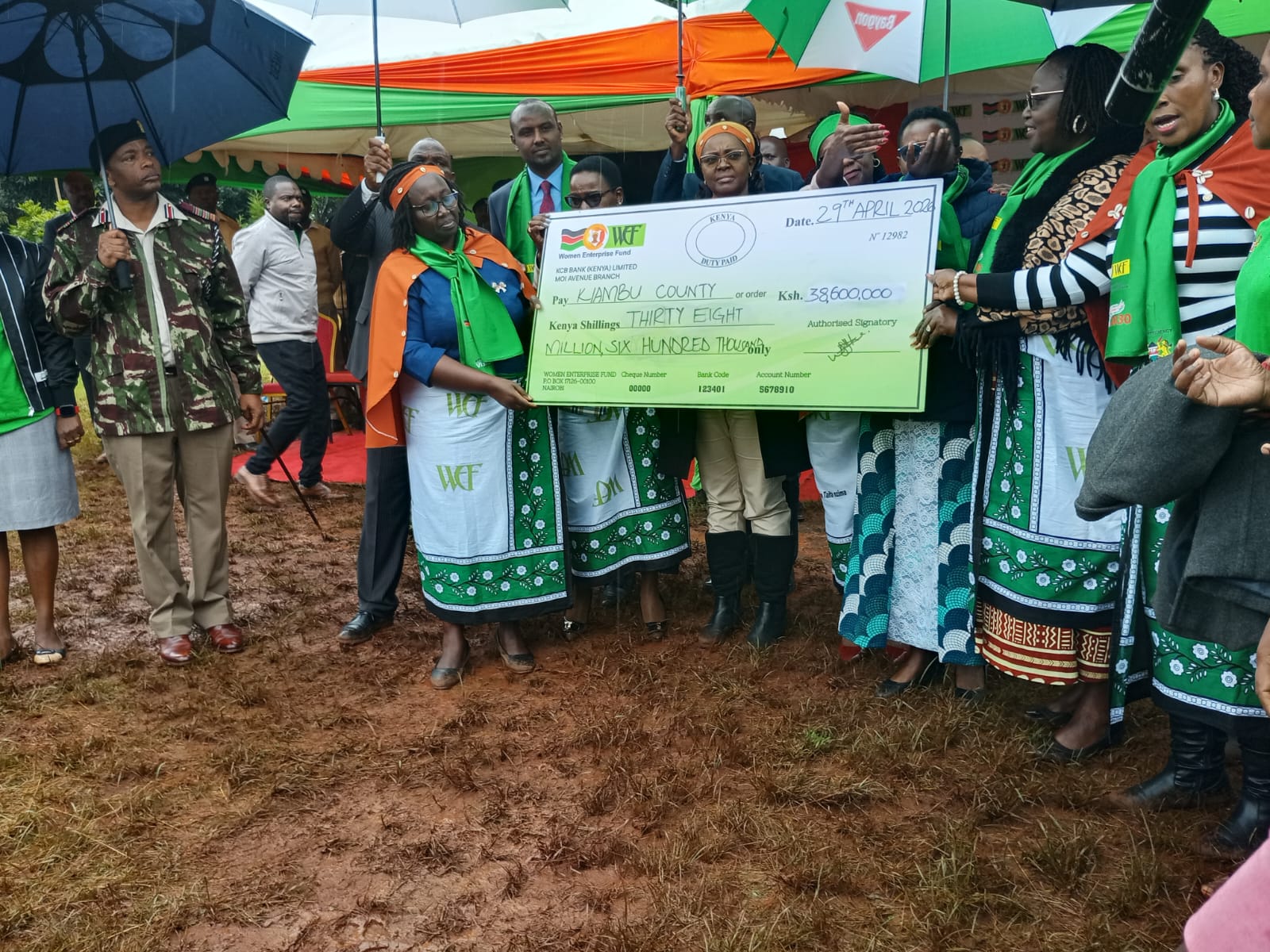
During her keynote address, Cabinet Secretary Hanna Wendot Cheptumo hailed the resilience of Kenyan women, noting that they run more than half of the country’s micro-enterprises and produce the majority of its food. She emphasized that when women are supported, the entire national economy operates at a higher potential. The Cabinet Secretary announced the issuance of cheques worth KSh 38.6 million to 80 women’s groups in Kiambu, a move she said would directly empower 867 households. She further committed to advocating for an increase in WEF funding from the current KSh 6.05 billion to at least KSh 10 billion by 2027. Addressing administrative hurdles, she issued a direct order to WEF management to reduce delays between loan application and disbursement, ensuring that entrepreneurs access capital exactly when they need it to keep their businesses moving.
Echoing the importance of structural support, Principal Secretary for Gender and Affirmative Action Anne Wang’ombe highlighted that the Women Enterprise Fund is a critical instrument for making constitutional rights to equality a reality. She urged women to formalize their businesses and maintain accurate records to enhance their creditworthiness. The PS also made a strong call to county governments to complement national efforts by simplifying business licensing and ensuring women-owned enterprises are prioritized in public procurement through the Access to Government Procurement Opportunities (AGPO) program.
Principal Secretary Dr. Salome Beacco of the State Department for Correctional Services emphasized the role of economic stability in social order and rehabilitation. She noted that financial empowerment reduces vulnerability and provides women with the dignity of self-reliance, which is essential for stable families and a safer society. She praised the inter-agency collaboration that brings such opportunities to the doorstep of every woman, regardless of their background or previous challenges.
The legislative voice was strongly represented by Thika Town MP Alice Ng’ang’a, who encouraged the women of Kiambu to be bold in their ventures and disciplined in their financial management. She lauded the WEF for its impressive 95 percent repayment rate, noting that this discipline proves that women are the most reliable borrowers in the country. She pledged continued support in Parliament to ensure that legislative frameworks favor small-scale traders and protect the interests of women in business.
Representing the National Government Administration, Kiambu Sub-County Senior Deputy County Commissioner Titus Macharia assured the gathering of the government’s support in ensuring a conducive environment for business. He noted that the administration is working tirelessly to ensure security and accessibility so that trade can flourish in every corner of the sub-county. He encouraged women to organize themselves into formal groups to make it easier for the government to channel development resources and training to them.
The governance perspective was provided by Dr. Jane Lang’at, Chairperson of the WEF Advisory Board, who explained that the board’s role is to ensure the KSh 28 billion disbursed since the fund’s inception continues to reach its intended targets responsibly. She acknowledged that while the fund has reached 2.2 million women, more work is being done to reach underserved rural areas and simplify application processes for those in the informal sector.
Testimonials from beneficiaries brought the impact of the fund to life. Pauline Wambui, Chairlady of the Juakali High Aimers Self Help Group in Thika, shared how WEF loans allowed her group to venture into real estate by purchasing land and building rental units. Similarly, Anastassia Ikonya of the Kiambu Mercy Mothers Self Help Group described how her tailoring business expanded after receiving value-addition training and a loan to purchase modern equipment, eventually leading to supply contracts with local schools.
The forum concluded with an exhibition of products ranging from textiles to processed agricultural goods, showcasing the diverse talents of Kiambu’s women. As the officials departed, the message remained clear: the economic empowerment of women is not just a social goal, but a fundamental pillar for the growth and stability of the Kenyan nation.