










Millions of Africans living with disabilities remain excluded from education, employment, and social participation due to limited access to essential assistive technologies, a new continent-wide report has revealed.
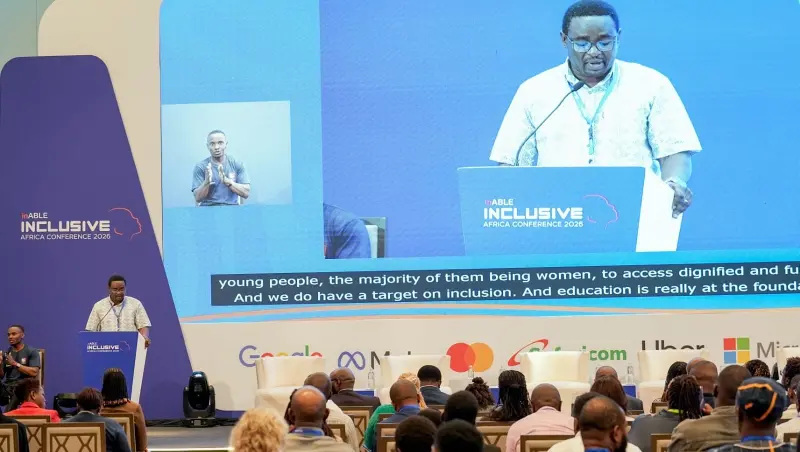
The findings are contained in the Assistive Technology Landscape in Africa Report, launched by the Mastercard Foundation during the 7th Annual Inclusive Africa Conference in Nairobi. The report offers the most comprehensive review to date of Africa’s assistive technology ecosystem, covering all 54 countries on the continent.
Produced by a research consortium led by Stellenbosch University, the study examines access to assistive technology, policy frameworks, innovation trends, market systems, and opportunities for economic participation among persons with disabilities.
The report paints a mixed picture of progress and persistent barriers, highlighting both growing commitment to disability inclusion and significant gaps that continue to prevent millions from accessing life-changing technologies.

Assistive technologies such as wheelchairs, hearing aids, screen readers, prosthetic devices, Braille equipment, and digital accessibility solutions play a vital role in helping persons with disabilities live independently and participate fully in society.
However, researchers found that access to these technologies remains limited for many people, particularly those living in rural and underserved communities.
Among the challenges identified are high costs, inadequate service delivery systems, shortages of specialized providers, and long travel distances required to obtain assistive devices and related services.
The report notes that while approximately 15 per cent of Africa’s population lives with a disability, access to assistive technology remains far below demand, limiting opportunities for education, employment, entrepreneurship, and digital inclusion.
The study found that many African governments have made significant strides in developing disability inclusion policies and legal frameworks aimed at improving accessibility.
Nevertheless, implementation remains a major challenge.
Researchers cited inadequate funding, weak coordination among stakeholders, and limited institutional capacity as factors slowing progress and reducing the effectiveness of existing policies.
The report urges governments and development partners to move beyond policy commitments and focus on practical measures that ensure assistive technology reaches those who need it most.
Despite the challenges, the report highlights encouraging developments across the continent.


Governments, organisations of persons with disabilities, academic institutions, innovators, and development agencies are increasingly working together to strengthen assistive technology ecosystems and promote inclusion.
Researchers observed growing awareness of the importance of assistive technology as a tool for advancing equality and human rights.
The report also recognizes the contribution of African innovators who are designing solutions that respond directly to local needs and realities.
Speaking during the launch, Hannah Tsadik of the Mastercard Foundation said the report provides crucial evidence needed to strengthen disability inclusion efforts across Africa.
She emphasized that improving access to assistive technology requires coordinated investments, stronger partnerships, and policies that translate into meaningful outcomes for young people with disabilities.
Irene Mbari-Kirika, Founder and Executive Director of inABLE, said access to assistive technology has the power to transform lives by removing barriers and expanding opportunities.
She noted that the experiences of communities across the continent demonstrate the urgent need for greater investment and systemic reforms to ensure no one is left behind.
The report was commissioned by the Mastercard Foundation and developed through a consortium comprising Stellenbosch University, Kwame Nkrumah University of Science and Technology (KNUST), Humanity and Inclusion, and the Clinton Health Access Initiative (CHAI).
Researchers reviewed 185 scientific publications and 338 grey-literature documents from across Africa, making the study the most extensive evidence-based assessment of assistive technology on the continent.
The report concludes that expanding access to assistive technology is not only a matter of disability rights but also a critical step toward achieving inclusive development, reducing inequality, and ensuring that persons with disabilities can participate fully in Africa’s social and economic future.