







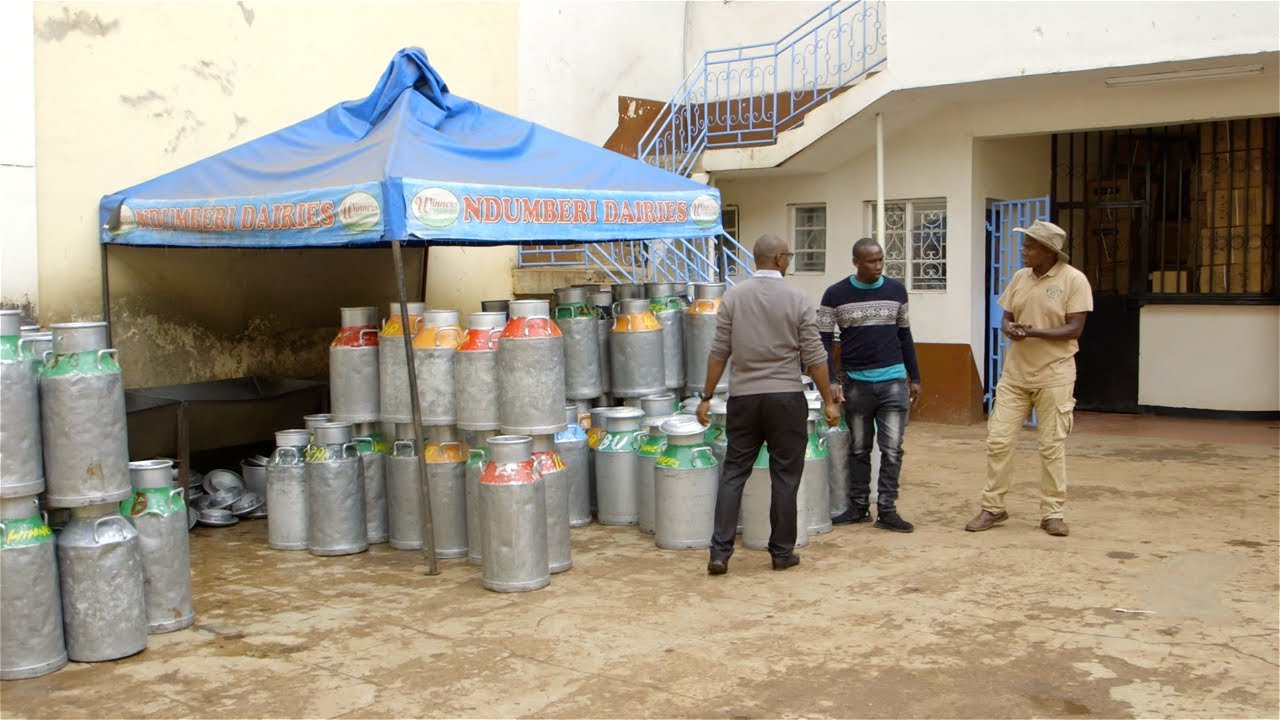
More than 1,000 dairy farmers in Ndumberi are set to benefit from improved milk preservation and reduced post-harvest losses following the delivery of a 5,000-litre milk cooler to the Ndumberi Dairy Farmers Cooperative Society.
The facility, delivered by the State Department for Livestock Development under the Livestock Value Chain Support Project, is expected to strengthen the cooperative’s milk-handling capacity while improving the quality and value of farmers’ produce.
The intervention follows sustained lobbying by Kiambu MP Machua Waithaka, who had written to the Ministry of Agriculture and Livestock Development seeking urgent support for the cooperative.
In a letter dated September 23, 2025, Mr Waithaka told the Principal Secretary for Livestock Development Jonathan Mueke that the cooperative had more than 1,081 active members producing approximately 14,000 litres of milk daily.
He warned that inadequate cooling capacity was exposing farmers to losses and threatening the cooperative’s ability to handle increasing production.
The MP said improved milk storage was necessary not only to safeguard farmers’ earnings but also to enhance food safety and strengthen the dairy value chain in Kiambu.
The ministry subsequently approved and delivered a 5,000-litre cooler to the cooperative on May 20, 2026.
The development places Ndumberi among several dairy cooperatives in Kiambu that have benefited from government investment in bulk milk cooling infrastructure.
Official project records indicate that Githunguri Dairy Cooperative Society received a 10,000-litre cooler for its Kanjuku Milk Collection Centre, while Kikuyu Dairy Farmers Cooperative Society received a 5,000-litre facility at Mutaratara.
Ndarugu Dairy Cooperative Society in Gatundu South also received a 5,000-litre cooler.
For Ndumberi farmers, the new facility is expected to address one of the major challenges confronting smallholder dairy producers—maintaining milk quality between collection and delivery to processors.
Milk is highly perishable and requires prompt cooling after milking. Without adequate facilities, farmers and cooperatives can suffer losses through spoilage, quality deterioration and rejection of milk.
The cooler is therefore expected to give the cooperative greater capacity to collect and preserve milk before it is transported to processors.
Mr Waithaka has welcomed the intervention, saying the facility would help farmers preserve their produce, reduce losses and improve household incomes.
“When farmers speak, we listen. When we promise, we follow up and deliver,” the MP said.
The intervention comes as dairy farming remains an important source of income for thousands of households in Kiambu, where smallholder farmers depend heavily on milk sales to meet household expenses and support education and other basic needs.
With the cooperative handling an estimated 14,000 litres of milk each day, the additional cooling capacity is expected to provide a stronger foundation for managing the farmers’ growing production.
The cooler could also improve the cooperative’s bargaining position by enabling it to maintain milk quality and reduce pressure to dispose of milk quickly because of limited storage.
For farmers, this could translate into more predictable marketing arrangements and fewer losses associated with poor storage.
Mr Waithaka had described the situation as increasingly urgent in his correspondence with the ministry, noting that the cooperative was struggling to sustain rising production volumes without adequate storage infrastructure.
He urged the government to treat the request as a priority, arguing that investment in milk-cooling infrastructure would support farmers while advancing the Government’s agricultural transformation agenda.
The delivery demonstrates the importance of collaboration between farmer cooperatives, elected leaders and government agencies in addressing infrastructure gaps along agricultural value chains.
Beyond Ndumberi, the Government has increasingly invested in milk-cooling facilities as part of efforts to reduce post-harvest losses and improve the returns farmers receive from livestock production.
For Ndumberi Dairy Farmers Cooperative Society, the new facility represents more than an equipment upgrade. It is an investment in the ability of farmers to preserve the value of their work from the cowshed to the market.
As milk production continues to rise, the cooperative will now have additional capacity to handle its members’ output while maintaining quality standards.
The project is also likely to reinforce the role of cooperative societies as important links between smallholder farmers and the formal dairy market.
For Mr Waithaka, the delivery marks the culmination of a lobbying effort that began with farmers’ request for assistance and continued through correspondence and follow-up engagements with the ministry.
The MP said the intervention would ultimately help strengthen the dairy value chain and empower farmers to earn better returns from their livestock enterprises.
The challenge now, however, will be to ensure that the new facility is properly managed, maintained and utilised to its full capacity so that its benefits can be sustained for years to come.
With more than 1,000 active members and thousands of litres of milk entering the cooperative’s collection system each day, the cooler gives Ndumberi farmers a critical piece of infrastructure as they seek to turn increased production into higher and more reliable household incomes.