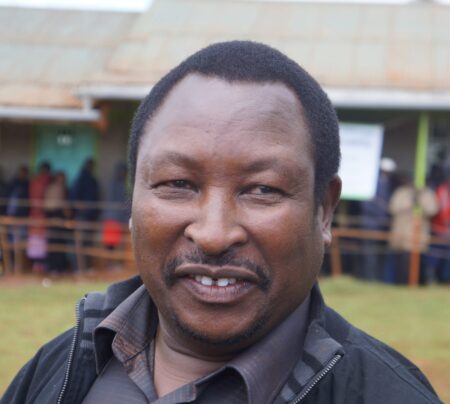


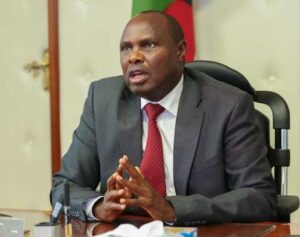







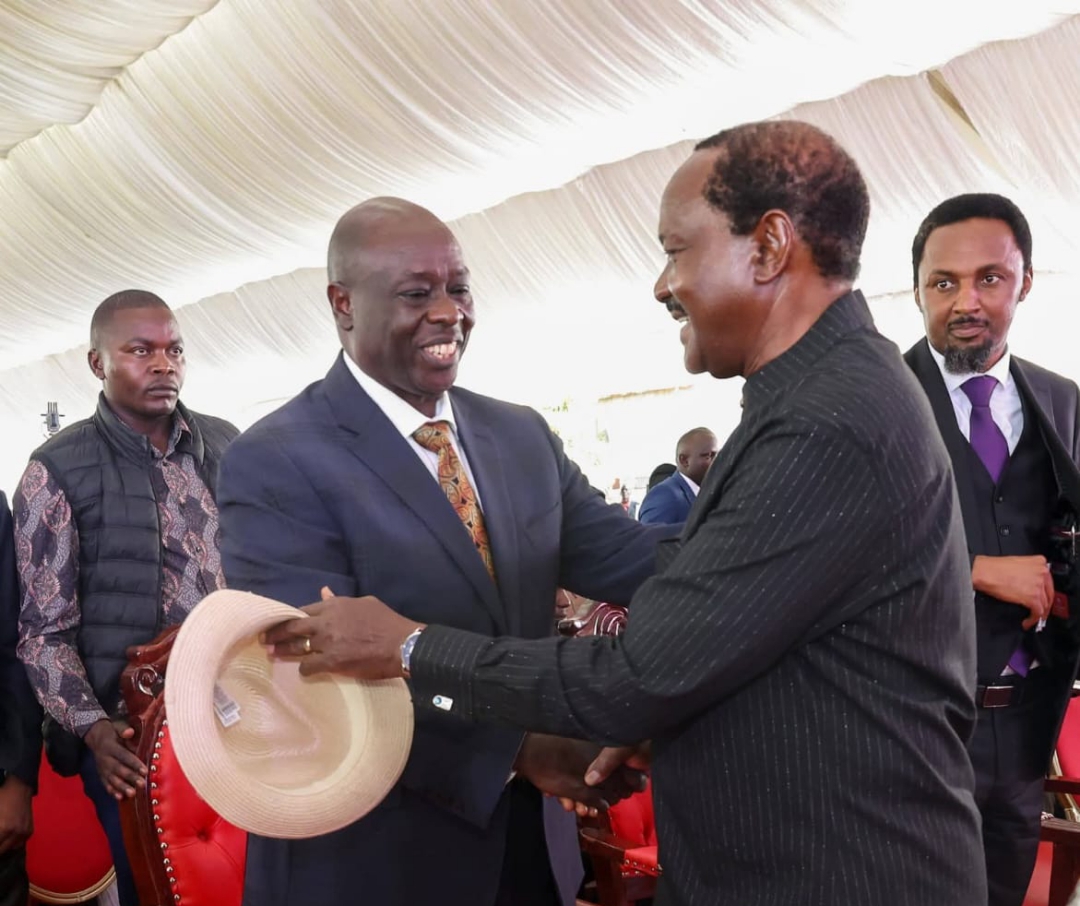
The Nairobi Hospital took center stage during the burial of 93-year-old Lucia Wangui, mother to Kiambu Senator Karungo wa Thang’wa, as opposition leaders sharply criticized the government over what they termed as overreach and lack of accountability.
The emotional send-off, held in Mitahato Village, Ngewa Ward in Githunguri Constituency, brought together a host of political heavyweights, who turned the solemn occasion into a platform to address pressing national issues—chief among them the ongoing controversy surrounding the premier private health facility.
Wiper Party leader Kalonzo Musyoka and DAP-Kenya leader Eugene Wamalwa led calls for transparency and non-interference in the affairs of Nairobi Hospital, insisting that the institution remains a private entity that must be protected from political manipulation.
Kalonzo raised concerns over recent arrests and legal actions involving hospital officials, including Dr. Obwaka and former board chair Chris Bichage, describing the move as intimidation.
“The hospital is a critical institution not just for Kenyans but for the region. Even international bodies such as the United Nations rely on it. Any attempt to interfere with its governance must be resisted,” Kalonzo said.
He further alleged that there had been attempts to convert the hospital into a public liability company under questionable circumstances, warning that opposition leaders would remain vigilant against what he termed as “unconstitutional dealings.”
Wamalwa echoed these sentiments, condemning what he described as harassment and coercion of hospital officials by state agencies.
“We are saying clearly: stop interference in private institutions. Nairobi Hospital is not a playground for abuse of power,” he stated.
Former Deputy President Rigathi Gachagua escalated the claims, alleging that there had been plans to sell Nairobi Hospital, a move he said was halted after public outcry.
According to Gachagua, unnamed individuals within government circles were targeting key national assets, including health institutions, for privatization deals lacking transparency.
“We were informed there were plans to sell Nairobi Hospital. That cannot be allowed. Kenyans must know what is happening to their institutions,” he said.
He further accused President William Ruto of presiding over a regime that is allegedly facilitating the capture of state and strategic assets by private interests.
Democracy for Citizens Party (DCP) Secretary General Cleophas Malala, while offering condolences to the bereaved family, shifted focus to what he termed as a deteriorating state of governance.
Malala linked the Nairobi Hospital saga to a broader pattern of alleged state capture and suppression, warning that Kenya risks institutional collapse if urgent corrective measures are not taken.
“Apart from issues of corruption, we are seeing a dangerous trend where critical institutions are under siege. If we do not act, even our healthcare systems will not be safe,” he said.
He also raised concerns over alleged extrajudicial killings and lack of accountability in the country, calling for thorough investigations into the deaths of prominent individuals.
The leaders, including Kalonzo, Wamalwa, Malala, and Gachagua, emphasized the need to uphold the Constitution and protect institutions from political interference.
They maintained that the opposition would continue to push for accountability, transparency, and respect for private enterprise, warning against what they described as attempts to “auction the country without public participation.”
“The rule of law must prevail. Kenya is a constitutional democracy, and no one is above the law,” Kalonzo asserted.
Despite the charged political atmosphere, leaders took time to eulogize the late Lucia Wangui as a devoted mother and matriarch who raised a prominent leader.
The burial ceremony, attended by religious leaders and hundreds of mourners, was marked by tributes celebrating her life and legacy, even as political tensions simmered in the background.
As the country watches closely, the unfolding controversy around Nairobi Hospital is likely to remain a focal point in Kenya’s political discourse, with opposition leaders vowing to keep the pressure on the government over the matter.