







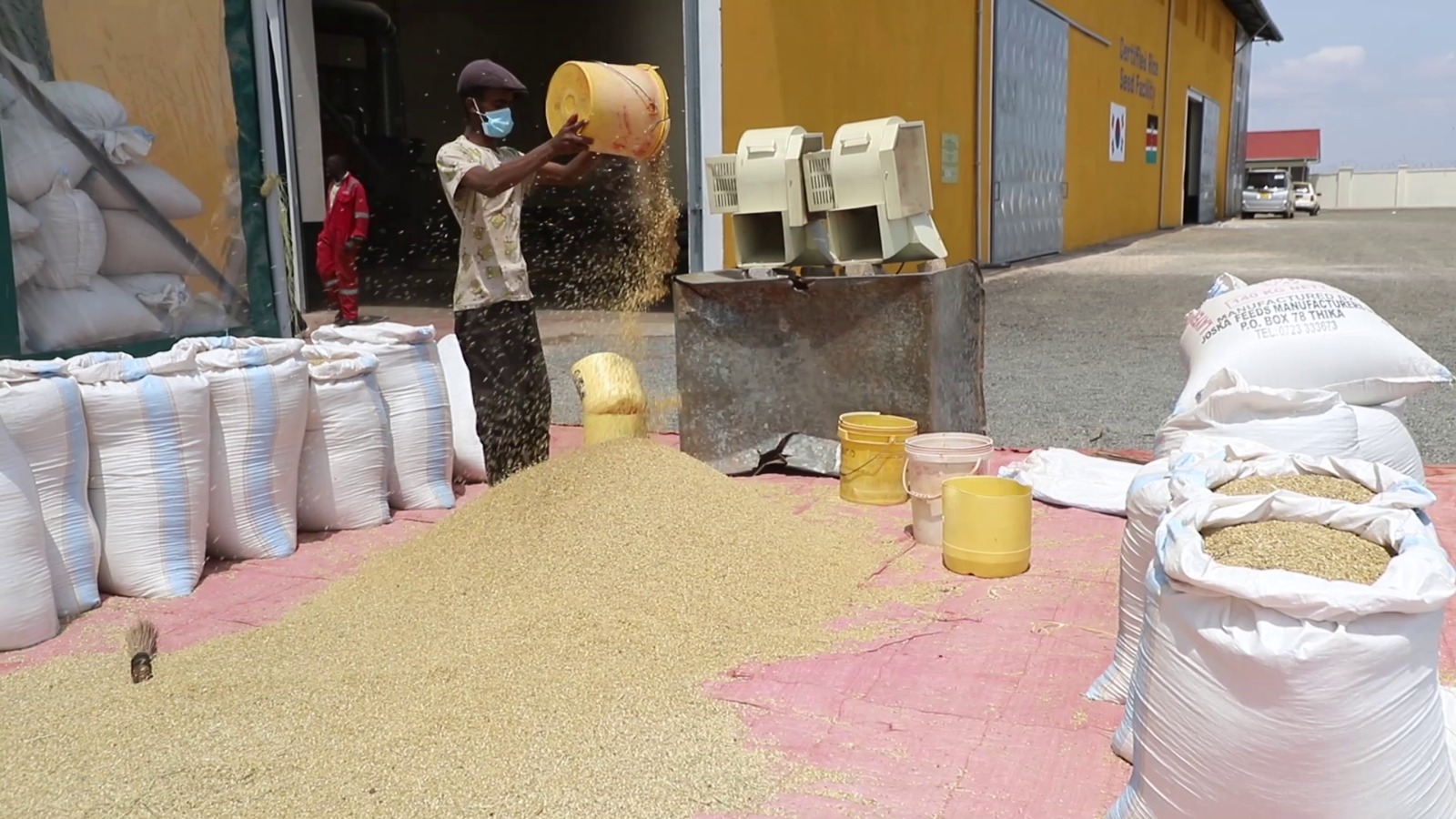
Kenya is currently faced by a persistent rice deficit, driven by high production costs, poor weather, inferior seeds among other factors, forcing the country to rely hugely on imports.
Rice farmers across the country produce 230,000 to 260,000 metric tons of rice annually against a demand of about 1.3 million metric tons. This translates to 20 percent of the country’s rice demand, creating an annual shortage of exceeding 800,000 metric tons.
A recent economic survey indicated that Kenya’s spending on rice imports reached a historic high of sh 55.11 billion, surpassing wheat imports for the first time. The country imports the grain from Asian and regional markets including Pakistan, India, Thailand and Tanzania.
These imports have faced a backlash from local farmers who face heavy market competition from the imported grain.
However the government together with development partners have embarked on diverse projects aimed at improving the country’s rice production and reducing reliance on imports.

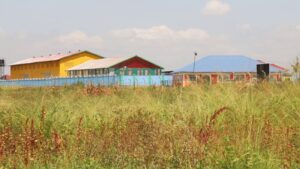
Among the projects is the Development of Africa Rice Seed Cultivation Complex dubbed as K-Rice Belt Project that is being undertaken at Kirogo Farm in Kimbimbi, Mwea constituency in Kirinyaga County.
The state-of-the-art certified rice seed cultivation and processing project commenced on August 2024 and is set to be complete by December 2028. It is funded by he Korean Government through the Korea Program for International Cooperation in Agricultural Technology (KOPIA), to a tune of about sh 580 million.
The project, according to KOPIA Kenya Country Director Dr Ji Gang Kim, is expected to transform rice farming by ensuring adequate supply of affordable and high-quality certified seeds to thousands of rice farmers across the country.
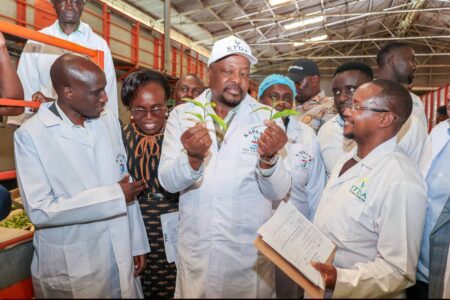
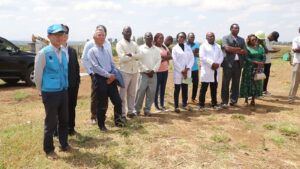
Dr Kim who spoke during an inspection tour at the facility said that the project, that sits on a 200-acre piece of land, will ensure that Kenya is self-reliant on rice and reduce the import burden while enabling farmers to increase productivity through access to quality seeds.
The Director divulged that the facility has been equipped with advanced processing technology including Korean rice driers and rice dressers and modern storage systems. It has the capacity to produce 40 tonnes of certified rseed daily, translating to approximately 700 tonnes annually.
According to Dr. Kim, the increased availability of certified seeds will ensure farmers have reliable access to quality planting materials, leading to higher yields and improved incomes.
“We are also training rice farmers on latest farming technologies including mechanisation and use of high-quality certified seeds to boost their production and income. We are optimistic that Kenya will soon be rice self-sufficient,” Dr Kim said.
Through the collaboration between KOPIA and the Kenya Agricultural Livestock and Research Organization (KALRO), the facility is now producing various rice varieties that are high-yielding and disease-resistant. They include Mkombozi, Komboka and Tongil.
Anita Ijayi, a seed researcher at KALRO, divulged that they have been training farmers on the new seed varieties noting that they can produce up to seven tonnes per acre.
She noted that KALRO will work closely with cooperatives and farmers’ organizations to ensure widespread distribution of certified seeds adding that the facility will play a pivotal role in capacity building among farmers from rice-growing areas and especially Mwea and Bura.
“We have already roped in about 75 farmers in Mwea and Bura schemes who are cultivating these seeds. We are also calling on all farmers to use the right certified seeds because they are available unlike before when we couldn’t meet the demand,” Ijayi said.
Mathew Kamanu, a rice farmer in Mwea said the region has long struggled with seed production challenges but expressed confidence that the new facility will resolve the problem.
Kamanu said that inadequate and low-quality seeds has been one of the reasons behind low rice production in the area adding that now with introduction of new varieties and proper farmer training on latest farming technologies, most local farmers are maximizing on their production.
“We have been growing Basmati variety for decades for economic purposes and most of the times we were left buying other cheap varieties for local consumption. However, since the Komboka variety was introduced to us, we have witnessed improved production and better returns,” Kamanu said.