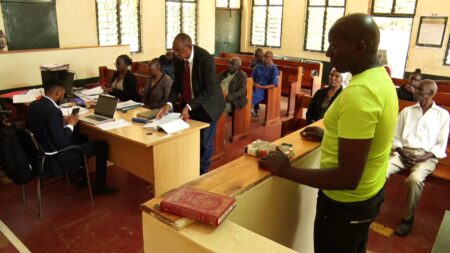











Justice has traditionally been a coercive and authoritative process when delivered in courts with very little if any input from the litigants and is often long, tedious and very expensive affair leaving disputing parties exhausted, poorer while leaving losers bitter and in most cases, it completely destroys relationships.
Kenya alongside other East African counties have joined the rest of the world by embracing Mediation and other Alternative Dispute Resolution methods to address disputes both in and out of the court system where disputing parties with the assistance of a neutral third party referred to as a mediator solve their dispute trying to come out with an amicable solution or come up with a plan of action.
Unlike litigation, the mediator has no decision-making authority and his or her role assist disputing parties to end their conflict and come up with a mutually agreed settlement agreement.
During an interview with The Kiambu Observer the CEO and Chief Mediator of a local mediation firm Millphen Mediation Consultants Ng’ang’a Thairu said the self determinations by the parties makes mediation a win win situation since it is the parties that decide their dispute as opposed to litigation where the Judge or Magistrate has the final word.
Mediation according to Thairu is also cheaper, faster, confidential in nature and most importantly it mends relationship especially when family members are involved.
There are two types of mediation where disputing parties may approach a mediator for private mediation and when a case before the court is refereed for mediation after screening. In case of private mediation, the parties meet the cost while the Judiciary meets the cost of any court accredited dispute Thairu said during the interview.
‘The role of a mediator is to create an environment where effective communication between parties forms a foundation of problem solving and agreement. He /she supports parties to identify clarify and explore issues to generate and consider options and make decisions about future actions and outcomes’ He said.
The confidential nature of mediation also allows parties to solve their dispute without the glare of the public and media while not washing their dirty linen in the public.
‘In litigation, control of the outcome depends on the Judge or Magistrate which can be unpredictable regardless of whether parties feel the outcome is fair or meets their needs and where appeals are allowed, they might be expensive and time consuming.’ Said the Certified Professional Mediator who is also Accredited by the Judicially.
Cases that can be mediated include but not limited to commercial and labour disputes, succession, child maintenance and matrimonial property.
While cases before courts can last years, any matter referred for mediation takes a maximum of 60 days to conclude so the process is faster and not time consuming.
On mending relationships, the Mediator said he has in the course of his duties witnessed blood relatives who have not spoken to one another shake hands and hugged after a mediation session.