










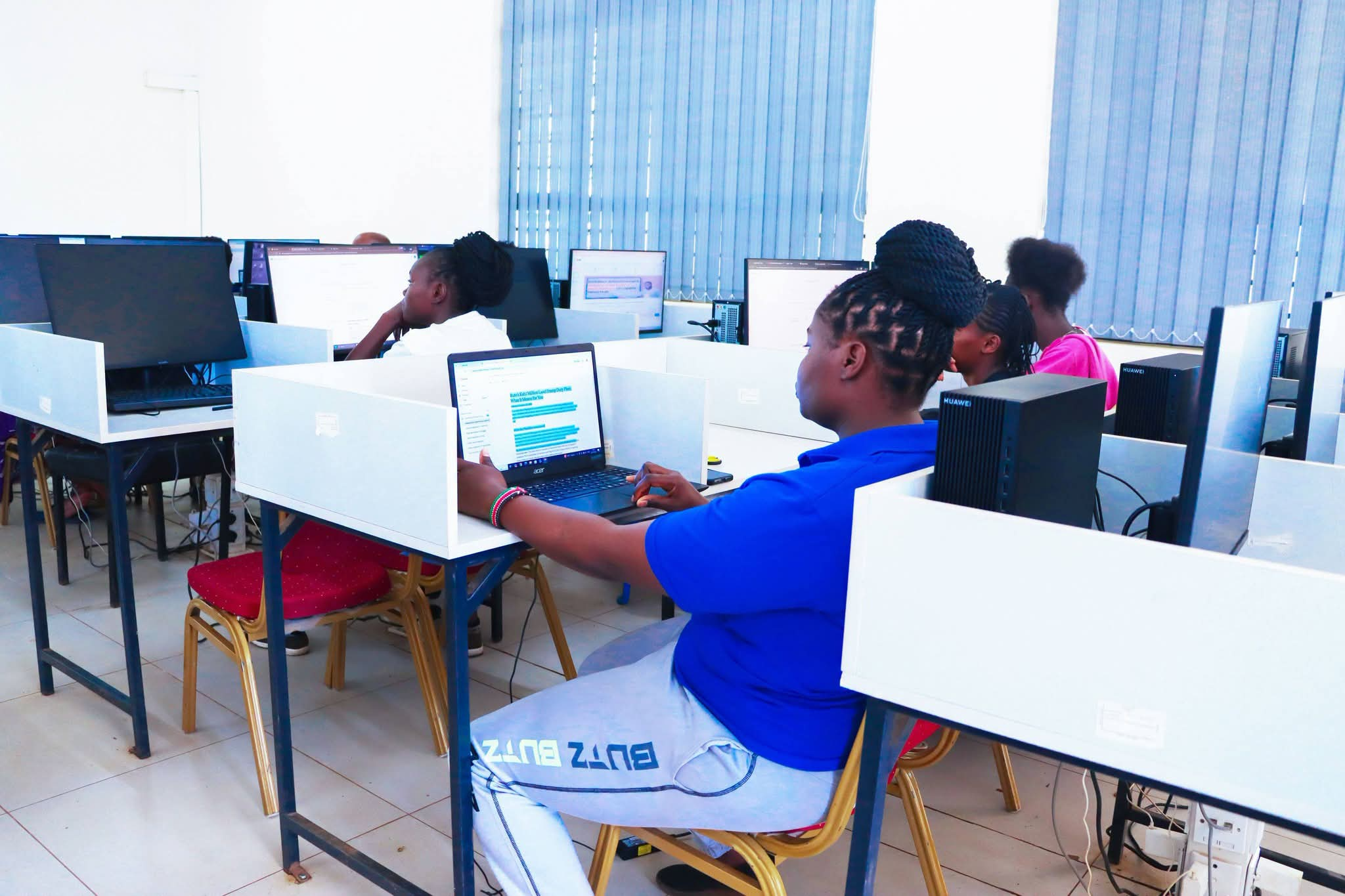
Kiambu Member of Parliament Machua Waithaka has urged parents and guardians to enrol their Form Four leavers at the Ndumberi Jitume ICT Hub, saying access to practical digital skills could help young people overcome unemployment and explore opportunities in the growing digital economy.
The legislator said school leavers should not be left idle at home after completing secondary education, but instead be encouraged to acquire marketable skills that can prepare them for employment, entrepreneurship and self reliance.
Waithaka made the appeal as young people at the Ndumberi based facility continued to receive training in digital content writing, a skill increasingly used by businesses, organisations and individuals to communicate and market their services through online platforms.


The training exposes participants to the basics of creating clear, engaging and professional content for websites, social media platforms and other digital communication channels.
The programme is part of efforts to equip young people with practical competencies that can help them participate in the digital economy, where content creation and online communication have become important tools for business growth and information sharing.
“Parents and guardians should take this opportunity to send their sons and daughters who have completed Form Four to the Ndumberi Jitume ICT Hub, where they can acquire valuable digital skills at no cost,” Waithaka said.
He urged families to view the transition from secondary school as an opportunity for further skills development rather than a period of inactivity, arguing that practical training could help young people prepare for the world of work.
The initiative also offers an alternative pathway for school leavers who may not immediately proceed to university or college, enabling them to develop competencies that could support their entry into the job market or the establishment of small businesses.
Digital content writing is among the skills that can be applied across different sectors, including marketing, media, e-commerce and corporate communications. With the right training and experience, young people can explore opportunities in freelance writing, social media management, website content development and other online services.
However, successful participation in these fields also requires discipline, creativity, continuous learning and the ability to produce quality work that meets clients’ needs.
The availability of training at no cost could ease the financial burden on families seeking additional learning opportunities for their children, while giving young people a chance to build their skills before pursuing further education or employment.
A resident, Njeri Nduta, said young people had considerable potential that could be realised if they were encouraged to use their time productively and pursue opportunities to improve their capabilities.
She called on parents and the wider community to support initiatives that equip young people with practical skills and help them prepare for a more secure future.
The appeal comes amid persistent concerns over youth unemployment and the difficulties many school leavers face in transitioning from education to employment. For many young people, the challenge extends beyond obtaining academic qualifications to acquiring practical skills that employers and customers can readily use.
Community based digital training centres can help bridge part of this gap by providing access to technology and skills development closer to where young people live.
The Ndumberi Jitume ICT Hub is being positioned as a resource for young people seeking to strengthen their digital capabilities and explore opportunities beyond traditional employment pathways.
For the initiative to deliver lasting results, participants will need to translate their training into practical experience, build portfolios of their work and identify opportunities to apply their skills in the market.
Parents, educators and community leaders also have a role to play in ensuring that young people are aware of available training opportunities and receive the encouragement needed to take advantage of them.
Waithaka’s appeal is therefore aimed not only at school leavers but also at families who can help them make productive choices during the period after secondary school.
Investing in digital literacy and practical skills, supporters of the initiative say, can help young people become more competitive, independent and better prepared to adapt to changing economic demands.
As more services and businesses embrace digital platforms, access to relevant training could provide young people with additional avenues to earn an income, develop businesses and participate in the country’s economic growth.
For Ndumberi and the wider Kiambu community, the challenge will be to ensure that young people seize such opportunities and turn the skills they acquire into tangible economic benefits.
Empowering young people through practical training, the initiative’s supporters argue, is an investment not only in individual livelihoods but also in the country’s future workforce.