







The government is reviewing legal, policy and administrative frameworks governing development partner funded programmes in a fresh push to improve the utilisation of funds, strengthen accountability and align external financing with national development priorities.
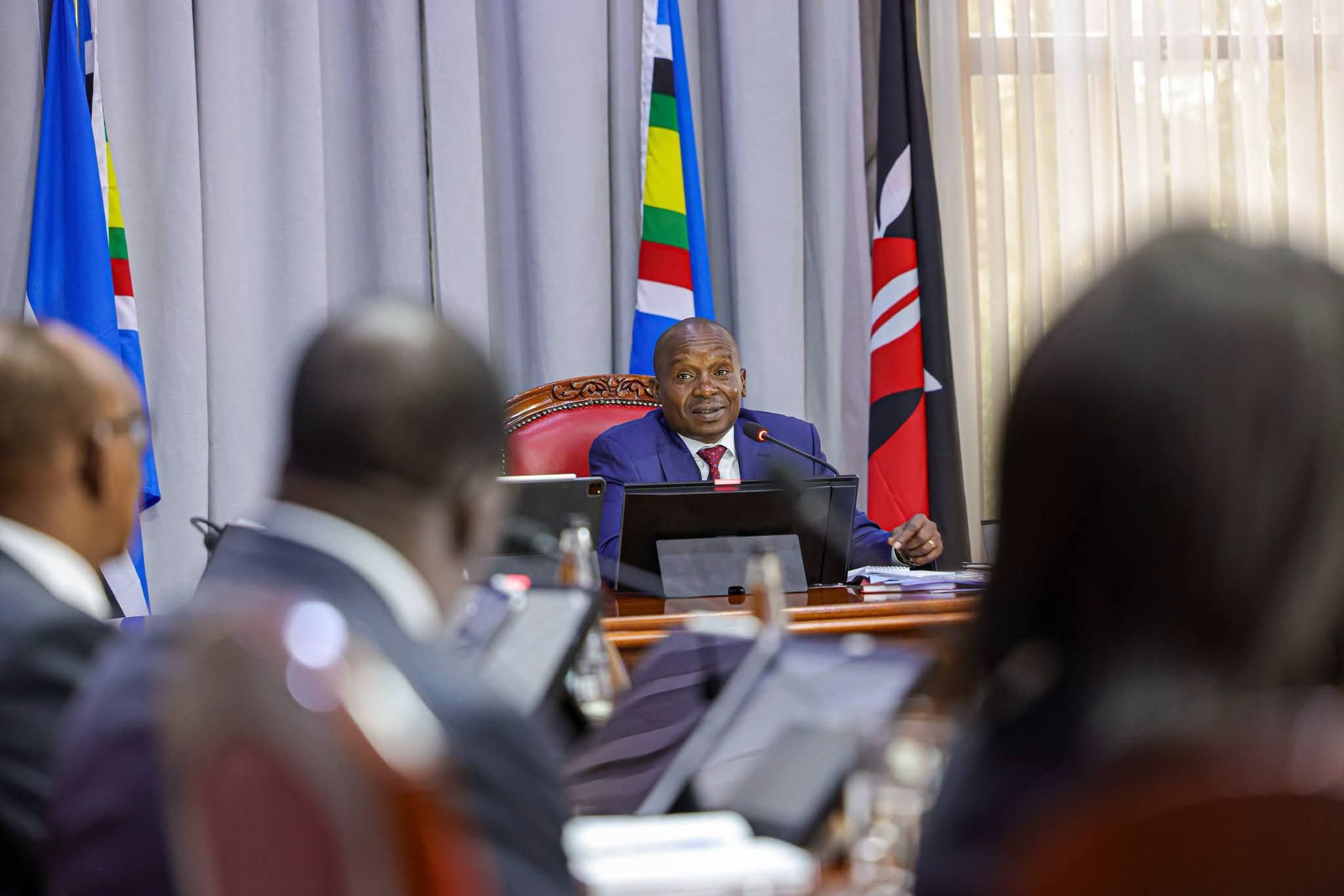
Deputy President Kithure Kindiki on Thursday chaired deliberations by the Cabinet Committee of the Whole in Karen, Nairobi, where members examined policy recommendations aimed at streamlining the implementation of projects supported by development partners across government.
The meeting focused on reforms intended to improve the absorption of available funds, address institutional and administrative challenges and ensure that externally financed programmes deliver tangible benefits to Kenyans.
The review comes amid the government’s continued pursuit of its Bottom Up Economic Transformation Agenda (BETA), which seeks to expand economic opportunities, improve service delivery and promote inclusive development.
During the meeting, Dr Kindiki received and deliberated on a range of proposed legal, policy, institutional and administrative reforms designed to strengthen the management and implementation of development partner funded programmes and projects.
The proposals seek to improve the government’s capacity to utilise available financing while ensuring that funded initiatives remain relevant to national priorities and contribute effectively to the country’s development objectives.
A key resolution was to establish continuous oversight of the pace, relevance and effectiveness of development partner funded programmes and projects across government.
Under the proposed approach, the progress of the initiatives will be monitored to assess whether funds are being utilised effectively, implementation is proceeding as intended and projects are delivering the expected development outcomes.
The committee also resolved that regular reports on the performance of the programmes be submitted to the full Cabinet, providing a framework for sustained oversight and accountability at the highest level of government.
The reporting mechanism is expected to keep the Cabinet informed about implementation progress, the effectiveness of funded interventions and their contribution to the country’s development agenda.
Development partners provide financial and technical assistance to support programmes across various sectors of the economy. Effective management of such resources is critical to ensuring that projects are completed efficiently and that public institutions achieve value for money.
However, the impact of external financing depends not only on the availability of funds but also on the government’s capacity to absorb the resources, coordinate implementing institutions and ensure that projects respond to identified needs.
The proposed reforms seek to strengthen these processes by improving institutional coordination, tightening oversight and linking programme implementation more closely to national development priorities.
By committing to regular reviews and reporting to the full Cabinet, the committee aims to make the management of development partner funded initiatives a continuous government responsibility rather than an exercise limited to individual project reviews.
The deliberations form part of broader efforts to enhance public sector efficiency and ensure that resources mobilised for development translate into measurable improvements in the lives of Kenyans.
The government has yet to publicly detail the specific legislative amendments, administrative changes, implementation timelines or individual projects that will be prioritised under the proposed reforms.
The effectiveness of the initiative will ultimately depend on how the recommendations are implemented, the consistency of monitoring and the extent to which identified challenges are addressed to accelerate project delivery and strengthen accountability for development financing.