





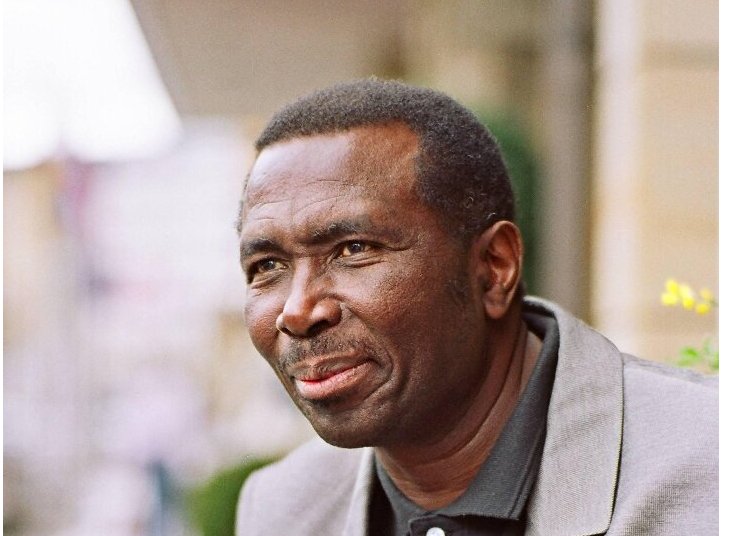
Renowned Kenyan writer and filmmaker Meja Mwangi, celebrated for his profound narratives on social realities, has passed away at the age of 78. He died peacefully in Malindi on Thursday, December 11, marking the end of a prolific career that significantly shaped African literature. Mwangi’s passing elicited widespread tributes from across the literary and cultural spectrum.
Born David Dominic Mwangi in Nanyuki on December 27, 1948, his early life experiences profoundly influenced his storytelling. He began his literary journey in the early 1970s, quickly establishing himself as a significant voice. His debut novel, “Kill Me Quick,” published in 1973, earned him the prestigious Jomo Kenyatta Prize for Literature.
Mwangi’s works often illuminated the challenging urban landscapes of post-independence Kenya, vividly portraying themes of poverty, crime, and the daily struggles faced by young Kenyans. He possessed a unique ability to combine sharp social insight with compelling narrative, capturing the grit and poetry of everyday life.
His acclaimed novel, “Going Down River Road” from 1976, became a staple of Kenyan literature, delving into the lives of construction workers in Nairobi. “The Cockroach Dance” (1979) further explored the complex dynamics of urban existence, highlighting resilience amid hardship.
A notable contribution, “Carcase for Hounds” (1974), bravely addressed the Mau Mau liberation struggle, reflecting on Kenya’s colonial past and the sacrifices made for independence. Mwangi’s unflinching portrayal of history acknowledged the complexities of freedom.
He continued to receive accolades throughout his distinguished career, including another Jomo Kenyatta Prize for Literature in 2000 for “The Last Plague.” This poignant work offered an African perspective on the devastating impact of HIV/AIDS in rural areas.
Beyond his celebrated novels, Meja Mwangi demonstrated considerable versatility, writing short stories and children’s books. His narrative style, characterized by realism, often included a distinctive sense of humor amidst serious social commentary.
Mwangi’s international recognition included a writing fellowship at the University of Iowa during the 1975-76 academic year. Critics like Simon Gikandi even compared his literary method and career to that of the renowned Victorian novelist Charles Dickens.
His creative contributions extended into the film industry, where he worked as a screenwriter, assistant director, and casting professional. He notably contributed to projects like the 1981 screenplay for “Cry Freedom” and served as an assistant director for “Out of Africa” in 1985.
Publishers, fellow authors, and readers collectively mourned his loss, remembering him as a fearless and honest storyteller whose work resonated deeply. Nuria Bookstore, his long-time publisher, affectionately described him as a “quiet revolutionary” and a proud son of Nanyuki.
Many expressed that Meja Mwangi’s stories brilliantly captured the struggles, humor, and resilience of everyday life in Kenya. An X user, Hamza K, reflected, “Meja Mwangi made my childhood imagination wander. Such a great writer.”
Another voice on X added, “He shaped the literary direction of an entire generation with his work. RIP Meja Mwangi. You may be gone, but you live on in your books and in the minds of the millions you enthralled.”
His profound influence on Kenyan literature is undeniable, with his works continuing to be studied and appreciated both locally and internationally. Mwangi leaves behind a powerful legacy that helped define and elevate the nation’s literary heritage.