




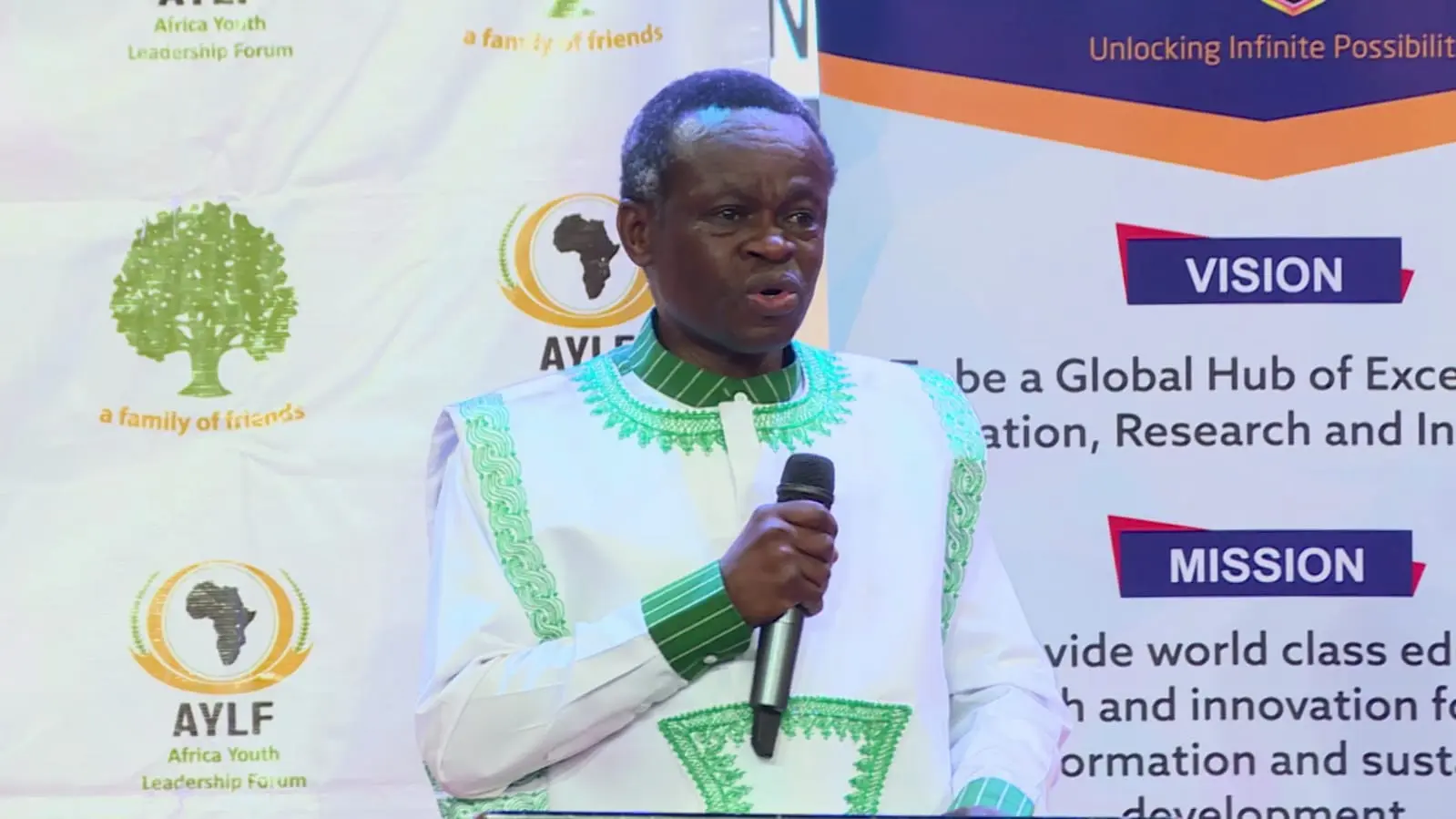
Renowned legal scholar and governance expert, Prof PLO Lumumba, has sounded an alarm regarding the growing instances of tribal rhetoric and political polarization within the nation. He cautioned that if this trajectory isn’t immediately checked, the country faces the danger of sliding into harmful ethnic divisions.
Lumumba asserted that the recent political disagreements observed across the country have reignited ethnic-based exchanges, posing a threat to both national unity and development.
While delivering a speech at the third annual African Youth Leadership Forum (AYLF), hosted at Mount Kenya University (MKU), Lumumba warned that this ethnic discourse, coupled with heightened political temperatures despite the next general election being two years away, suggests a bleak reality for a nation ensnared by harmful identity politics. He specifically urged the youth to resist manipulation by politicians who exploit ethnic sentiments for their own benefit. Lumumba remarked, “If you read today’s Kenyan newspapers, you might think we have a general election tomorrow yet the elections will be held in 2027.”
Lumumba lamented that, in Kenya, every matter is viewed through a tribal lens. He gave the example of students in some local universities organizing themselves into tribal groups, asking, “How primitive can a people be?” He continued, cautioning, “Each time a national Cabinet is constituted or judges are appointed, we ask how many are from our tribe? Even when lawyers and doctors graduate, we ask how many are our tribesmen? We must liberate ourselves from tribal manacles!”
Prof Lumumba was the chief guest at the AYLF Summit, held at the university’s Mwai Kibaki Convention Centre in Thika town. The theme of the Third Annual leadership summit was ‘Building a New Africa for the 21st Century’.
Lumumba challenged young people to actively engage in leadership and governance, emphasizing that they must step up and define the nation’s future rather than passively waiting for change. He encouraged the youth to play an active role in demanding accountability, transparency, and good governance. Prof Lumumba stressed that politics should center on development and transformation, not ethnicity or hate speech.
“The youth must liberate this country from the chains of tribalism. Don’t allow yourselves to be put into tribal cocoons. If you permit poor governance, you will pay the price. Lamentations won’t help,” he warned.
He pressed the attendees to reflect on how Africans can achieve liberation. He advised against continued neo-colonialism, which perpetuates racism against Africans.
Lumumba noted, “African problems cannot be solved by holding international forums. We are holding too many workshops and meetings, but not enough symposiums.”
Professor P L O Lumumba implored Africans to intensify efforts to effectively utilize the 21st century to re-define the future of the continent. He stated that despite Africa being rich in natural resources and a blessed continent, the most significant hurdle is bad leadership.
He pointed out that Africans are being nearly dominated in their own countries by people from other continents, effectively reviving the colonial era as a consequence of poor governance. He urged African leaders to embrace their national languages and to cease incorporating tribalism into every aspect, including using their mother tongues in public gatherings.
The youth who attended the forum, led by Leona Chebet and Harrison Njoroge, said the discussions profoundly impacted their perspectives on leadership, governance, and nation-building. However, the youth underscored the necessity for their inclusion in leadership positions and key decision-making spaces so they can meaningfully contribute to addressing the nation’s challenges. Chebet remarked, “The youth are looking forward to a better Africa but need better representation in leadership.”
They expressed disappointment that despite possessing the capability and skills to handle various issues and provide solutions, they are infrequently given opportunities to demonstrate their abilities in substantive roles. “We need to change our mindsets, to look for new solutions. We have talented people, intellectuals. The youth should get jobs and opportunities for training so that barriers can be overcome,” said Njoroge.
Prof Lumumba concluded, “My prayer and hope is that this assembly of youth will not be enticed by ethnicity as the basis for making judgement.”
The Africa Youth Leadership Forum (AYLF) is a collaborative, Kenya-based initiative that unites university students, their leaders, and alumni from both public and private universities for mentorship, training, networking, and capacity building. It is dedicated to advancing values and principles that promote transformational and servant leadership. AYLF aspires to be a movement of friends focused on nurturing a new generation of leaders in Africa by developing young leaders in Kenya through programs such as student leadership development and university debates grounded in Christian values.