







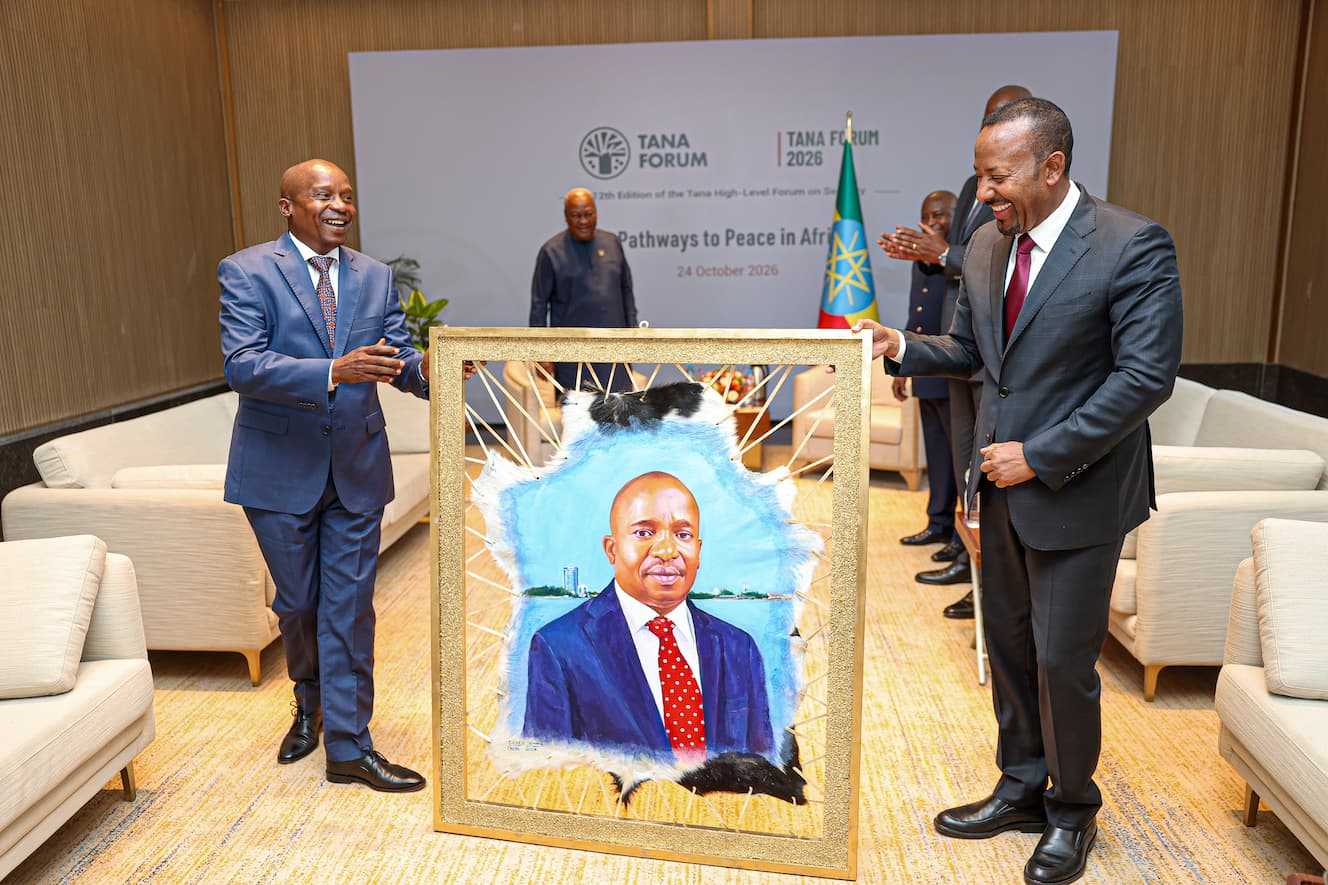
Deputy President Kithure Kindiki has challenged African countries to turn their vast natural resources, youthful population and strategic economic assets into bargaining power, warning that the continent risks remaining on the margins of global affairs unless it strengthens its institutions, finances its own development and asserts greater control over decisions affecting its people.
Prof Kindiki said Africa’s persistent development challenges were not caused by a shortage of resources but by its limited capacity to convert those resources into economic prosperity, political influence and sustainable peace.

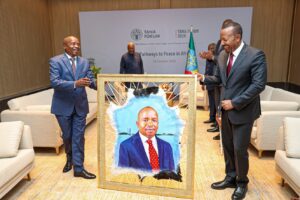
Speaking at the Tana High Level Forum on Security in Africa in Bahir Dar, Ethiopia, where he represented President William Ruto, the Deputy President called for a fundamental shift in how African governments approach sovereignty, security, development financing and relations with global powers.
He argued that political independence alone was insufficient if African countries remained unable to determine their economic priorities, protect their investments and influence international decisions despite possessing minerals, fertile agricultural land, renewable energy resources and a rapidly growing workforce.
“Africa should be a partner to all, a satellite of none, and an equal participant in shaping the international order,” Prof Kindiki said, urging governments to engage international partners on the basis of mutual benefit rather than historical loyalties or automatic political alignment.
His remarks came during a high level panel discussion titled From the Margins to the Centre: Building an African Model for Peace and Sovereignty in an Age of Geopolitical Rivalry, hosted by Ethiopian Prime Minister Abiy Ahmed.
The forum brought together Ghanaian President John Mahama, Burundi’s President Évariste Ndayishimiye, Mozambican President Daniel Chapo, former Nigerian President Goodluck Jonathan, former Sierra Leone President Ernest Bai Koroma, diplomats, academics and other distinguished participants.
The discussions focused on how Africa can strengthen its strategic autonomy amid intensifying geopolitical competition, growing demand for critical minerals and increasing pressure on countries to align themselves with competing global powers.
Prof Kindiki described Africa’s position in the global economy as a contradiction: a continent endowed with resources essential to modern industry and future economic growth, yet with limited influence over the decisions that shape international trade, security and development.
He said the continent’s minerals, agricultural potential, renewable energy resources and human capital should provide the foundation for stronger economies and greater influence in international negotiations.
However, exporting raw materials while importing finished products continued to limit the benefits African countries derived from their natural wealth.
The Deputy President called for greater investment in processing, manufacturing, technology and skills development to ensure that more economic value was retained within the continent.
“Africa must move beyond exporting raw materials and importing finished products,” he said, urging governments to prioritise value addition across the mineral, agricultural and energy sectors.
He argued that developing local industries would not only create employment but also expand government revenues, strengthen domestic markets and reduce dependence on imported manufactured goods.
The shift, he said, requires coordinated investment in infrastructure, industrial capacity, technical education and technological innovation, supported by policies that encourage African businesses to compete regionally and globally.
Prof Kindiki cited Kenya’s mobile money platform M-Pesa, Ethiopian Airlines and Dangote Industries’ cement manufacturing and oil refining investments as examples of African enterprise demonstrating the potential to build globally competitive businesses.
He said such enterprises offered lessons in innovation, industrial development and the ability to respond to Africa’s economic needs using home grown solutions.
For Kenya, he added, supporting African enterprise and strengthening economic cooperation remained central to the country’s vision of a more integrated and prosperous continent.
The Deputy President also called on African governments to treat peace and security as essential investments rather than competing demands on public resources.
He warned that infrastructure projects, industrial investments and economic gains could quickly be wiped out by violent conflict, terrorism and organised crime if governments failed to build effective security institutions.
Roads, railways, ports, energy installations and water systems, he argued, could not guarantee lasting prosperity in countries where instability threatened lives, disrupted commerce and destroyed public infrastructure.
“A country that had built significant infrastructure can suddenly find itself at war, and that infrastructure is destroyed. It is going to take ages to restore normalcy,” he said.
Prof Kindiki maintained that peace was a prerequisite for development and that governments needed to recognise the relationship when setting national priorities and allocating public funds.
He called for stronger, accountable state institutions capable of preventing conflict, defending democratic processes and resisting threats to constitutional order.
Such institutions, he said, must be supported by adequate domestic financing and inclusive political processes that address grievances before they escalate into violence.
He also urged African governments to strengthen the capacity of the African Union, regional economic communities and other regional security mechanisms to prevent conflicts and respond to emerging threats.
The Deputy President said an African approach to peace should place greater emphasis on prevention, dialogue and locally driven solutions, while maintaining constructive cooperation with international partners.
He argued that external assistance would be more effective when it supported African led priorities rather than determining the continent’s security agenda.
Prof Kindiki said sustainable sovereignty would remain elusive unless African countries mobilised more domestic revenue to finance development, peacekeeping and security operations.
He called for national budgets to reflect the importance of security alongside investments in roads, electricity, water, schools and hospitals.
Governments, he said, should strengthen revenue collection, improve public institutions and ensure that security agencies and regional initiatives receive adequate and predictable funding.
He also proposed reforms to African financial institutions to better connect development financing with peace and security.
The Deputy President questioned the long term value of investing heavily in infrastructure and industrial projects without ensuring that the surrounding security environment could protect those investments.
He called for institutions such as the African Development Bank and other regional financial bodies to consider security risks when financing major development programmes.
In his view, the protection of strategic investments should be treated as part of the development process, rather than as a separate responsibility addressed only after threats emerge.
Prof Kindiki illustrated the argument by referring to a proposed major oil refining investment in Lamu on Kenya’s Indian Ocean coast, which he put at approximately $16 billion.
He said investments of such magnitude required security arrangements commensurate with their economic value, particularly where disruptions could affect businesses, jobs, regional trade and the wider economy.
The principle, he added, should apply across Africa, where insecurity can undermine industrial projects and discourage investors from committing long term capital.
He urged governments and financial institutions to develop funding frameworks that recognise the relationship between stable societies, protected investments and sustained economic growth.
The Deputy President further challenged African leaders to reconsider traditional diplomatic alignments as international relations become increasingly shaped by geopolitical rivalry and transactional partnerships.
He argued that Africa should avoid depending excessively on any single external power and instead develop the confidence and flexibility to engage different partners according to its interests.
Rather than isolating countries or committing permanently to particular geopolitical blocs, African governments should pursue what he described as “eclectic diplomacy”, making decisions on a case by case basis.
Such an approach, he said, would enable countries to negotiate better terms for investments, trade, technology transfer and development financing while retaining their independence in international affairs.
Prof Kindiki maintained that Africa’s natural resources and strategic importance gave it leverage that governments had not fully exploited.
He urged leaders to negotiate more assertively with industrialised countries seeking access to critical minerals, renewable energy resources, agricultural products and other commodities essential to their economies.
The continent’s youthful population, he added, would remain an important economic asset as countries across the world confront changing labour market needs and competition for skilled workers.
“Africa must engage all partners constructively, without isolation or automatic alignment, guided by its interests and collective priorities,” he said.
The Deputy President’s position was that African countries should approach international negotiations with greater unity, confidence and clarity about the benefits they expect from their resources and partnerships.
He said the continent needed to move away from relationships in which its role was largely confined to supplying raw materials or receiving assistance, and instead become an active participant in shaping global economic and political arrangements.
Prof Kindiki also called for greater investment in digital infrastructure and technological capabilities, warning that sovereignty in the modern world increasingly depends on a country’s ability to govern its data, protect critical systems and participate in shaping emerging technologies.
He said African governments needed to strengthen digital infrastructure, build local expertise and protect essential systems against threats that could disrupt public services, economic activity and national security.
“In this age of information and digital technologies, African countries must strengthen their capacity to govern data, protect critical digital infrastructure, develop technological capabilities and shape the rules governing emerging technologies,” he said.
He argued that technological advancement offered opportunities to expand financial inclusion, improve public services, increase productivity and create new avenues for employment and entrepreneurship.
However, African countries needed to invest in the skills and institutions required to harness these opportunities instead of remaining dependent on technologies developed and controlled elsewhere.
Regional cooperation, he said, could help African states pool expertise, expand digital markets and develop common approaches to emerging technological challenges.
Prof Kindiki said President Ruto remained committed to strengthening the African Union’s ability to respond to the continent’s priorities through institutional reforms and improved financial sustainability.
He cited the President’s role as African Union Champion for Institutional Reform, saying the reform agenda sought to make continental institutions more effective, accountable and capable of delivering on their mandate.
He argued that stronger African institutions were essential to the continent’s ability to coordinate responses to conflict, finance common priorities and exercise greater influence in global affairs.
The Deputy President also called for long term reforms to the international peace and security architecture to give Africa a stronger voice in decisions affecting the continent.
He said the financing of African security operations and responses to crises should receive greater attention in international discussions, given the wider implications of instability for global peace and economic security.
For Africa to advance its interests, he added, governments must combine stronger domestic institutions with coordinated regional action and strategic engagement with international partners.
Ultimately, Prof Kindiki said, the continent’s ability to shape its future would depend on whether its leaders could translate its considerable resources into productive industries, resilient institutions, secure communities and stronger negotiating power.
He urged African governments to abandon the assumption that natural wealth alone would guarantee prosperity, insisting that the continent needed the confidence to negotiate firmly, mobilise resources and determine its own development priorities.
The challenge, he said, was to ensure that Africa’s wealth and strategic importance translated into tangible improvements in the lives of its people while giving the continent a more influential role in shaping the international order.